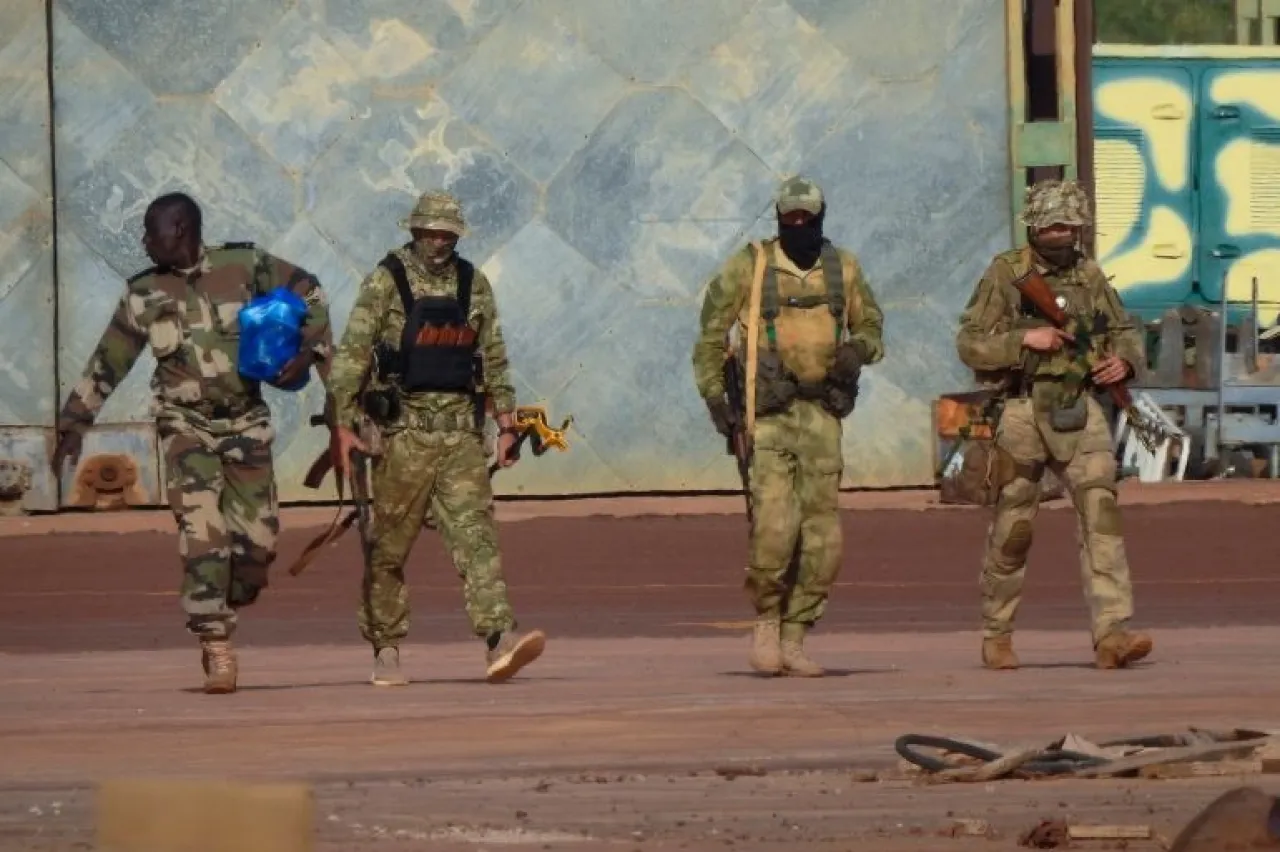
Khaberni - Dozens of civilians who fled the fighting told The Associated Press that "a new Russian military unit that replaced the mercenary group Wagner commits violations including rape and beheadings while cooperating with the Mali army to pursue extremists."
Refugees reported that "Africa Corps" uses the same methods that were followed by "Wagner", in stories not yet published in the international media.
Two refugees showed video clips of villages burned by "white men", and two others said they found bodies of relatives with missing livers and kidneys, violations that the agency had previously reported occurring in areas associated with "Wagner".
One of the village leaders in Mali - who fled the area - said it was "a scorched earth policy, the Russian soldiers do not talk to anyone, they shoot anyone they see, no questions and no warning, people don’t know why they are being killed."
The vast Sahel region in West Africa has become the world’s most deadly area in terms of activities of armed Islamic groups, and the military governments in Mali, Burkina Faso, and Niger have shifted from allying with the West to Russia seeking help in fighting fighters linked to Al-Qaeda or the Islamic State organization.
"When Africa Corps replaced Wagner six months ago, the exhausted civilians hoped for less brutality, but all parties to the conflict committed violations against them," says the United Nations.
Dozens of Witnesses
The Associated Press gained rare access to the Mauritanian border, where thousands of Malians have fled in recent months as the fighting escalated.
The agency spoke with 34 refugees who described random killings, kidnappings, and sexual assaults, most of them speaking on condition of anonymity for fear of retaliation.
The village leader said, "They are the same men receiving salaries from the government and continuing the massacres, no difference between Wagner and Africa Corps."
The authorities in Mali have not publicly acknowledged the presence of Wagner or Africa Corps forces, but Russian official media published reports from Mali in recent weeks praising "Africa Corps" for defending the country from "terrorists".
The Russian Foreign Ministry also confirmed that the unit is active "at the request of the Malian authorities", providing field accompaniment, search and rescue operations, and other activities.
The Russian Ministry of Defense did not respond to questions from The Associated Press.
Insulting the Residents
It was early in the morning when Mojagaloa was making sweet black tea when she heard gunfire, and seconds later two cars stopped in front of her tent, filled with masked white men screaming in a foreign language.
Mojagaloa - a cattle herder from northern Mali - said she had seen her share of atrocities during a decade of violence, but affirmed no one was as brutal as these men.
She explained that the men arrived with Malian soldiers who grabbed her 20-year-old son Cobadi, questioned him about seeing gunmen, and when he denied it, they beat him unconscious before the men slaughtered him right in front of her eyes while she was helpless to intervene.
She added that the family fled, but the gunmen found them again in late October.
This time they asked no questions, wore masks and military clothing, took everything the family owned, from animals to jewelry, and kept repeating one word which is "pes", a Russian pejorative word meaning "dog".
She said they dragged her 16-year-old daughter Akhadia when she resisted, then noticed her older daughter Fatima, and turned away from Akhadia.
They took Fatima to her tent, and without thinking, Mojagaloa grabbed Akhadia's hand and they started running, leaving Fatima behind. Since then, they have not heard anything about her.
Mojagaloa said trembling, "We were very scared, we hope she reaches here sometime."
Widespread Violations
Experts say it is impossible to know the number of people being killed or assaulted in Mali, especially in remote areas, in light of increasing restrictions on journalists and aid workers' access to the country.
The representative of the United Nations High Commissioner for Refugees in Mauritania Sukru Gancis said "There are many people being raped, assaulted, and killed, families are being torn apart, and there is no doubt about it," but added that "sometimes it is hard to precisely identify the perpetrators."
Henny Nsasyiba - from the Project on Locations and Incidents of Armed Conflicts - said civilians are under pressure from militants and from the "Africa Corps" and Malian fighters, they have become "caught between the hammer and the anvil."
There are fewer external entities monitoring the situation, as the United Nations peacekeeping mission withdrew from Mali in 2023 under government pressure.
Mali's withdrawal this year from the International Criminal Court further complicates efforts to track violations.
The International Criminal Court had been investigating serious crimes committed in Mali since 2012 when confrontations with armed groups began.
Eduardo Gonzalez Cuevas, the United Nations independent expert on human rights in Mali, told The Associated Press that he twice requested this year from the military authorities in the country permission to visit, and sent them a questionnaire, but they did not respond.
He added that the government of Mali considers investigations into alleged violations "improper and detrimental to the morale of the forces", as stated in the latest report presented to the Human Rights Council of the United Nations in March.