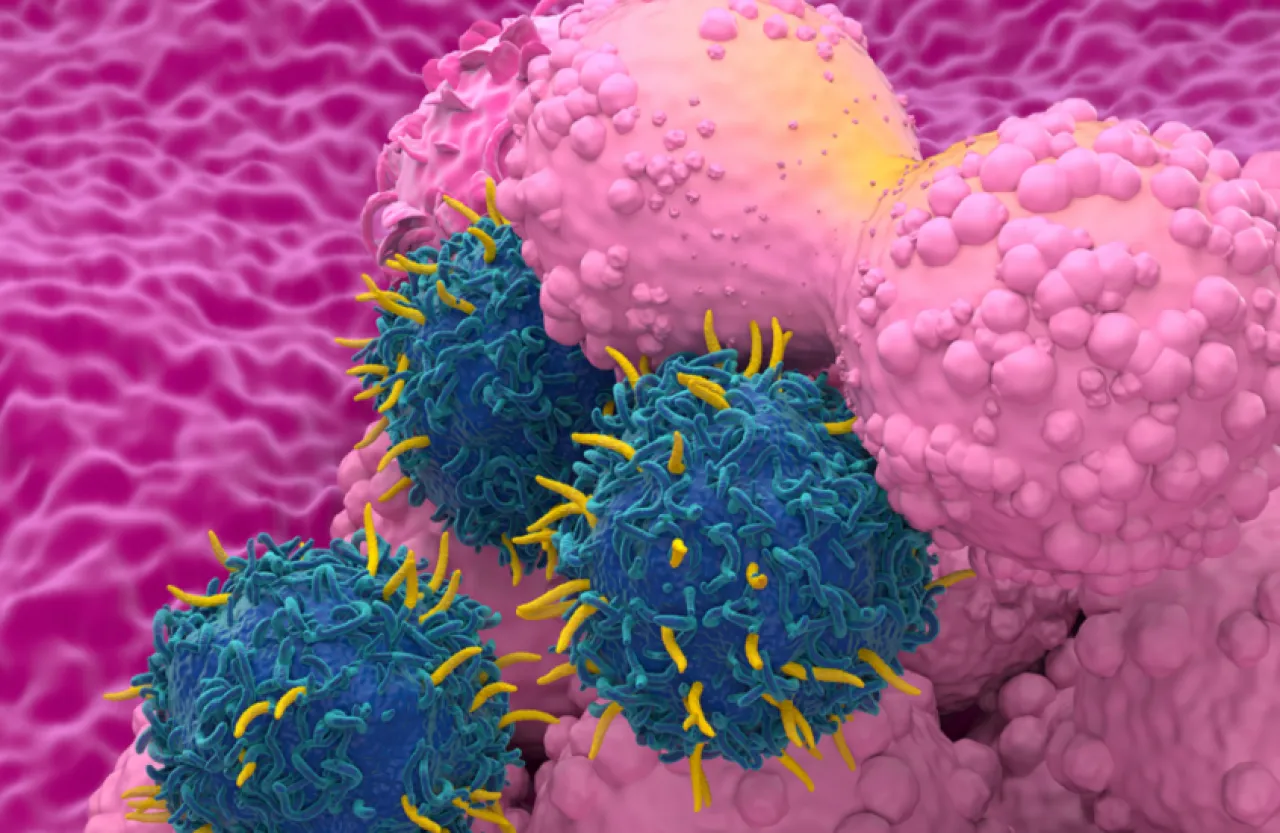
Researchers at the Del Mar Hospital Research Institute in Barcelona have made significant progress in the treatment of the most common type of breast cancer, the estrogen receptor-positive type.
The results suggest the possibility of making immunotherapy effective against tumors that previously showed no immune response, a step that could transform the treatment of this disease, which accounts for about 70% of breast cancer cases and causes the highest death rate.
Typically, this type of tumor does not respond to immunotherapy due to the effect of estrogen receptors that limit the infiltration of immune cells and inhibit the effectiveness of the treatment. Through the analysis of data from multiple clinical trials, researchers found that inhibiting the estrogen receptor leads to the activation of LCOR and interferon signals, both of which enhance antigen presentation on the cell surface, making the tumor visible to the immune system.
To confirm these results, the team developed a pre-clinical model in laboratory animals, and revealed that the estrogen receptor "blocks" the LCOR molecule, which has been proven effective in enhancing immunotherapy against triple-negative breast cancer, and prevents it from performing its function.
To overcome this effect, the researchers used two strategies in a pre-clinical setting: the first, combining LCOR with immunotherapy and existing hormonal inhibitors for treating this type of cancer; and the second, developing a modified version of LCOR - LSKAA - which prevents its isolation by estrogen receptors, enhancing antigen presentation and facilitating the body's response to immunotherapy.
José Ángel Palomeque, a researcher at the institute, explains: "By using anti-estrogen therapy, LCOR can be activated and antigen presentation enhanced, paving the way for immunotherapy. The modified version of LCOR avoids the effect of estrogen receptors and boosts the immune response."
In this context, the institute's RNA-based therapy lab is working on developing modified LCOR treatments, while VIOLET Pharmaceuticals, a recent subsidiary, focuses on developing these innovative treatments.
Dr. Joan Albanil, head of the Medical Oncology Department and director of the Cancer Research Program, says: "This study opens the door to a new strategy for stimulating the estrogen receptor-positive breast cancer subtype to respond to immunotherapy, with the potential for these modified compounds to be evaluated in upcoming clinical trials."