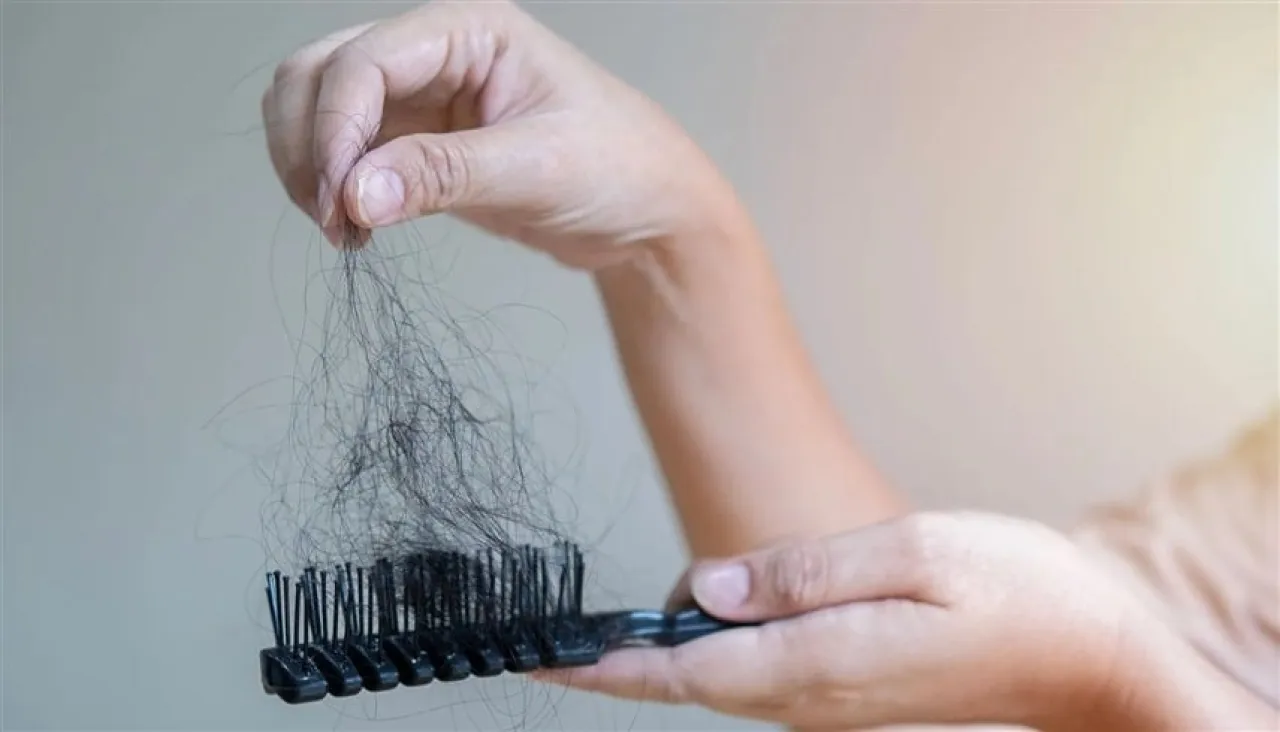
Khaberni - A new research study explored how stress impacts hair loss and how the body's response to stress has long-term effects on the scalp.
An increase in the stress hormone leads to the killing of proliferative cells in hair follicles.
Researcher Ya Chieh Hsu, a professor of stem cell and regenerative biology, and her colleagues at Harvard University found that hair loss results from a two-part reaction and that its mechanism is related to autoimmune diseases.
Immediate Hair Loss
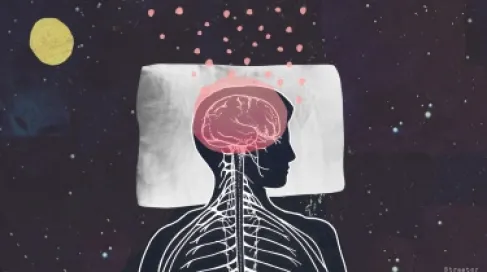
The first part, which is immediate hair loss due to stress, was simple, as Hsu explained, and added that it begins with a natural "fight or flight" response due to the sensation of pressure, which secretes the neurotransmitter norepinephrine. This neurotransmitter, among other effects, kills rapidly proliferating cells in hair follicles when its level is very high.
According to "Medical Xpress", hair loss in such conditions is usually temporary.
Hsu said: "Since there are no stem cells in this case, hair follicles can be renewed, leading to temporary hair loss, but then, the stem cells will activate to regenerate new hair."
Immune Response and Long-Term Effects
However, additional, more comprehensive details were revealed by the imaging conducted by fellow researcher Amalia Passoli, a biologist specializing in electron microscopy.
She found that the hair follicles killed by norepinephrine “looked as though hydrochloric acid had been poured on them” and died due to necrosis.
This surprising discovery prompted the research team to examine the tissues more closely, revealing a secondary reaction.
After the secretion of norepinephrine, the researchers found that the body perceives the inflamed or dead tissues as an attacking body, which in turn triggers a series of immune responses to activate autoreactive T cells.
T Cells
Hsu explained that these T cells, which usually protect healthy cells, "now see the hair follicles as a foreign body that must be attacked."
This secondary attack may have long-term effects, as hyperreactive T cells can launch repeated autoimmune attacks on hair follicles under additional stress factors.
This opens up possibilities for exploration to understand other autoimmune diseases, such as Type 1 diabetes, lupus, and multiple sclerosis.
Researchers find it exciting to see that the effect of psychological stress resembles the effect of genes in relation to baldness.