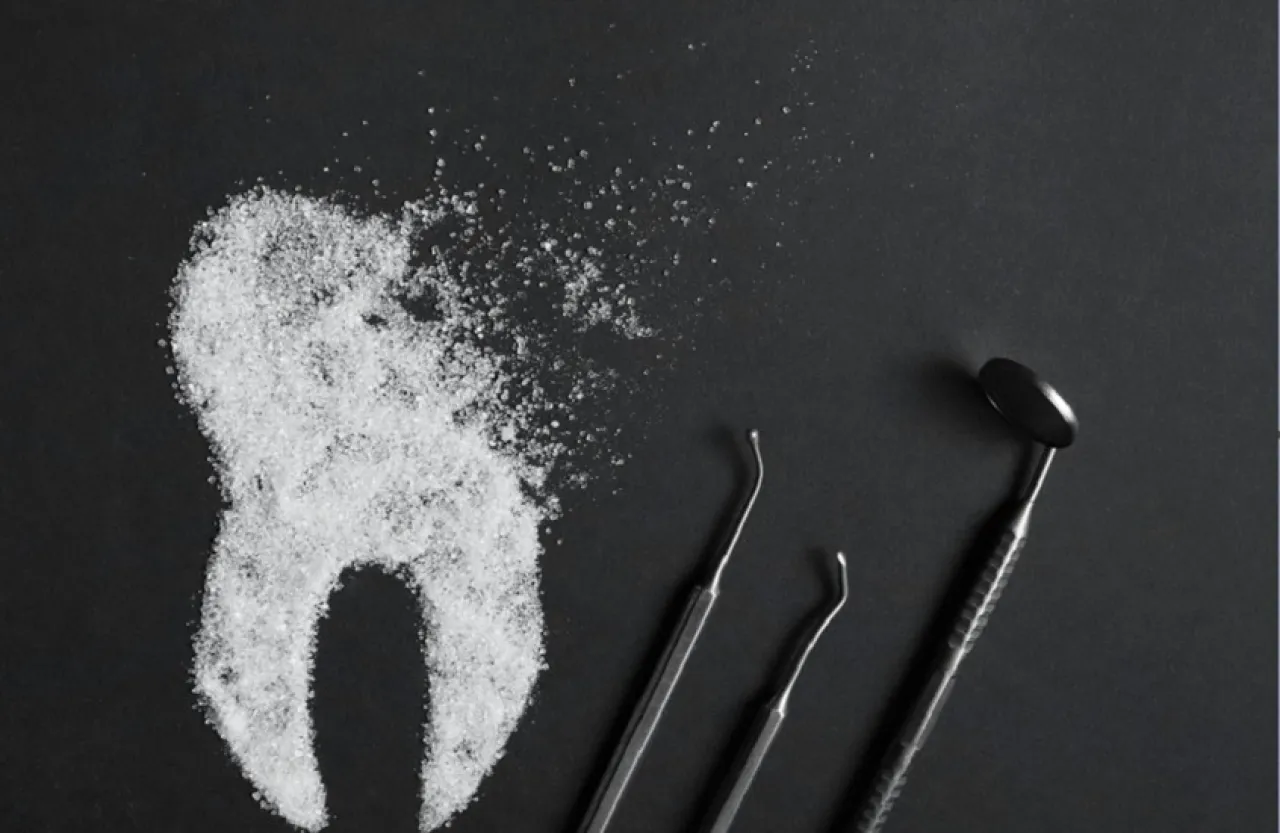
Khaberni - Consuming sweets and sugary drinks during the holidays gains great popularity, but it opens the door for oral bacteria to form a harmful layer on the teeth.
Although many are aware that excessive sugar consumption can cause tooth decay, most people do not know how bacteria use these sugars to form a sticky layer called plaque on the teeth immediately after the first sweet bite.
What happens when you consume sugar or sweets?
Within seconds of consuming sugar, oral bacteria begin to digest it for growth and reproduction, and as it is converted into energy, large amounts of acids are produced. Just one or two minutes later, the acidity in your mouth rises to levels that can dissolve tooth enamel, the mineral layer that covers their surfaces.
Fortunately, saliva works to balance these acids and remove the excess sugars. There are also beneficial bacteria that compete with decay-causing bacteria for resources and space, helping to rebalance the mouth's acidity.
However, continuous overindulgence in sweets and sugary drinks gives harmful bacteria a chance to overcome the mouth's natural defenses, increasing the risk of tooth decay.
Biofilm formation and bacterial attack
Decay-causing bacteria use sugar to form a sticky biofilm that adheres to the teeth, creating a fortress that is difficult to break except by brushing or visiting the dentist. This film prevents saliva from neutralizing the acids, allowing harmful bacteria to thrive and multiply while beneficial bacteria decline.
In this environment, the level of mouth acidity remains high, and the loss of tooth minerals continues until decay becomes visible or painful.
Steps to protect your teeth
Reduce sugar intake and consume it during meals to help saliva production remove the sugars and neutralize the acids.
Avoid sweets and sugary drinks throughout the day, especially refined sugar or high-fructose corn syrup.
Brush your teeth regularly, preferably after every meal, and use dental floss daily to reach areas not accessible by the brush.
The report was prepared by José Lemus, Professor of Oral Biology, and Jacqueline Branches, Associate Professor of Oral Biology, the University of Florida.