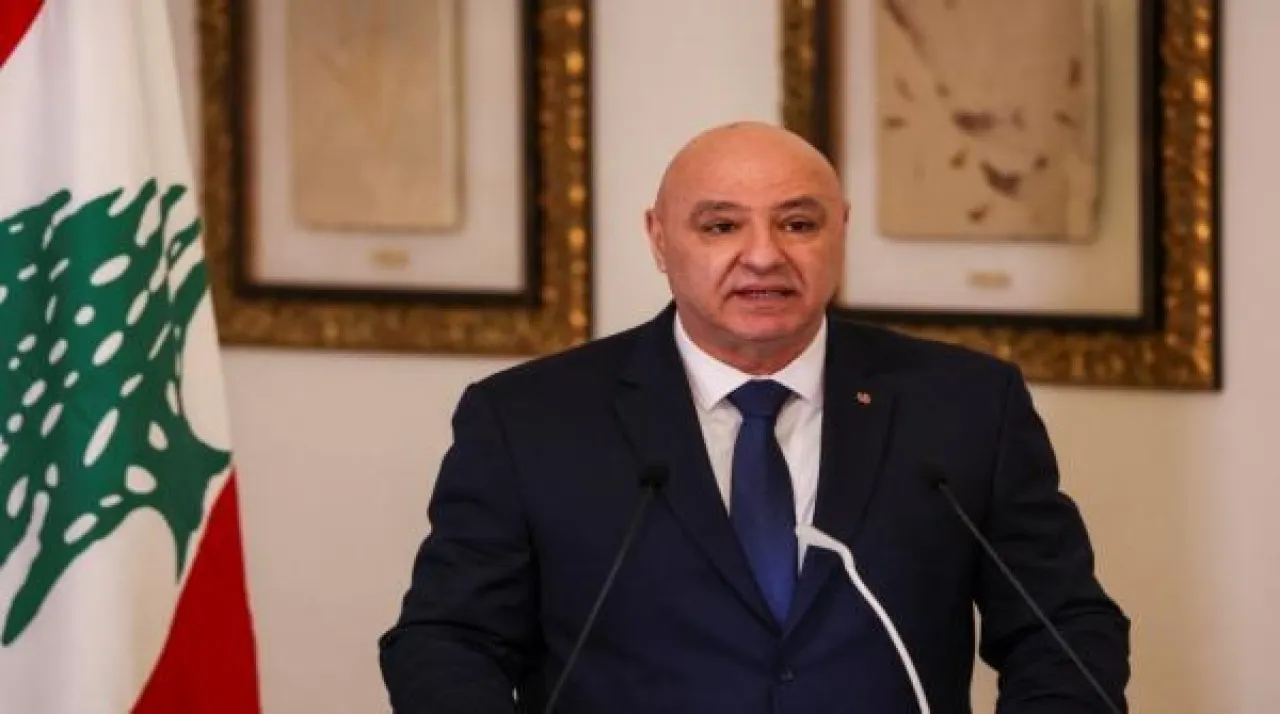
Khaberni - Lebanese President Joseph Aoun, on Thursday, considered that the first session of talks chaired by civilians between Israel and Lebanon was "positive," and should be built upon "to avoid the specter of a second war," with a subsequent session on December 19.
Amid fears of a significant Israeli escalation, a Lebanese and an Israeli civilian delegate participated Wednesday in the meeting of the committee charged with monitoring the ceasefire between Israel and Hezbollah at the headquarters of the United Nations Interim Force in Lebanon (UNIFIL), in the first direct talks between the two countries in decades.
At the conclusion of a cabinet meeting in the Presidential Palace, Information Minister Paul Marcus quoted Aoun saying, "It is obvious that the first session would not be highly productive, but it paved the way for future sessions starting on the 19th of this month."
He emphasized that "the goal is not to target a sector or a segment of the Lebanese as some began to promote, but to protect Lebanon, the whole of Lebanon," adding "until now, the reactions to the first meeting have been positive, and this is what we should leverage to achieve our goal of avoiding the specter of a second war in Lebanon."
Aoun, as conveyed by Marcus, stressed on "the need to prevail negotiation language over the language of war and that there is no concession on Lebanon's sovereignty," asserting "there is no other option but negotiation, and this is the reality and what we have learned from the history of wars."
He mentioned that the directives of the Lebanese government to the former ambassador Simon Karam who was appointed head of the delegation Wednesday, "focus on security negotiation, which means stopping aggressions, withdrawing from occupied points, demarcating borders, and returning prisoners, and nothing beyond that."
Aoun plans to inform representatives of the member states of the Security Council visiting Beirut on Friday that "the international community and primarily the United States should work towards successful negotiations by asking Israel to engage with a positive and serious spirit."
He reported that the delegation will visit southern Lebanon adjacent to the border with Israel, where the Lebanese army is supposed to complete by the end of the year, the first phase of a plan to dismantle military installations belonging to Hezbollah.
Karam and Yuri Resnik, senior director for foreign policy at the Israeli National Security Council, joined the ceasefire monitoring committee meeting on Wednesday, attended by US envoy Morgan Ortagus. This step was welcomed by the United States and France, participants in the ceasefire monitoring committee.
Israeli Prime Minister Benjamin Netanyahu’s office on Wednesday stated that the talks “took place in a positive atmosphere," noting that "an agreement was reached on formulating ideas to enhance possible economic cooperation between Israel and Lebanon," emphasizing that "disarming Hezbollah is inevitable."
Israel and Hezbollah reached a ceasefire agreement, under American and French sponsorship, on November 27, 2024, after a year of bloody confrontation that began when Hezbollah opened what it called a "support front" from southern Lebanon to aid Palestinians in the war in the Gaza Strip.
Despite the agreement, Israel still conducts daily air raids on various areas in Lebanon and has maintained its forces in 5 highlands in the south.
The Lebanese authorities have approved a plan for Hezbollah disarmament in accordance with the agreement, and the army has begun implementation. However, Washington and Israel are pressing to accelerate the process, which faces numerous challenges, including internal divisions on this topic.