Khaberni - The Parliamentary Financial Committee, chaired by MP Nimr Al-Saleihat, discussed on Wednesday the budget of the Ministry of Tourism and Antiquities, the Department of Antiquities, the Jordan Museum, and the Madaba Institute of Mosaic Art and Restoration for the fiscal year 2026.
This was during a meeting attended by the Minister of Tourism and Antiquities Imad Hijazin, Secretary-General of the Ministry Yazan Al-Khudair, Director General of the Department of Antiquities Fawzi Abudanah, Director General of the Jordan Museum Ihab Amarin, Director of the Madaba Mosaic Institute Ahmad Al-Amayreh, and Acting Director General of the General Budget Department Ayman Abu Al-Rub.
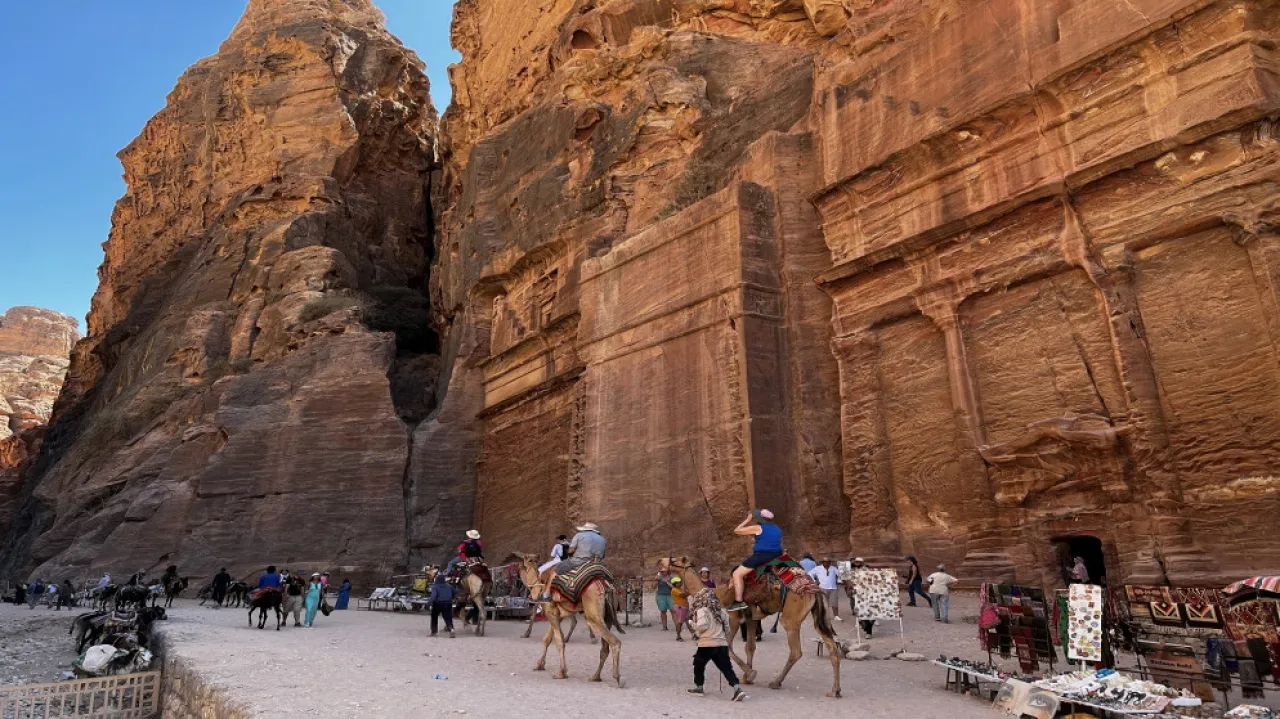
Al-Saleihat emphasized the importance of the tourism sector to the national economy, noting Jordan's historical diversity and prominent archaeological sites led by Petra and historical castles. He outlined that the Department of Antiquities, operating under the Antiquities Law since 1988, maintains archaeological sites, explores new sites, prepares them for tourism, and organizes services and permits as well as hosting exhibitions and implementing internationally funded projects.
He also revealed plans to study the possibility of opening some sites needing infrastructural development to the private sector within agreements ensuring their protection and maintenance.
Al-Saleihat noted that the budget of the ministry and the department amounted to about 16.3 million Jordanian dinars, with an increase of 900,000 dinars, mostly in current expenses, affirming the continuous monitoring of these expenses on the department's performance.
For his part, Hijazin reviewed the budget and plans of the ministry for the coming year, explaining that Arab tourists, especially those coming from the Gulf Cooperation Council countries and Jordanian expatriates, constitute about 75% to 80% of the total incoming tourists, while tourists from Europe and the United States do not exceed 15%.
He added that foreign tourists contribute to stimulating economic activity on a broader scale due to their movement between provinces.
He also reviewed the efforts made to develop the tourism product and enhance the competitiveness of the sector.
For his part, Abudanah confirmed the ongoing implementation of the department's tasks according to the Antiquities Law, including maintenance, exploration, service development, and benefiting from internationally funded projects, with exploring the possibility of offering sites in need of additional infrastructure to the private sector under agreements that ensure their safety.
Ihab Amarin highlighted the cultural and tourism importance of the museum, pointing out the need for greater support for maintenance and facilities, development of activities, and enhancement of staff efficiency.
He noted that the museum's budget reached 1.1 million Jordanian dinars, with an increase of 111,000 dinars in current expenses, due to the expansion of maintenance operations, operations, and service improvements.
Ahmad Al-Amayreh explained that the institute works to preserve architectural and artistic heritage and restoration, emphasizing its role in preparing specialized technical staff since its establishment in 2007.
Meanwhile, committee members called for the development of tourist infrastructure across various provinces, enhancement of services at archaeological and natural sites, easier access, and empowering local communities in managing tourist initiatives, besides adopting modern marketing strategies to highlight the diversity of the Jordanian tourist product, including adventure tourism, environmental tourism, and cultural tourism, to increase visitor numbers and boost the sector's contribution to economic growth.