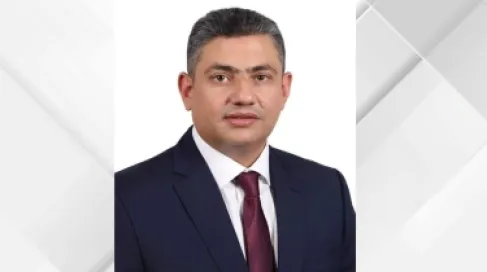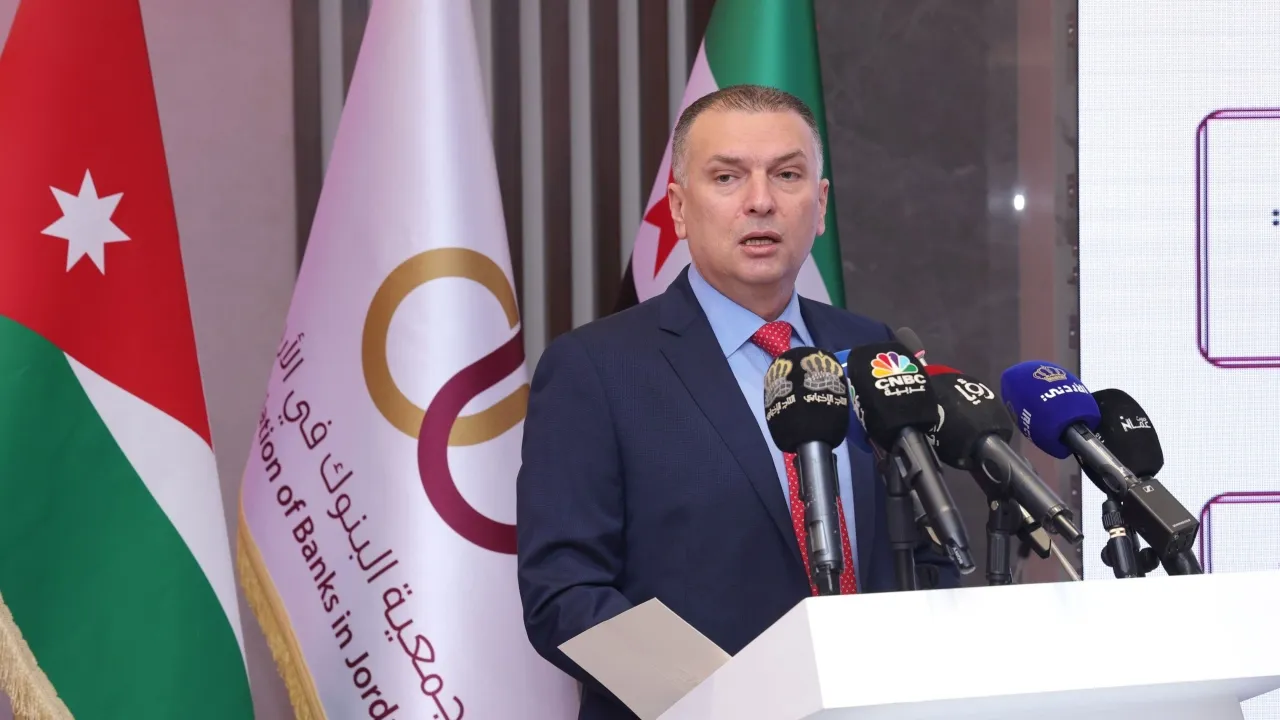
Dr. Adel Sharkas, the Governor of the Central Bank, confirmed that Jordanian banks are in a position that qualifies them to support reconstruction and development efforts in the Syrian economy, especially with the current operation of three Jordanian banks in the Syrian market.
This was stated during the Jordanian-Syrian Banking Summit held by the Association of Banks in Jordan on Wednesday, sponsored by Sharkas and the Governor of the Central Bank of Syria, Dr. Abdul Qader Hosriya.
Sharkas said during the summit, attended by the Minister of State for Economic Affairs, the head of the economic team, Dr. Mohannad Shehadeh, the chairpersons of the boards of directors and general managers of banks, the Jordan Chamber of Commerce and Industry of Amman, regulatory authorities, the Securities Authority, the foreign exchange and insurance sectors, that expanding and deepening this presence will directly contribute to transferring accumulated banking expertise to the Syrian banking sector and developing financial products and services that meet the requirements of the current stage.
He pointed out the broad prospects and promising unlimited opportunities for cooperation to transfer Jordan's experience in the banking sector and digital financial services and financial technology to the Syrian side, enhancing the modernization of the Syrian banking sector and contributing to increasing its integration into regional and international financial markets, tightening financial and banking linkage between the two countries, and supporting efforts aimed at reconstruction and achieving sustainable economic development in Syria.
He explained that Jordan has achieved a success story and a qualitative leap in the field of digital financial services and electronic payment, reflecting indicators related to the spread of electronic banking channels and the growing use of digital payment tools.
Sharkas confirmed that this progress was driven by the widespread adoption of internet banking and mobile banking services, which contributed to enhancing financial inclusion, improving the efficiency of service delivery, and enhancing the quality of banking services provided to individuals and the business sector alike.
He pointed out that the ongoing economic recovery path in the Syrian Arab Republic, alongside the steps taken to reintegrate Syria into regional and global markets and the international financial system, removing restrictions, and the return of Syrian institutions, notably the Central Bank of Syria, to operate within the regional and international financial systems, creates opportunities to open new prospects for trade and investment, and to enhance economic development trajectories, and support higher levels of stability and prosperity.
Sharkas confirmed that the doors of the Central Bank are open for entering into close cooperation with the Central Bank of Syria, including transferring accumulated Jordanian expertise in financial, banking, and regulatory fields, and enhancing the capacity and resilience of the Syrian financial system and opening new channels for economic and financial cooperation between the two countries.
He indicated that banks in Jordan have managed to mobilize savings of about 49.3 billion dinars, granted credit facilities of about 36.2 billion dinars, and have a presence in 16 countries, and that four Jordanian banks are listed among the top 1000 banks in the world, according to financial results for 2024.
Sharkas explained that the Jordanian banking sector has proven at various stages its ability to absorb shocks and emerge stronger by developing innovative financial solutions that enhanced its efficiency and ability to keep up with global financial and technological developments.
He pointed out that the volume of trade between Jordan and Syria has seen a significant rebound during the first three quarters of 2025, reaching about 400 million US dollars, reflecting a positive trend paving the way for further expansion and diversification in areas of cooperation in the coming period.
He said that the economic relations between Jordan and Syria hold a special significance, based on the historical, geographical, and social bonds that unite the two countries, which makes economic cooperation between them a joint lever for growth and sustainable development, aligning with the visions and directives of the brotherly leaderships of the two countries aimed at deepening cooperation and joint work at various levels.
From his part, Basem Khalil Al-Salem, the chairman of the board of directors of the Association of Banks, affirmed that the meeting of Jordanian and Syrian banking and economic leaders under one roof represents a clear translation of a political and economic will aimed at building a deeper and more systematic cooperation phase between the two countries.
He said that the opportunity appears favorable for deepening cooperation not only at the government level but also through the private sector, particularly banks, which possess the ability to play a pivotal role in supporting economic integration and rebuilding ties that were affected during the past years.
Al-Salem emphasized that the Jordanian vision towards Syria aligns with what His Majesty King Abdullah II has repeatedly affirmed about the need to stand by the Syrian people and support their efforts to regain stability and prosperity.
He explained that over the past decades, the Jordanian banking sector has proven its commitment to international standards, maintaining strong levels of capital, liquidity abundance, asset quality, and effective governance, factors that contributed to achieving stability and supporting economic growth.
Al-Salem pointed out that this resilience resulted from the effective supervision exercised by the Central Bank of Jordan over more than half a century, alongside the qualified workforce in the banking sector.
Al-Salem explained that the Jordanian banking sector stands today on the threshold of an advanced stage, confidently moving towards digital banks, enhanced by artificial intelligence, instant payments, and advanced compliance systems, making it a natural and deserving partner to support the development of financial sectors in the region.
He affirmed that the challenges facing Syria are significant, but the opportunities that the next stage holds are broader and more diverse, whether in the sectors of energy, transport, agriculture, industry, trade, and services, or in the huge financing needs for reconstruction and restructuring the banking sector, developing technical systems, and building human capital.
Al-Salem announced that the Jordanian banking sector is putting its expertise, institutional capabilities, and long experience at the disposal of our brothers in Syria, proposing a framework for Jordanian-Syrian banking dialogue based on practical principles, including the formation of a joint banking committee, providing a safe and transparent environment for attracting financing, expanding banking partnerships, enhancing digital and technical integration, developing compliance and governance mechanisms, exchanging data, and establishing a joint vision for a modern banking sector in Syria capable of supporting reconstruction and sustainable development.
On his part, Dr. Abdul Qader Hosriya, the Governor of the Central Bank of Syria, noted that the meeting comes at a critical stage where the global economy experiences major transformations related to political fluctuations, inflation cycles, supply chains, and rapid developments in financial technology.
He said that banks in Syria and Jordan played a significant role in maintaining financial stability and providing financing for the productive sectors, supporting bilateral trade, and developing digital infrastructure during the past years, pointing out that this meeting lays the foundation for a new phase of integration between the two countries.
Hosriya explained that exchange rate stability and effective monetary policy are essential for any investment environment, and that the Central Bank of Syria is working to enhance its monetary instruments, improve reserve management, develop cash flow monitoring systems in cooperation with international institutions, update banking legislations to conform to global standards in governance and credit regulation, and develop the financial infrastructure by updating the real-time settlement system, launching a national banking network center, implementing a national credit rating system, and reinforcing cybersecurity.
He pointed to the importance of practical cooperation between Jordanian and Syrian banks, through developing settlement and money transfer channels, launching joint financing programs for industries, agriculture, energy, and transport sectors, exchanging expertise in risk management, enhancing financial inclusion and digital transformation, and organizing joint meetings to identify financing needs.
Hosriya affirmed that Syria is now entering a new phase of rehabilitating facilities and expanding the production base, mentioning vast investment opportunities in food and manufacturing industries, modern agriculture, energy, construction, transport, and technology, calling for banking partnerships to turn these opportunities into actual projects.
Concerning joint financing mechanisms to transform these opportunities into actual projects, Hosriya said that banks in Syria and Jordan have the ability to establish effective financing mechanisms, such as: bilateral financing programs for productive projects, a joint investment fund for agricultural and industrial sectors and energy, credit lines for bilateral trade, and document credits facilitation, and joint credit guarantees in partnership with Arab institutions.
He pointed out that these partnerships will enable the two countries to increase production, expand markets, create job opportunities, and enhance the competitiveness of vital sectors.
Hosriya said that the opportunities available to us today are significant and promising, and the Syrian-Jordanian banking cooperation can be a real lever to achieve stability and growth.
In turn, Dr. Maher Mahrouq, General Manager of the Association of Banks in Jordan, gave a comprehensive presentation about the reality of the Jordanian banking sector, affirming that it is one of the most important pillars of the national economy and among the most organized sectors thanks to the advanced regulatory framework led by the Central Bank of Jordan.
He explained that the sector consists of 15 Jordanian banks and five foreign banks including Islamic and commercial banks, and the number of branches and scale of facilities make it capable of efficiently meeting the financing needs of the economy.
Mahrouq pointed out that the sector is distinguished by the diversity of its services and its ability to reach different community segments, with a system of modern banking services content by digital transformation and compliance with cybersecurity standards, noting that 84 percent of the services today are offered through electronic channels.
He indicated that the size of the sector's assets equals the gross domestic product, the size of deposits reaches 112 percent of the product, while credit facilities approach 50 billion dollars, indicating that the banking sector is one of the main drivers of economic growth, and the soundness of financial indicators in terms of capital adequacy, liquidity, and non-performing loan ratios reflect the reputation of the Jordanian banking sector and the confidence of international institutions in it.
The summit, which reflected the level of representation in it the shared desire to launch a new stage of financial and banking cooperation between the two countries, in line with the regional economic developments and the reconstruction process in Syria, concluded with affirming that the upcoming stage will witness practical steps to enhance Jordanian-Syrian banking cooperation, through forming joint committees, launching financing programs, exchanging expertise, developing technical systems, creating a safe and transparent financial environment, and contributing to supporting reconstruction in Syria and enhancing economic integration between the two countries.