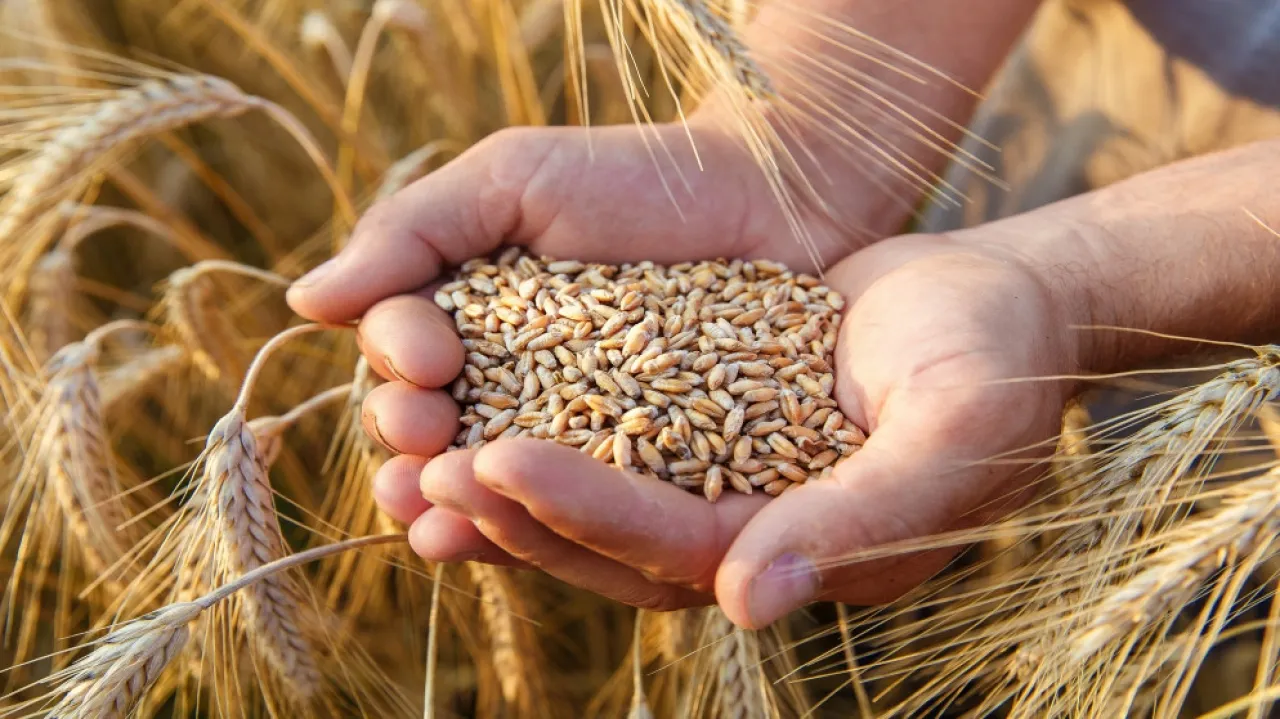
Khaberni - Scientists from the University of California, Davis have developed a new type of wheat capable of producing part of its natural fertilizer itself, which could reduce reliance on chemical fertilizers and minimize environmental pollution, and represents a promising step towards enhancing global food security.
The modified wheat works by releasing a natural compound known as apigenin, which stimulates bacteria in the soil to convert atmospheric nitrogen into forms absorbable by plants. This process is known as nitrogen fixation, a natural method relied upon by a limited number of plants such as legumes, but previously unavailable to wheat, according to scitechdaily.
The project was led by Professor Eduardo Blumwald, a distinguished researcher in the Department of Plant Sciences at the University of California. His team used the CRISPR gene-editing technology to enhance the plant's production of this compound. When the plant secretes excess apigenin into the soil, it helps form biolfilms for the bacteria, providing a low-oxygen environment that allows the bacteria to fix nitrogen for the plant, according to scitechdaily.
Experiments showed that the modified wheat achieves higher yields compared to traditional wheat when crops are grown in low nitrogen fertilizer conditions. This means that farmers can reduce the use of fertilizers by up to 10%, potentially saving billions of dollars annually on a global scale. In the United States alone, farmers spent about 36 billion dollars on fertilizers in 2023.
Scientists believe that this innovation could be decisive for farmers in developing countries, where fertilizer costs are high and farms are small.
Blumwald says, "Imagine growing crops that stimulate soil bacteria to naturally produce the fertilizer they need. This will change the reality of agriculture in resource-limited areas."
The team adds that the research represents a continuation of earlier advances in rice cultivation, with plans to apply the same approach to other grain crops.
Estimates indicate that wheat consumes about 18% of the world's nitrogen fertilizers, yet plants typically absorb only 30 to 50% of the nitrogen, with the rest leaching into the water, causing "dead zones" and producing greenhouse gases such as nitrous oxide. Thus, this modified wheat can reduce the environmental damage associated with traditional agriculture.
The results of the study were published in the journal Plant Technology, supported by Bayer Crop Science and the Will Lester Foundation at the University of California. A patent application is under review.
This innovation represents an important step towards more sustainable, economical, and secure agriculture, demonstrating how modern science can transform traditional crops into tools for environmental protection and achieving global food security.