Khaberni - The House of Representatives holds its first monitoring sessions in its second term
Creation date 15:56:11 01-12-2025 Last update 16:05:20 01-12-2025
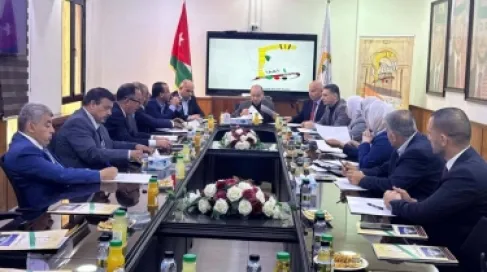
The House of Representatives, on Monday, held its first monitoring session in the second ordinary session, chaired by the Speaker of the House Mazen Al-Qadi, and attended by Prime Minister Jafar Hassan and members of the government team, to discuss parliamentary questions and government responses.
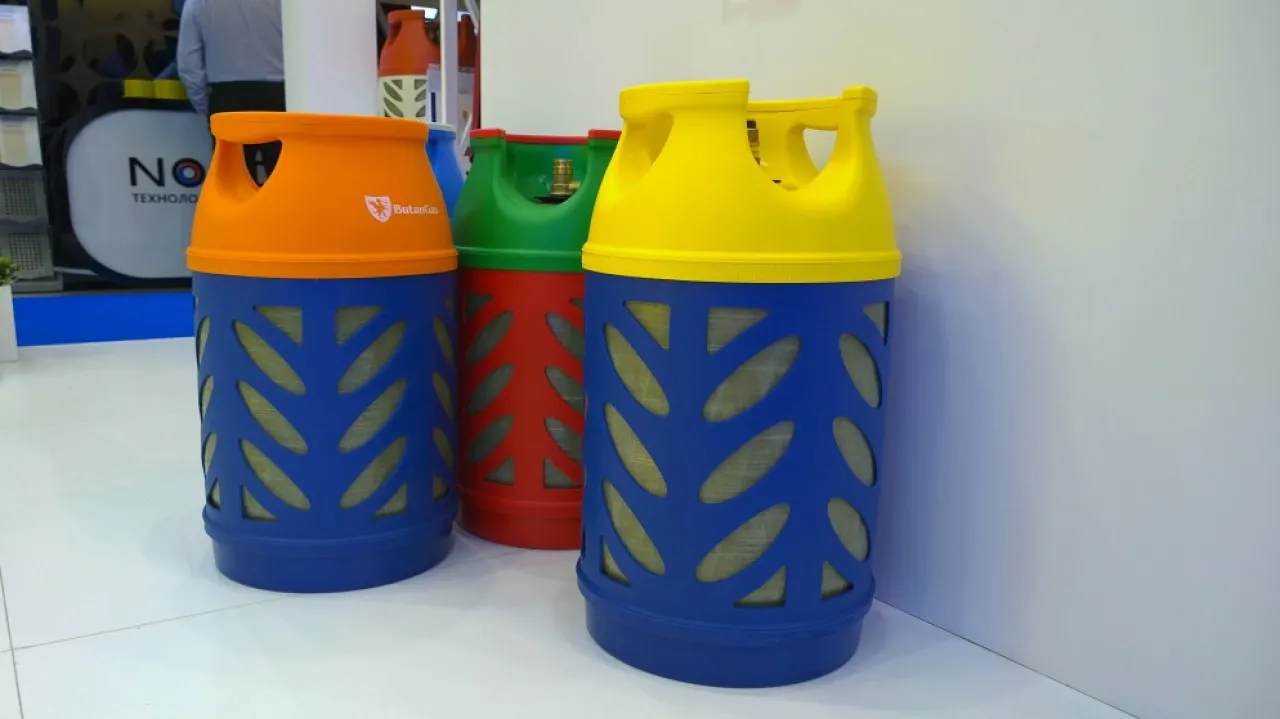
During the session, which was chaired by the first deputy of the House Speaker Khamees Atiyah, MP Zaki Bani Melhem decided to turn his question into an interrogation, concerning "fitted (plastic) gas cylinders".
Minister of Energy and Mineral Resources, Saleh Al-Kharabsheh, in his response to the question, confirmed that the government will not allow the entry of any non-compliant plastic gas cylinders, noting that the Standards and Metrology Institution has inspected 135,000 cylinders so far, out of 200,000 cylinders imported by a company.
He added that the government granted approval for a company to establish a gas filling station with composite cylinders, which is currently in the process of completing licensing requirements, while two other companies have applied for the license.
Similarly, MP Suleiman Al-Zaben was satisfied with the written answer received from the Minister of Digital Economy regarding his question comprising 14 items, primarily: the existence of clauses in contracts that allow the government to cease any company's operation in case of repeated violations, and the possibility of increasing competition in the telecommunications market to ensure fair pricing.
MP Jamil Al-Dheisat also posed a question to the Ministry of Agriculture regarding its plan to compensate farmers and livestock breeders for the delayed rainy season.
The Minister of Agriculture, in his written response, stated that the ministry, through the Agricultural Risk Management Fund, compensates in the event of the following agricultural risks: drought, snow, heavy rain, hail, storms, floods, frost, pests, affecting both the plant and animal wealth sectors, according to the system for compensating farmers affected by agricultural risks number 57 of 2023.
He added: "We work on educating farmers on the importance of taking necessary precautions against risks they might face, minimizing their impacts, and encouraging them to adopt modern agricultural methods."
MP Musa Al-Wahsh asked why municipalities are not required to have internal monitoring units responsible for tracking violations.
Minister of Local Administration, Walid Al-Masri, explained that 2000 municipal employees have been trained on internal control tasks, noting that the ministry coordinated with the Audit Bureau on training and qualifying municipal employees according to international standards and the bureau's standards.
Al-Masri mentioned that the ministry increased the number of monitoring units to 23 active control units, and their number in municipalities rose to 81 units, with central control units established in provinces linked to remote municipalities due to their weak staffing and lack of specializations.
Regarding MP Khader Bani Khalid's question about Al-Akeider landfill for liquid and solid waste, Al-Masri said that the ministry, according to the work plan of the National Strategy for Municipal Solid Waste Management for the years 2015–2034, prioritized the development of Al-Akeider landfill into a sanitary landfill.
He added that three sanitary cells were constructed with a grant from the European Union and the Canadian government, according to international standards, and include pipes for future methane gas extraction.
He pointed out that a contract for the development and rehabilitation of Al-Akeider landfill project was signed, and after the project is completed, landfilling will return to environmentally sound conditions.
About the residential clusters affected by the landfill, Al-Masri explained that an environmental impact study was prepared before the tender was issued, adding that the ministry paved roads, established a park, and secured funding for a health center, while environmental impact studies continue.
MP Mohamed Salama Al-Ghawiri requested information on the number of day laborers and sanitation workers who were appointed in municipalities and joint service councils between 2023 and 2024.
Al-Masri, in a written response, indicated that the number of employees appointed in municipalities amounted to 1814 workers in 2023, and 47 workers in 2024, reaching a total of 1861 workers.
As for the joint service councils, the number of appointed workers was 344 in the year before last, and 302 last year, making a total of 646 workers.
Regarding the unpermanent workers in municipalities and joint councils, Al-Masri pointed out that their number is about 8,000 workers, noting that some engage in cleaning, agriculture, lighting, or maintenance tasks, while others are tasked with administrative roles and hold educational qualifications.
He confirmed that the actual number of working employees varies between 4200 and 4300 workers, and their names have been submitted to the Civil Service Bureau for their confirmation.
Meanwhile, MP Rania Ab