Khaberni - An Israeli report detailed the magnitude of the ongoing transformations within a broad project launched by Washington under the name "New Gaza," a plan in which Israel and the United States are participating to "decide the battle with Hamas".
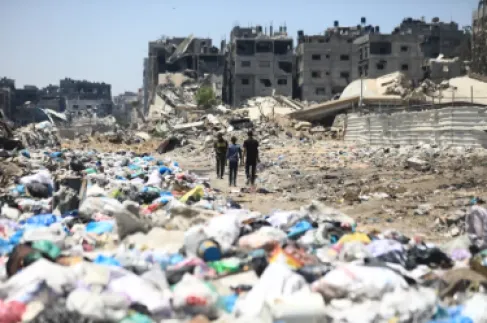
During a tour conducted by Israeli correspondents in the "Morag" axis between Khan Yunis and Rafah, large quantities of food were seen scattered on the roads, including tons of flour and food cans. The Israeli army justified this by saying they "fell from aid trucks," while other officers speculated they might have been looted by local groups. These scenes highlight the comprehensive failure in the humanitarian aid system in the sector.
American headquarters in Kiryat Gat are working in cooperation with the Israeli command to implement the first phase of the project in Rafah, which includes the establishment of "temporary neighborhoods" in the open areas east of Rafah, supervision by an international force named "ISF" over security and management, building a comprehensive infrastructure including schools, medical centers, mosques, and service networks, and relocating tens of thousands of Palestinians from camps to these neighborhoods in exchange for providing temporary job opportunities.
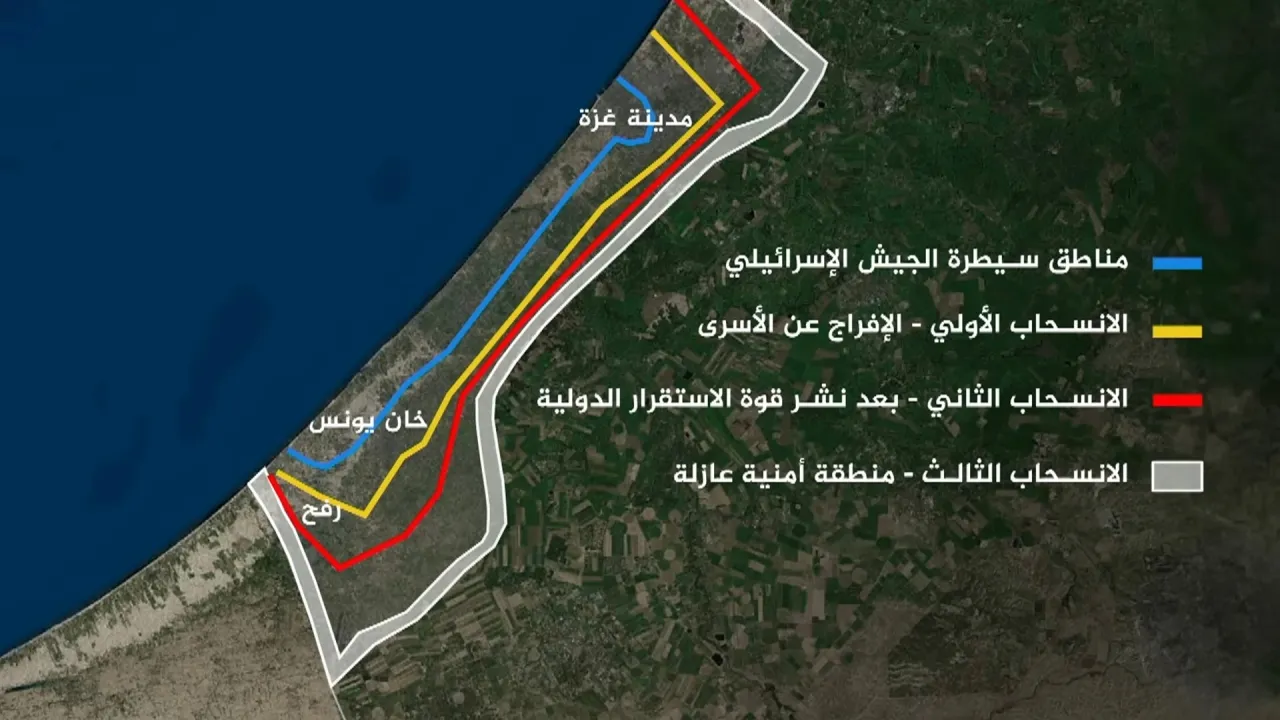
According to the report, the areas under Hamas control will be completely isolated from humanitarian aid and reconstruction projects. The Israeli army plans to establish advanced checkpoints on the "yellow line" boundary to prevent the infiltration of Hamas elements or the smuggling of weapons.
The plan aims to relocate about two million Palestinians to new residential areas under American-Israeli surveillance, with plans to build permanent residential settlements with Gulf funding later. The Israeli army is working to force Hamas fighters out above ground through concentrated operations in Rafah and Khan Yunis.
Despite the project's high ambition, it faces significant obstacles, as the international force has not yet been formed, and no countries have announced their readiness to participate, and Gulf funding is still not guaranteed. The success of the project remains dependent on political developments and the continuation of the fragile ceasefire.
This plan reveals a radical attempt to reshape the demographic and political reality in the Gaza Strip, but its ability to change the facts on the ground remains questionable in light of existing practical and political challenges.