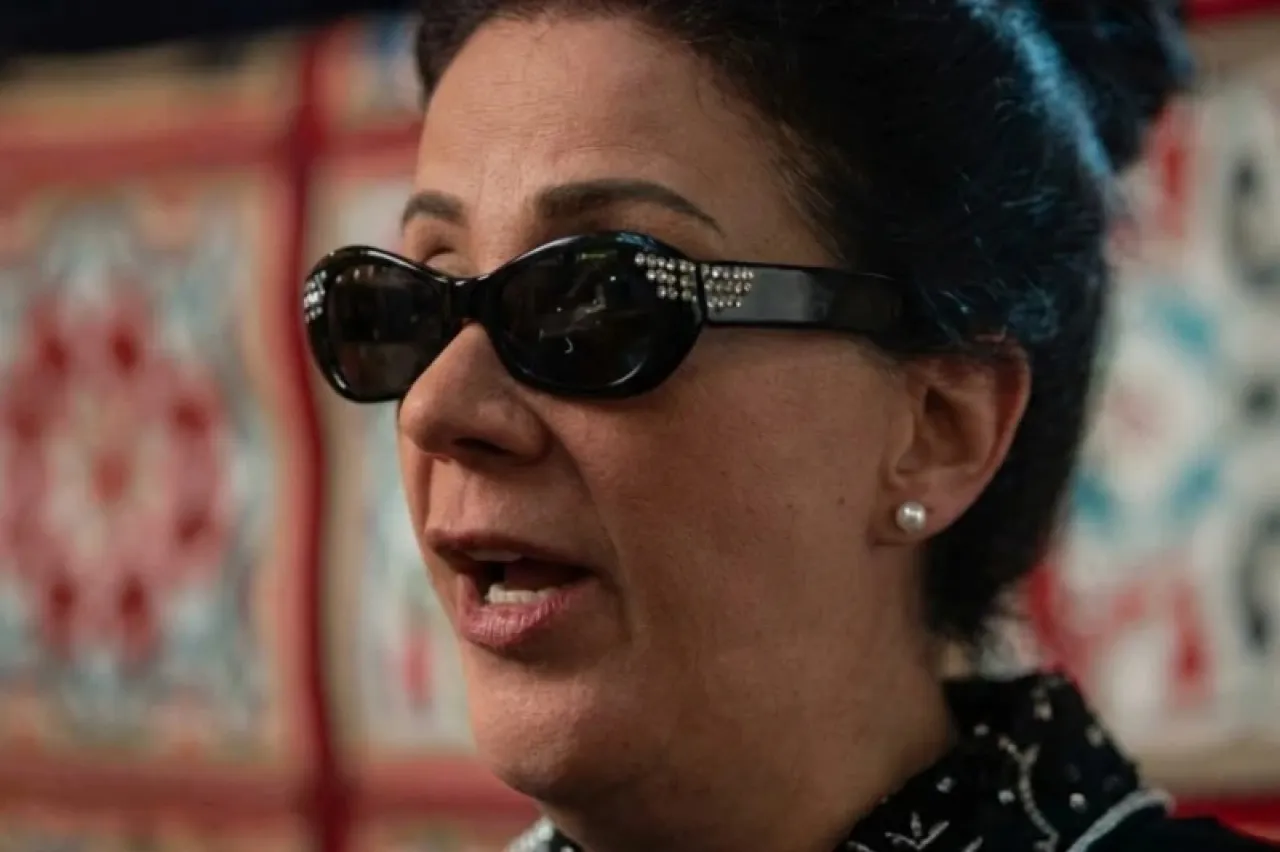
Khaberni - The team of the Egyptian film "El Sett" had just revealed the promotional trailer for the movie, which depicts the life of "The Star of the East," Umm Kulthum, portrayed by the Egyptian actress Mona Zaki, when social media became abuzz with various opinions.
The film presents a cinematic vision of the life of "The Star of the East" through a screenplay written by Ahmed Murad and directed by Marwan Hamed, featuring many stars of Egyptian cinema, including Ahmed Khaled Saleh, Sayed Ragab, Amr Saad, and Ahmed Dawood, along with guest appearances by stars such as Karim Abdel Aziz, Ahmed Helmy, and Nelly Karim.
Although the film will officially premiere in cinemas on December 10th, some social media users have already started commenting on the resemblance between the actress Mona Zaki and Umm Kulthum.
Amani Emad stated, "Despite my great love for Mona Zaki and her talent, passion, and diligence, her appearance in the promo was not convincing at all... No makeup, look, or voice could bring her closer to Umm Kulthum in any way."
However, the Egyptian journalist Wael El-Samry expressed his admiration for the promotional trailer and commented on the resemblance between the Egyptian actress Mona Zaki and Umm Kulthum, saying, "I don’t think the resemblance that people talk about is very important because Umm Kulthum's character needs to be portrayed by a major actress, or the choices will remain limited," urging respect for the filmmakers, whom he described as creating a work of art that "depicts the biography of the greatest artist in our modern history."
The debate did not stop there; some went on to compare the promotional trailer of the film with the "Umm Kulthum" series aired in 1999, where the then actress Sabreen portrayed her and was considered to closely resemble Umm Kulthum, unlike, according to them, Mona Zaki.
Eihab Ahmed Tawfik commented, "The 'Umm Kulthum' series is over a quarter century ago, more than 25 years, imagine. So naturally, people will critique how Mona Zaki looks now... With all the advancements and development that occurred in the past quarter century, it would have been easier to try and achieve a reasonable resemblance with makeup so that viewers feel that yes, she now looks somewhat like Umm Kulthum."
In turn, Sabreen told Egyptian media during her candidacy to play Umm Kulthum in the series aired in 1999, she faced significant criticism then, adding that she trusts the performance of the Egyptian actress Mona Zaki as Umm Kulthum.
About choosing the actress Mona Zaki to portray the character, the film's writer, Ahmed Murad, said in a talk with Egyptian media, "The role needs a capable actress, and not just the appearance, and the actor should remain true to their personality and should not change," adding that he could have hired "extras" (minor characters) wearing a mask resembling Umm Kulthum, but he chose the Egyptian actress for her "acting capabilities we needed."
He explained that what was needed was someone who could master portraying Umm Kulthum's emotions.
"Not the First Attempt"
And the movie "El Sett" is not the first dramatic attempt to portray the life of Umm Kulthum, as there have been numerous prior works that have become part of the artistic memory in Egypt and the Arab world.
The 1999 series "Umm Kulthum," directed by Inaam Mohammed Ali and starring Sabreen, was the most notable work in this respect, providing a detailed treatment of the career of "The Star of the East" and gaining extensive popularity that still resonates with the audience.
Egyptian cinema has also explored some aspects of Umm Kulthum’s life without presenting a complete biography, such as the movie "Fatma" (1947) in which she participated herself, associated with a particular stage of her artistic development. Her biography also appeared in a series of films and documentary programs produced by Egyptian television and various cultural organizations over the past decades. In contrast, the movie "Star of the East" (1999) starring actress Firdous Abdel Hamid did not achieve the anticipated success and received broad criticism.
Film "El Sett" aims to present a different cinematic approach, relying on modern visual language and advanced techniques in cinematography, makeup, and historical documentation, distancing itself from the traditional style that characterized previous works.
The Egyptian singer Umm Kulthum, who was nicknamed "The Lady of Arab Singing" and "The Star of the East," was born in 1910, and since her childhood, she exhibited extraordinary singing talent, paving the way for a vocal career that extended over decades when she began singing with her father at local festivals, weddings, and special occasions in the villages and cities of the Egyptian Delta until her last illness in 1972.
For about 30 years, Egyptian radio broadcasted her monthly concerts live every Thursday night, reaching millions of listeners across the Middle East. She sang several poetic works by prominent poets, including Abu Firas al-Hamdani and Omar Khayyam.
Umm Kulthum also sang in Paris at the Olympia Theater following the 1967 war defeat to support the war effort.
When she passed away in 1975, many attended her funeral, and the Egyptian state then held a military funeral for her.