Khaberni - Signing of a twinning agreement between "Amman Industry" and "Damascus and its Countryside Industry"
Al-Jaghbeer: Developing the relationship between the chambers contributes to enhancing economic exchange between the two countries.
Moulawi: The relationship with Jordanian industrialists should be complementary, not competitive.
Engineer Fathi Al-Jaghbeer, president of both the Amman and Jordan Chambers of Industry, emphasized the importance of enhancing economic relationships between Jordan and Syria, especially since the two countries share a deep-rooted historical relationship, making them a strategic depth and economic complement to each other.
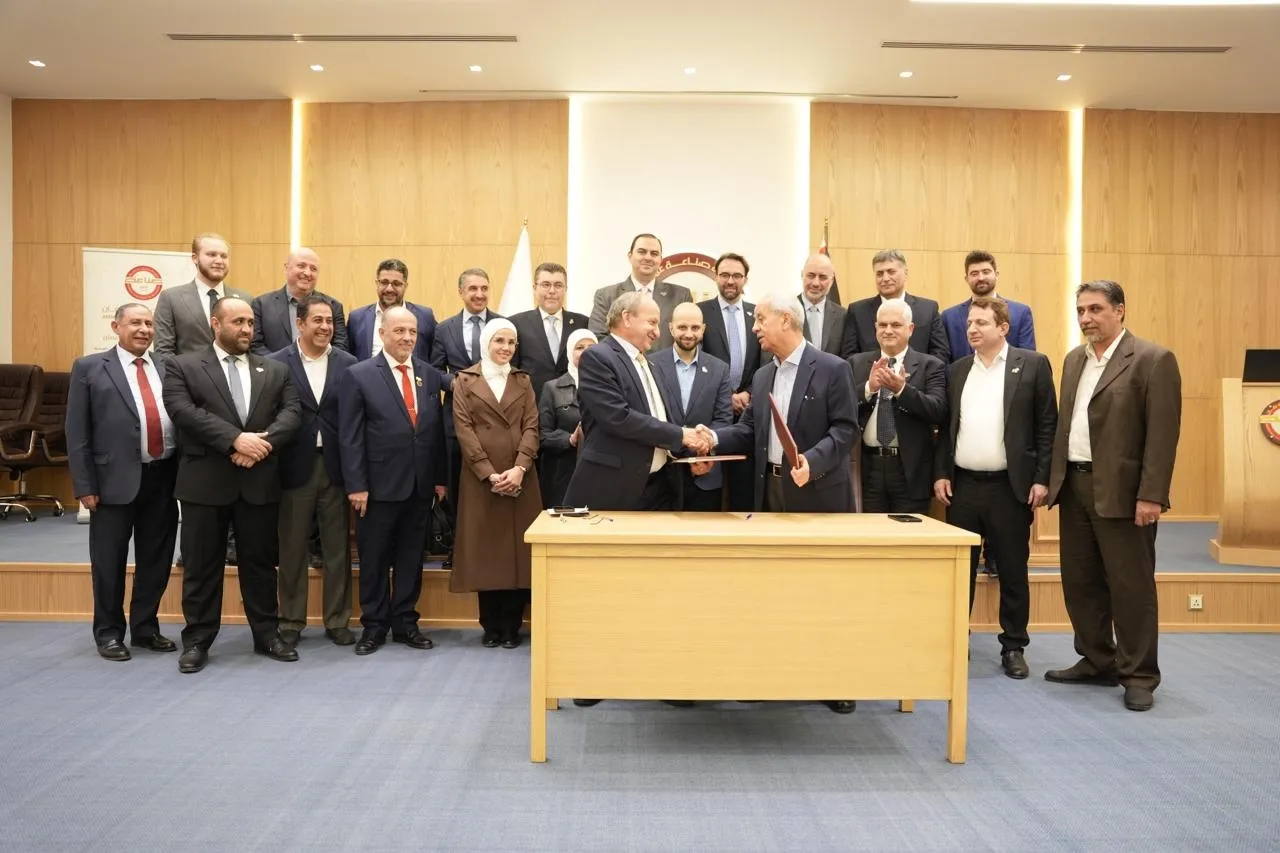
Al-Jaghbeer explained during the signing of the twinning agreement between the Amman Chamber of Industry and the Damascus and its Countryside Chamber of Industry, on Sunday, at the Amman Chamber of Industry building with several board members and directors of both chambers in attendance, that the Jordanian industrial sector looks forward to growing and integrated economic relationships through creating an environment for more joint ventures in both countries, overcoming any challenges to enhancing trade exchange, emphasizing that developing the relationship and communication between the chambers in both countries contributes to enhancing economic exchange between them.
Al-Jaghbeer stated that all Jordanian businessmen from different economic sectors are ready to work with their counterparts in the Syrian market as partners in expertise, work, and capital in the reconstruction phase, especially since a large number of Syrian industrialists have moved their factories to Jordan and have proven successful. Their expertise could also benefit the Syrian market in the reconstruction process. Additionally, Jordan's geographical proximity to Syria will contribute to reducing transportation costs and time for exporters to the Syrian market. Furthermore, increased coordination between the two countries will facilitate Jordanian exports to the Balkans and Turkey in addition to Lebanon and will also ease the import of raw materials necessary for Jordanian industries from Syria and other countries.
On his part, Engineer Mohammad Ayman Moulawi, president of the Damascus and its Countryside Chamber of Industry, confirmed that the Syrian private sector believes that the relationship with the Jordanian side should be complementary, not competitive, through joint cooperation and investment. There are many materials and products that Syria needs and Jordan produces, and vice versa, materials that Jordan imports and Syria produces. Thus, it is possible for the private sectors in both countries to collaborate to build a true partnership for the benefit of both parties.
The twinning agreement aims to enhance cooperation between industrialists in the two countries and facilitate the exchange of information and expertise, encourage joint industrial investments and networking between companies, support the establishment of joint economic events including exhibitions, forums, and workshops, activate institutional communication channels between the two chambers, and exchange data related to industrial opportunities, legislation, and available services from both sides.
The cooperation areas include organizing delegations and mutual visits for businessmen and industrialists, exchanging economic studies and reports and information related to the industrial sectors, cooperating in training and capacity building through short programs and specialized workshops, coordinating in organizing local and international exhibitions and facilitating participation opportunities for companies from both countries, supporting industrial networking (B2B) through bilateral meetings between companies, encouraging the establishment of joint industrial projects between members of both chambers, and exchanging institutional expertise related to chamber services and their development.
It was agreed to form a joint follow-up committee consisting of three members from each side, which will oversee the implementation of the agreement's clauses. The committee holds periodic meetings every three months, alternating between Amman and Damascus or via videoconferencing, and submits semi-annual progress reports to both parties.