Khaberni - In a step that enhances the race for development in the world of robotics, researchers in China revealed a new artificial intelligence framework that grants humanoid robots greater ability to perform household tasks with unprecedented effectiveness.
The Wuhan University team confirms that the new system, named RGMP, succeeded in improving the handling skills and manipulation of objects with precision reaching up to 87%, relying on methodologies that require five times less data compared to the current models.
Engineering intelligence enhances the robots' capabilities
Unlike traditional systems that depend on a massive amount of data, the RGMP system is based on integrating machine learning with geometric reasoning, which allows the robot to understand the shape of the object it is dealing with and to make the appropriate decision, whether it needs to grip, push, or pinch the object, even in new and unfamiliar environments, according to a report published by "interestingengineering".
The researchers attribute this development to two fundamental parts in the framework:
Geometric Skill Selector (GSS): Helps the robot choose the type of motion according to the shape of the object and task requirements, in a manner that mimics human thinking.
Adaptive Memory Network (ARGN): Provides the robot with the ability to learn from a very few examples, by storing the spatial memory and updating it during interaction.
Outperforming global models
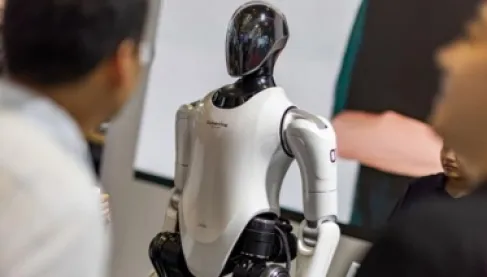
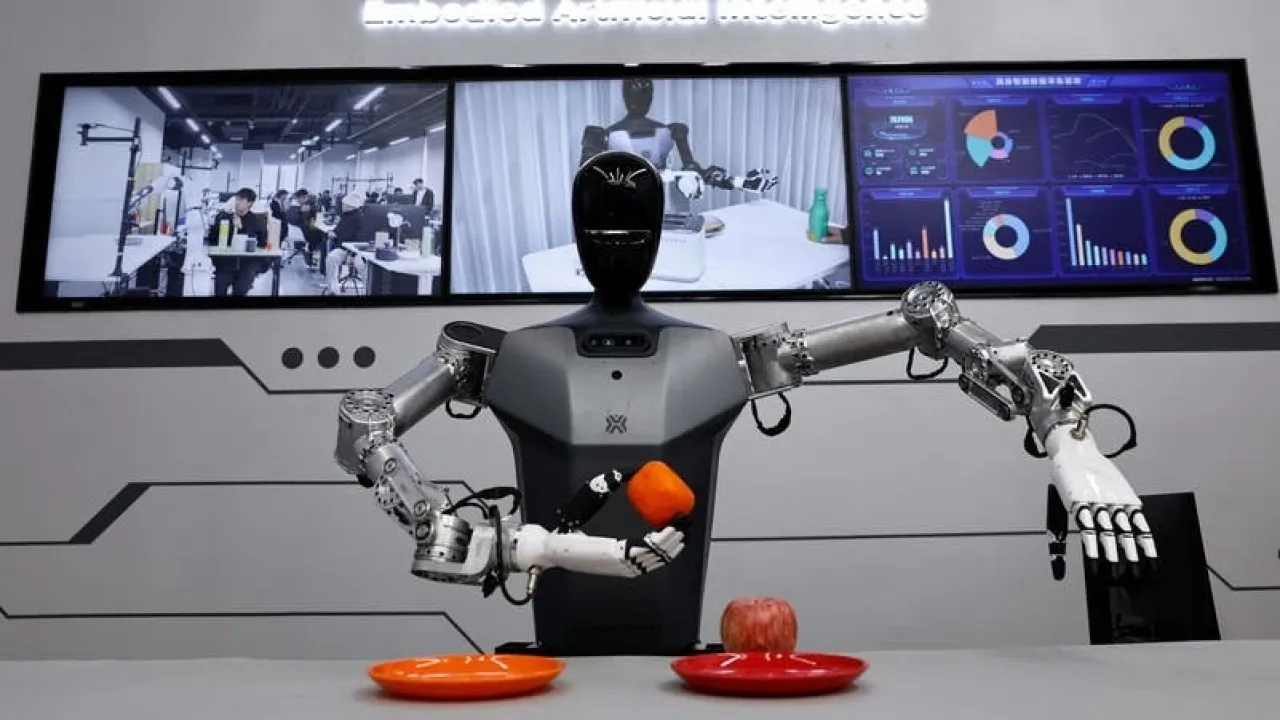
The system was tested on a humanoid robot and another dual-arm robot equipped with cameras, using only 120 demonstrative experiments, and RGMP succeeded in outperforming famous robot models, such as Diffusion Policy, OpenVLA, and ResNet50.
The results showed:
- An increase in skill selection accuracy by up to 25%.
- More stable execution of complex movements.
- The ability to achieve strong results using only 40 training examples, compared to 200 examples needed by other systems.
Step towards smarter and more autonomous robots
The research team believes that integrating symbolic thinking with deep learning is the key to innovating robots that efficiently handle real and changing environments.
The researchers are currently working on developing a future version of the system that can learn a new task from watching just one example.