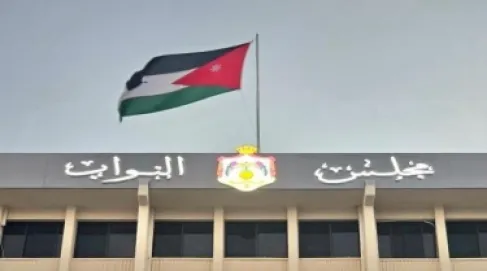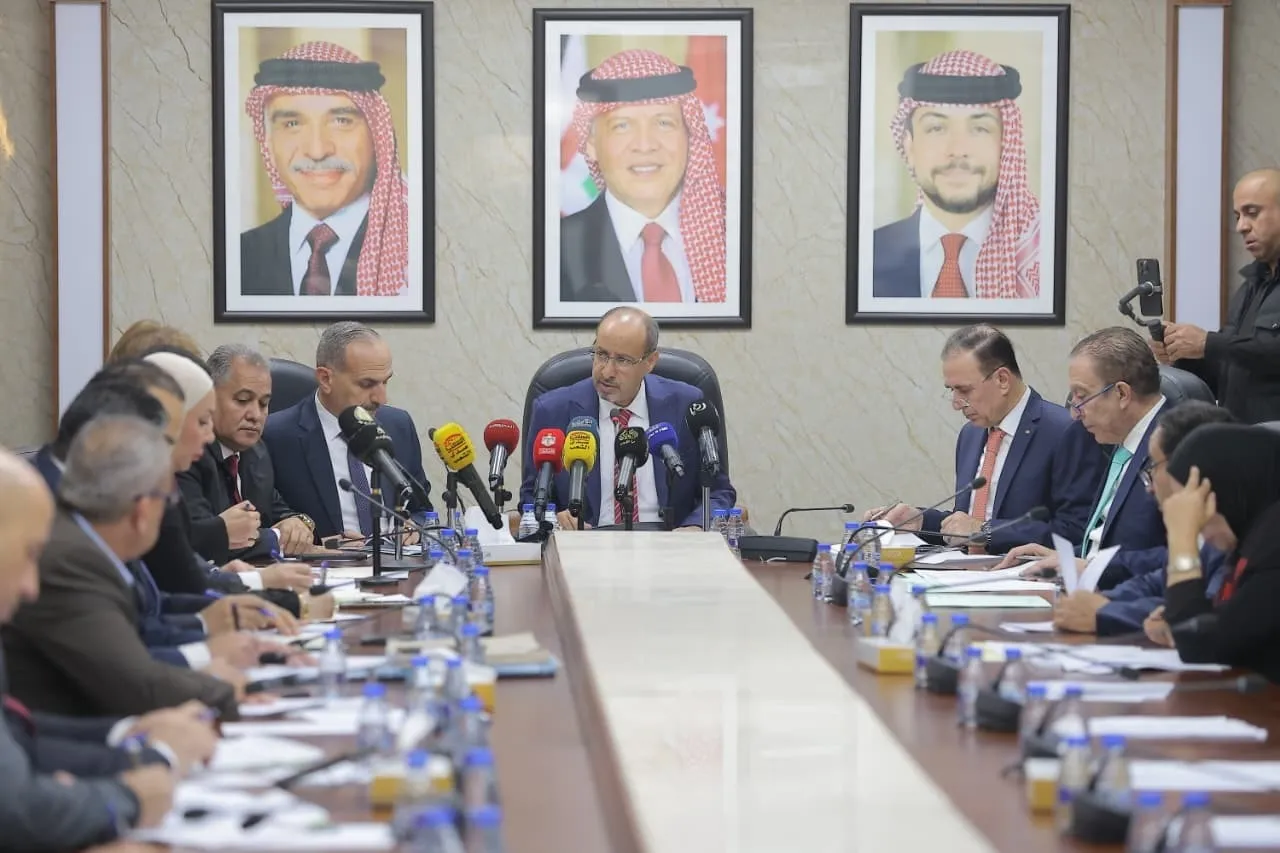
Khaberni - The Parliamentary Finance Committee, chaired by MP Dr. Nimer Al-Silahat, discussed today, Sunday, the budget of public sector development programs for the fiscal year 2026, attended by the Minister of State for Public Sector Development Badriya Al-Bilbeisi, Chairman of the General Service and Administration Authority Engineer Fayez Al-Nahar, and Director of the General Administration Institute Engineer Siham Al-Khawaldeh, and the Acting General Director of the General Budget Department Ayman Abu Al-Rub.
Al-Silhat emphasized that the review of the budget of public sector development programs is part of the committee's methodology to ensure that resources are directed towards national priorities, reflecting the state's seriousness in enhancing the services provided to citizens.
He stressed that monitoring progress in administrative modernization projects has become an urgent necessity to ensure that allocations are linked to measurable outcomes that directly reflect on the quality and efficiency of government services.
He pointed out that the three reform tracks launched by His Majesty the King in the political, economic, and administrative fields form a comprehensive framework to support the public sector modernization map since 2023, noting that there has been considerable progress in human resources, procedures, digitization, and governance, while some initiatives still need completion in the upcoming implementation phase.
He emphasized the need to identify a clear financing mechanism for the ministry's work, especially in the absence of an independent budget for it, to ensure the continuation of program implementation and achieve tangible impact on the citizen.
For their part, committee members posed questions about the progress in public sector reform, the course of structuring and merging independent institutions, the expected savings from rationalization processes, in addition to plans for digital transformation, service development, employment efficiency, and human resource management.
For her part, Al-Bilbeisi reviewed the public sector development programs plan and its needs for the year 2026, explaining that the proposed budget focuses on developing administrative structures, enhancing institutional transformation, and improving the efficiency of government services.
She outlined the progress in implementing the public sector modernization map since 2023, and what has been achieved in areas of digitization, human resources updates, legislation enhancement, and governance, and establishing an institutional culture.
She pointed out that the budget, despite not having direct allocations named after the ministry, provides support for institutional development programs and the implementation of the reformative tracks launched by His Majesty King Abdullah and His Royal Highness Prince Hussain bin Abdullah II, the Crown Prince.
In turn, Al-Nahar confirmed that the authority has entered an advanced stage of institutional maturity, indicating that competency centers, job descriptions updates, training programs, and the development of electronic services are fundamental pillars in enhancing the efficiency of public service.
He explained that the authority's budget reached about 6.2 million dinars, with an increase of approximately 1.3 million dinars, most of which are allocated to capital expenditures, while the committee requested clarifications about the reasons for the growth of current expenses and the extent of the projects' impact on performance.
For her part, Al-Khawaldeh presented a comprehensive presentation of the General Administration Institute's training plan, confirming the expansion of the programs to include both the public and private sectors at the Arab level, in addition to preparing studies for training needs, boosting trainers' efficiency, and cooperation with universities and experts.
She pointed out that the institute's budget amounted to 2.7 million dinars, with an increase of approximately 800 thousand dinars, most of which are directed to current expenditures.
She confirmed that the digital transformation has begun this year, contributing to procedural simplification, enhancing efficiency, and improving the quality of training services, in addition to programs linked to the modernization map's axes such as the Legislative Impact Program and the Frontline Staff Skills Polishing Program, aimed at enhancing the quality of governmental policies and services.