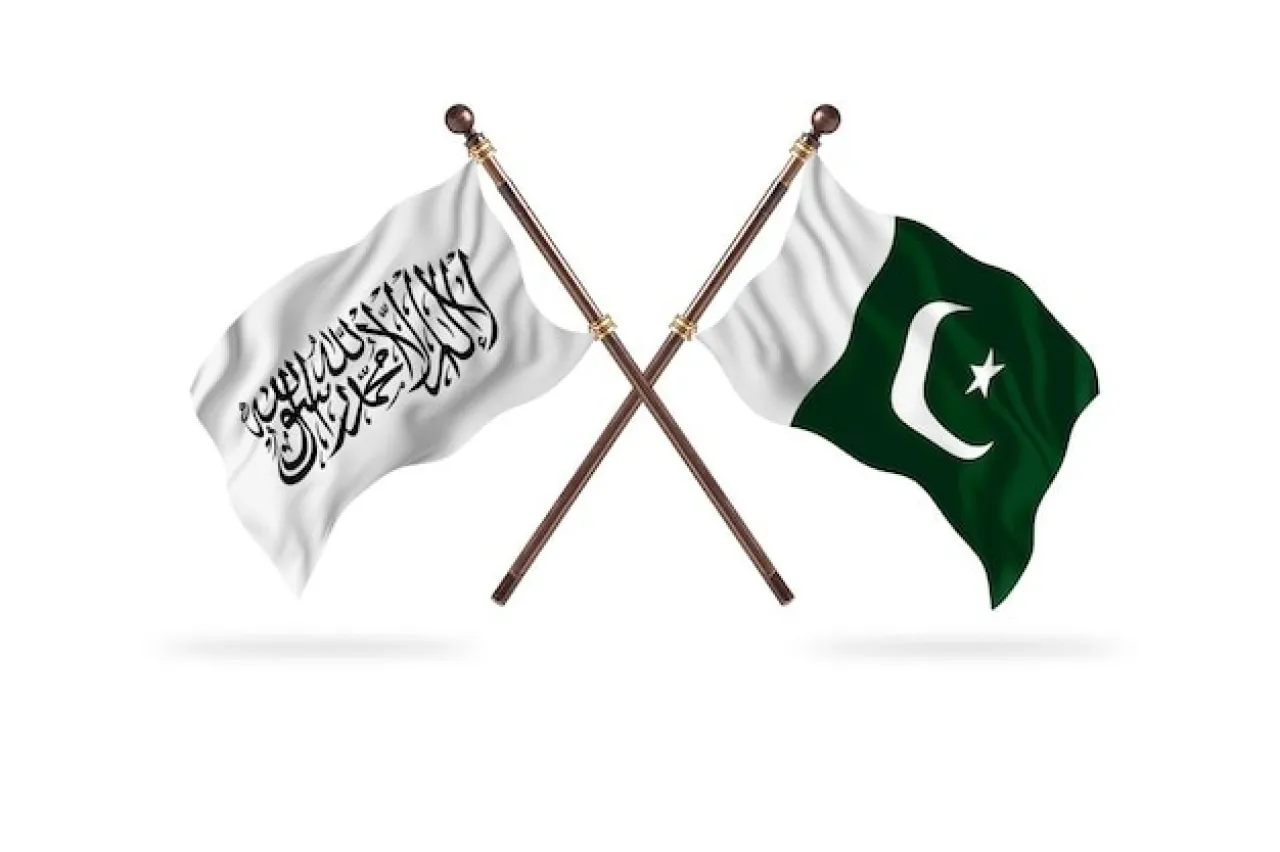
Khaberni - In a relationship characterized by chronic tension and accumulated signs of distrust over the years between Pakistan and Afghanistan, the repeated political escalation could not be isolated from the economic escalation between the two countries, which are often affected by political fluctuations.
Last month, relations between the two countries saw a sharp decline not seen at least since the Taliban took power in Afghanistan. There were clashes along the border over several days that resulted in dozens of casualties on both sides, until the fighting was halted by Qatari and Turkish mediation.
Mediation efforts failed to bridge views, as rounds of talks failed to reach a lasting agreement between the two sides, opening the door to continuing tensions and escalation on all fronts between the countries.
After reaching an impasse in the third round of Istanbul talks, Kabul announced a radical shift in its trade policies, urging traders to dispense with Pakistan and move to alternative routes for import and export.
A Radical Shift in Afghan Trade
With each round of military and political escalation between the two countries, crossings are more likely to be closed to trade and truck traffic, and Afghan transit trade passing through Pakistani territory is significantly affected, making the Afghan commercial sector vulnerable to loss.
After the failure of the third round of talks on November 7th, Afghanistan announced on the 12th through the Afghan Deputy Prime Minister for Economic Affairs Mullah Abdul Ghani Baradar that it would seek an alternative trade route to Pakistan, and also declared that the Afghan government would not cooperate with any Afghan traders who continue to engage in commercial dealings with Pakistan.
Mullah Baradar also criticized the quality of medicines imported from Pakistan, and announced a three-month deadline for pharmaceutical importers to close their accounts and end their trade dealings there.
He emphasized that Pakistan must provide definitive guarantees not to close these routes again under any circumstances, if it wishes to reopen trade routes with Afghanistan this time.
At the end of October, the spokesperson for the Pakistan Foreign Ministry, Ambassador Tahir Hussain Andrabi, confirmed that all crossings between Pakistan and Afghanistan are closed to trade and will remain so until further notice, noting that the decision to reopen the crossings is related to security considerations.
In response to the Afghan announcement, Andrabi said in a mid-month summary from the Pakistan Foreign Ministry that Afghan transit trade will not operate again until the Afghan government takes action against "terrorist groups" that attack Pakistan from Afghanistan, reaffirming Pakistan's commitment to developing regional trade.
In the midst of this crisis, following Afghanistan's decision to suspend trade with Pakistan, Afghan Minister of Commerce and Industry Nooruddin Azizi visited Iran on November 14th, focusing on his country's interest in using the Chabahar port—being developed in collaboration with India—as an important route for Afghan trade, from Chabahar to the Milak border station between Iran and Afghanistan.
Afterward, Azizi headed to India, where he met with senior Indian officials including the Indian Foreign Minister, Subrahmanyam Jaishankar, and the Indian Minister of Commerce, Piyush Goyal, where the Afghan Ministry of Commerce and Industry reported that the two sides discussed activating the Chabahar port and establishing commercial links between the two countries.
Unstable Trade Exchanges
According to the Pakistan Foreign Ministry, Pakistan is the largest trading partner (exports and imports) of Afghanistan, where Pakistan is the largest export destination and the third-largest import partner for Afghanistan, with several border crossing points for bilateral trade between the two countries, such as Torkham and Chaman.
According to the Pakistan Business Council, Pakistan primarily exports food, cement, pharmaceuticals, textiles, and manufactured goods to Afghanistan. Conversely, Afghanistan exports fresh and dried fruits, vegetables, and minerals to Pakistan.
A study by the council issued in May 2025 indicates that Pakistan's exports to Afghanistan have seen a strong upward trend during the specified period with a compound annual growth rate of 7.55% during the period from 2020 to 2024.
In 2020, Pakistan exported goods worth $852.31 million, reaching $1.14 billion in 2024 to record the highest value for exports.
On the other hand, Pakistan's imports from Afghanistan experienced greater fluctuations. They rose from $468.34 million in 2020 to a peak of $880.07 million in 2023 before experiencing a sharp decrease last year to $566.44 million.
Despite these fluctuations, the overall import trend experienced moderate growth with a compound annual growth rate of 4.87%.
Disruptions for Traders and Factories
In this context, Salman Javed, an expert in Pakistan-Afghanistan relations and director of the Asian Pakistani Youth Forum Studies Center, says that what Pakistan exports to Afghanistan represents about 20% of its regional exports of food and medicine, although this percentage represents only 3-5% of Pakistan's total export basket, which ranges in value between 30 to 40 billion dollars.Javed believes that in the short term, losses ranging from 400 to 700 million dollars over six months are a source of annoyance for exporters but are manageable by the state, and are concentrated mainly in wheat flour, rice, fresh products, and low-cost medicines, according to Al Jazeera.
Javed adds that Pakistani medicine producers previously supplied between 30 and 40% of medicines to Afghanistan, causing payment delays and disrupted production lines. However, these sector setbacks do not translate into instability at the macroeconomic level.
He believes the Pakistani economy can absorb this disruption because exports to Afghanistan only account for 3-5% of national exports, where the real pressure is on the border regions and medium-sized exporters, not on the overall economic situation of the state.
Meanwhile, writer and expert in Pakistan-Afghanistan relations Shahab Yousafzai says that Pakistan is facing an immediate export shock exceeding 900 million dollars, with 20% of its exports of food and medicine suspended, adding that in the short term there is a possibility for freezing cash flows, and perishable goods are at risk of spoilage, with the potential collapse of small and medium enterprises in border areas.
Yousafzai added that in the medium term, there would be a decrease in industrial production, disruptions in supply chains, and downward pressure on GDP, which could lead to a decline of 3-5% in the affected sectors.
He believes the most affected sectors will be in food manufacture, grains, fruits and vegetables, sugar, and pharmaceuticals. Meanwhile, about 14,000 jobs in the formal sector are at risk, with additional pressure on logistics, cold storage, and packaging services. The most affected regions will be the Khyber Pakhtunkhwa, Baluchistan, and border areas of Punjab.
Possible Measures for Pakistan
Salman Javed believes that Pakistan still retains political tools to mitigate the impacts of the crisis on the affected sectors, and sees that measures can be taken to reduce the effects of the crisis:
• Redirecting export incentives to expand the scope of Pakistani pharmaceutical, cement, and agricultural industries to markets in the Middle East, Africa, and Central Asia.
• Targeted tax exemptions and facilitated financing can support small and medium enterprises in Khyber and Chaman, while service clusters in Karachi can adapt by redirecting their energy to Gulf and African shipping lines.
• Pakistan can accelerate the diversification of its markets, with pharmaceutical exports growing by 34% annually, and Pakistani cement and food producers having promising opportunities in Gulf, African, and Central Asian markets.
• Technically, coordination through customs authorities, chambers of commerce, and border commissions can rebuild trade flows without making political concessions.
Javed concludes by saying that Pakistan can adapt to the reduction in Afghan trade; while Afghanistan cannot easily replace Pakistan's corridors, production capacity, or winter-resistant logistics.
Meanwhile, Shahab Yousafzai says that there are options that can be pursued:
• Targeting exports of food and medicine to the Middle East, Central Asia, and Africa to mitigate losses in the medium term.
• Diplomatic engagement through involving Kabul and regional mediators to reopen trade.
• Trade policy tools through export support, temporary tax exemptions, and incentives for perishable goods. And support for manufacturers and workers.