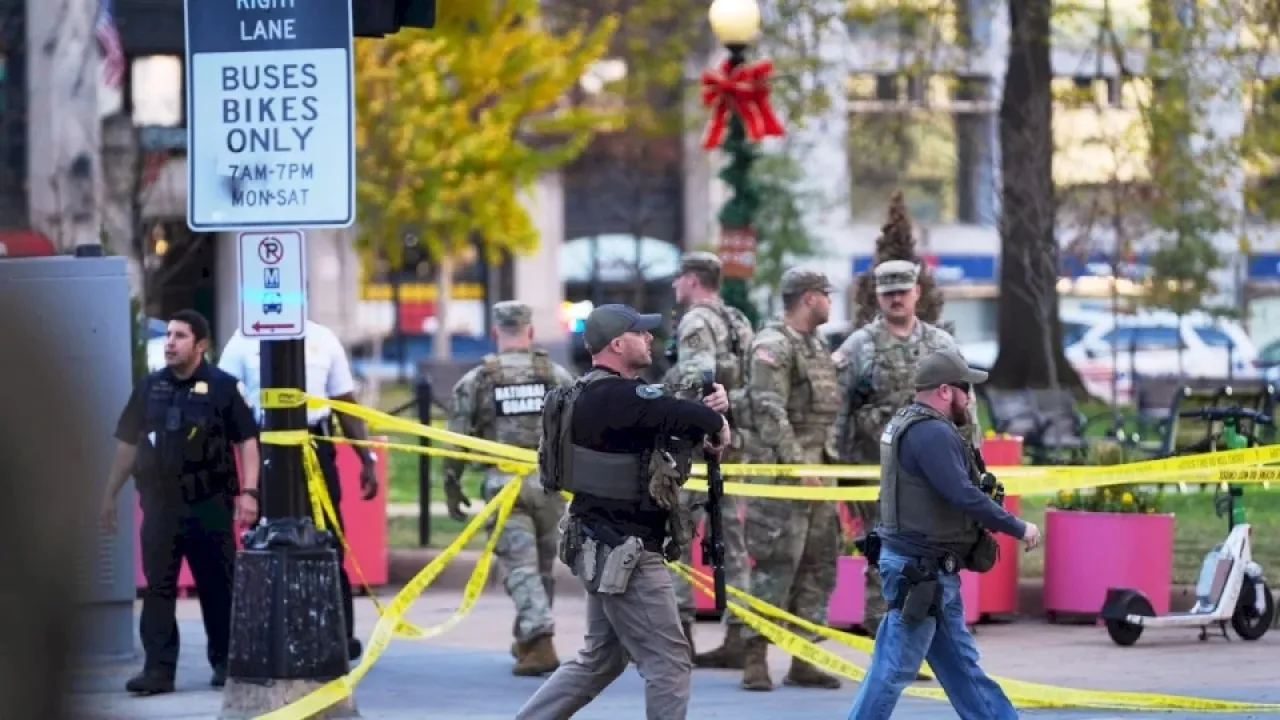
Khaberni - The United States is witnessing a wide debate after the identity of the suspect in the shooting incident of two members of the American National Guard in the capital, Washington, was revealed to be Rahmanullah Kunawal, an Afghan refugee who arrived in the United States under the "Ahla with Allies" program, and had previously worked with special forces affiliated with the Central Intelligence Agency "CIA" (CIA) during the war in Afghanistan.
Rahmanullah Kunawal was born in 1996 in Khost province, eastern Afghanistan, but he did not complete his education, as he left school in the tenth grade, and according to his colleagues, he was fond of sports, especially cricket, and began working with Afghan forces in 2012, when he was 16 years old.
He progressed in his unit within the Afghan forces affiliated with American intelligence from the rank of soldier to team leader, then transferred to the unit that works in the field of positioning "GPS" (GPS) and his mission was to track the leaders and fighters of the Taliban movement in the southern states.
Following the withdrawal of American forces from Afghanistan, Kunawal and his colleagues headed to Kabul International Airport, where American forces assisted the evacuation of Afghans who had worked with the United States in Afghanistan, and he boarded the last military plane that took off from Kabul Airport on the morning of August 31, 2021, to the United States.
He settled with his wife and five children in Bellingham, Washington, and obtained asylum by virtue of his work with American intelligence in Afghanistan, and received his green card in April of this year.
After the arrival of the first military and intelligence American forces in Afghanistan, the United States formed five special units in Afghanistan in 2002, known as "Counter-Terrorism Pursuit Teams," and they were under full American control until 2012.
A former security official - who preferred not to be named - told Al Jazeera Net that "these forces operated outside the framework of the official Afghan security structure, with support, training, equipment, and operational intelligence information from the Central Intelligence Agency, and in some cases they were also accompanied by American forces in the field or provided them with air support, as the Afghan government had no role or oversight over the work of these units."
The first special forces unit was formed in Khost province, eastern Afghanistan, later known as the Khost Protection Force (KPF), and the Central Intelligence Agency also established three other units:
Unit 01: which operated in the provinces of Kabul, Logar, and Wardak in central Afghanistan.
Unit 02: was based in Jalalabad, and conducted military operations in eastern provinces.
Unit 03: and was based in Kandahar, fighting the Taliban movement in southern states.
The American intelligence initially recruited members of militias opposed to the Taliban to help gather intelligence information and carry out secret missions against them, and over time, these units evolved into an elite strike force, receiving direct orders from the Central Intelligence Agency of America, outside the hierarchy of the Afghan military and intelligence.
The special units' elements were also trained and equipped by the Central Intelligence Agency and carried out their military operations based on intelligence information and orders issued by the CIA command in Afghanistan.
The security official told Al Jazeera Net, "The Afghan government did not know the number of these forces nor their missions nor the budget allocated to them, and they were among the forces close to American intelligence, and they were involved in killing, kidnapping, and arresting people."
The official also confirmed that Rahmanullah was a member of Unit 03, which operated in southern Kandahar, Afghanistan.
Among fear and indifference, reactions among Afghans varied about what Kunawal did, reflecting a mix of anxiety, shock, and indifference. For Afghan refugees in the United States and Europe, the incident triggered fears of collective stigma, as organizations defending refugee rights warned that "the act of one individual could reflect on the fate of thousands awaiting resettlement," emphasizing the need to differentiate between one person and an entire community.
The incident was also a source of shock and embarrassment among those who had lived through the war in Afghanistan, especially knowing that the accused was a member of special units supported by the American intelligence, re-raising questions about the impact of years of combat and harsh field experience on mental health and individual behavior.
Inside Afghanistan itself, indifference prevails, as many see the incident as an internal American matter that does not affect their daily reality. A security official, who preferred not to be named, told Al Jazeera Net, "I cannot comment on the incident in Washington, but I can say: their merchandise has returned to them."