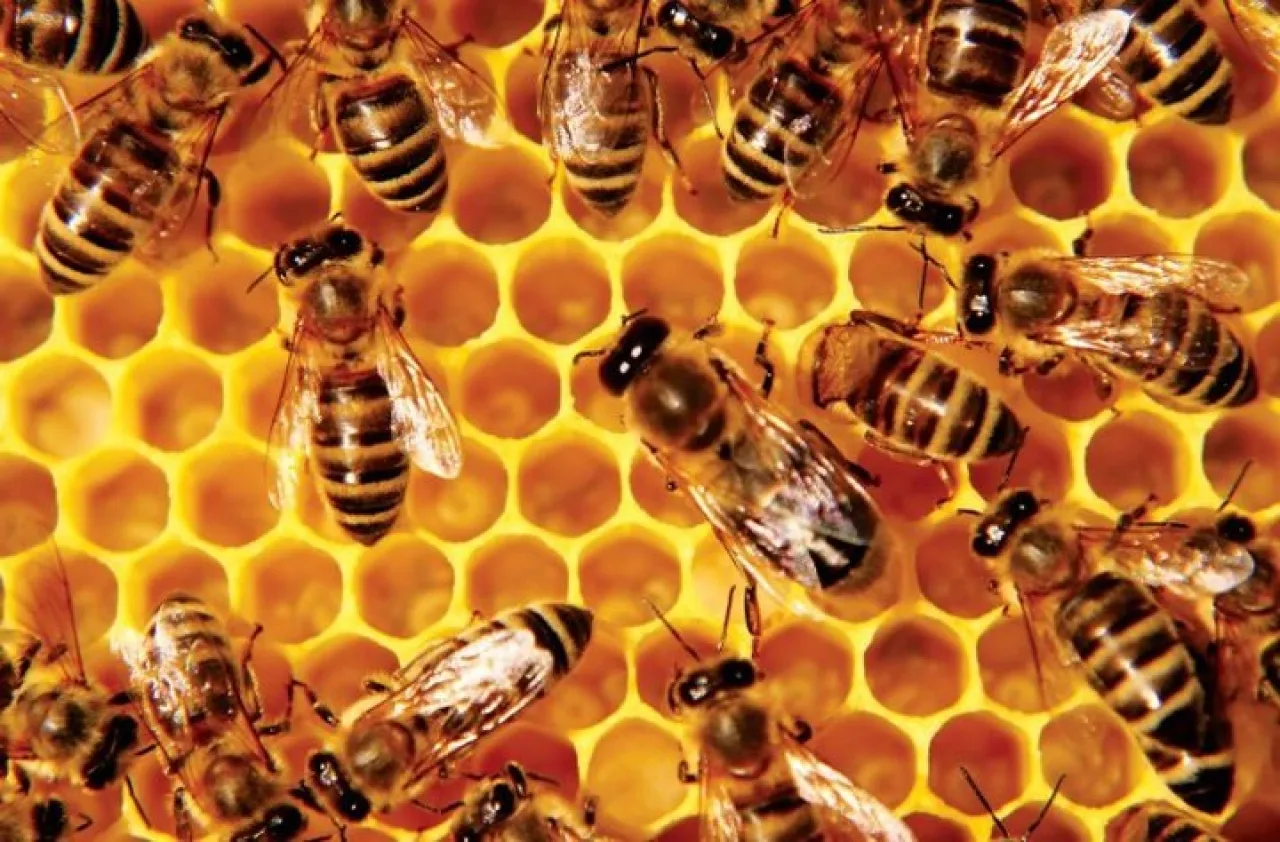
Khaberni - Beekeeping in Jordan constitutes one of the promising agricultural resources, due to its role in supporting food security and rural development, despite the climate, environmental, and economic challenges facing its workforce.
Engineer Moaz Kazem, the president of the Jordanian Beekeepers Union, emphasizes that the sector has great growth potential if sufficient protection and support are provided.
Kazem explains that the winter and spring seasons are the most sensitive for bee colonies, necessitating precise preventive measures including checking honey stocks, adjusting ventilation, reducing humidity, treating parasites, and reducing the size of the cells when necessary. He notes that these measures form the first line of defense to ensure the survival of the colonies and increase production efficiency, amid increasing climate fluctuations.
Moreover, Kazem highlights that honey adulteration has become one of the most significant challenges threatening the profession. He elaborates that methods vary from mixing with sugary solutions, excessive heating, and marketing imported honeys as local. He stresses the necessity of consumer awareness and purchasing honey from reliable sources, in addition to the importance of checking the label and recognizing local varieties and their production seasons.
In the same context, the Ministry of Agriculture, in cooperation with the Specialty Union for Beekeepers, continues to implement measures to combat fraud, notably forming a specialized committee to protect Jordanian honey, which includes regulatory and official entities, and regulating honey imports within certain guidelines, alongside awareness campaigns for consumers and hosting specialized festivals to enhance trust in local products.
Kazem points out that the sector includes between 3,000 to 4,000 beekeepers, who own about 80,000 hives spread across various governorates of the kingdom. Although the usual annual production ranges between 600 and 800 tons, climate changes, especially the lack of rainfall, have led to a production decrease of more than 60% this year, reaching only about 350 tons.
Jordan is distinguished by producing various types of honey, including citrus, sidr, eucalyptus, wildflowers, and mountain honey, alongside other products such as pollen grains, propolis, and royal jelly, which are experiencing growth in cosmetic and medical uses. Jordanian beekeepers have also achieved advanced positions in regional and international competitions, reflecting the quality of Jordanian honey and its global reputation.
Kazem believes that the success of the beekeeping sector is linked to several factors, notably environmental diversity, the widening gap between production and consumption, and the potential to integrate hive products into new industries. However, he also points to challenges including climate change, diseases, pesticide use, and rising production costs.
He concludes by affirming that developing the sector requires investment in scientific research, increasing nectar pastures, reducing pesticides, and enhancing community awareness, affirming that the honey industry in Jordan is capable of achieving added economic value if a supportive environment is provided.