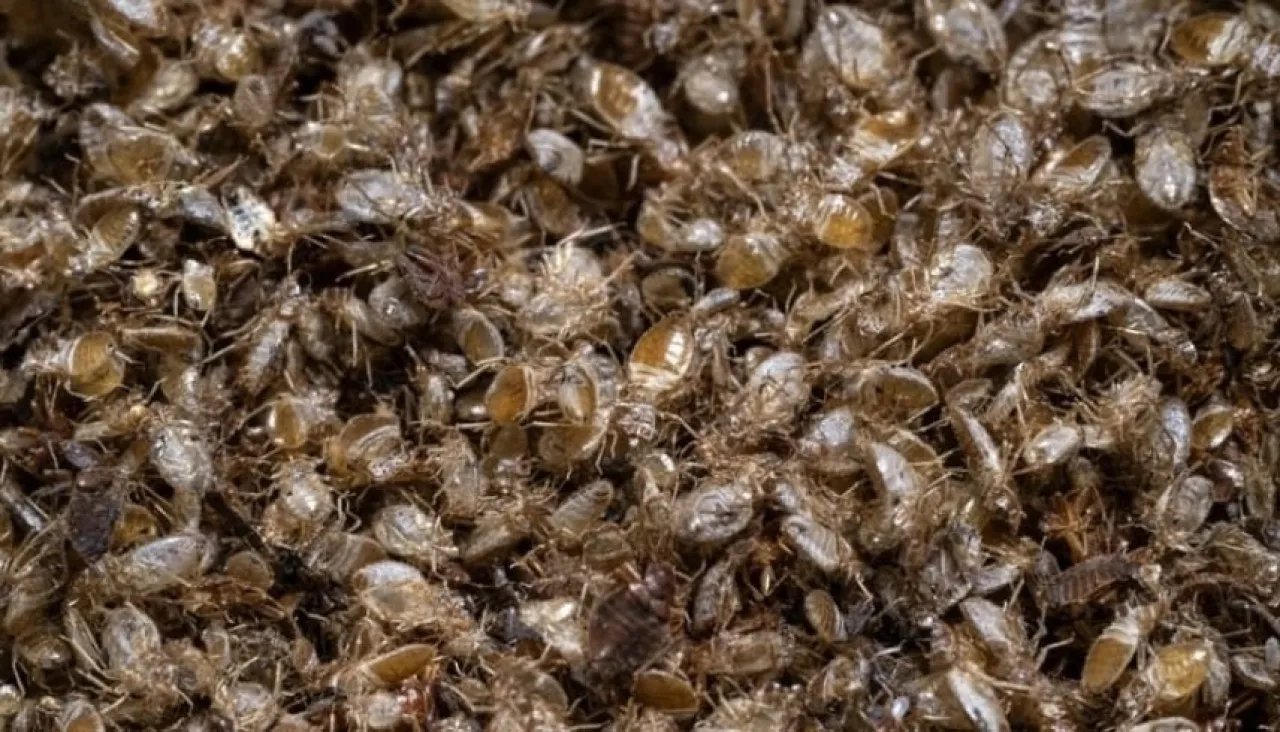
Khaberni - A research team from the University of Science in Penang, Malaysia, developed a non-traditional technique to utilize bedbugs in criminal investigations after studies proved these insects could retain human DNA for up to 45 days after absorbing blood.
In-depth Study on Tropical Bedbugs
The research team, led by the entomologist Abdul Hafeez Ab Majid and the doctoral researcher Lim Li, conducted a precise experiment within the laboratories of the College of Biological Sciences.
The researchers used small containers covered with mesh to protect the insects and allowed them to feed on human blood under close supervision, aiming to study the extent of DNA preservation and its use in criminal investigations.
Dr. Abdul Hafeez explained that bedbugs, which prefer to hide in cracks in beds and sleeping pillows, can preserve information about the victim including the sex, eye color, hair, and skin, making them a potential source of evidence at a crime scene.
He added that these small insects, known to Malaysians as "musuh dalam selimut" meaning "the enemy in the blanket," can turn into "spies" helping investigators identify perpetrators.
DNA Extraction
The researchers were able to extract DNA from bedbugs by using DNA sequencing techniques known as STR and SNP, which allows for determining phenotypic characteristics of the victim or perpetrator, as reported by the website "RTÉ".
This method is distinguished from using mosquitoes or flies in criminal investigations, as bedbugs cannot fly and remain near the location where they fed, making them a stable and non-evasive piece of evidence at the crime scene.
The study published in the Scientific Reports journal points out that bedbugs represent an important tool, especially in scenes where bodily fluids are wiped to destroy evidence, as the insects are often naturally hidden in the surrounding environment.
Personal Experiment
In the laboratory, researcher Lim Li conducted a practical experiment of feeding the insects with her blood to monitor how the DNA degraded over time.
The researcher confirmed that bedbugs are "misunderstood" creatures, as they do not transmit diseases although their bites can cause itching that might persist for weeks.
She mentioned the possibility of educating the public that these insects are not disease carriers, and their use in investigations might open new horizons in forensic evidence.
Despite the promising results, Dr. Abdul Hafeez emphasized that relying on bedbugs is not a magical solution, as the insects are limited in effectiveness in older cases, as they can only be used within a time frame of up to 45 days after the incident, provided they are present at the crime scene.
He added that this method is considered an aid for investigators and not a substitute for traditional evidence, but it provides a new opportunity to obtain accurate information that may help identify perpetrators.