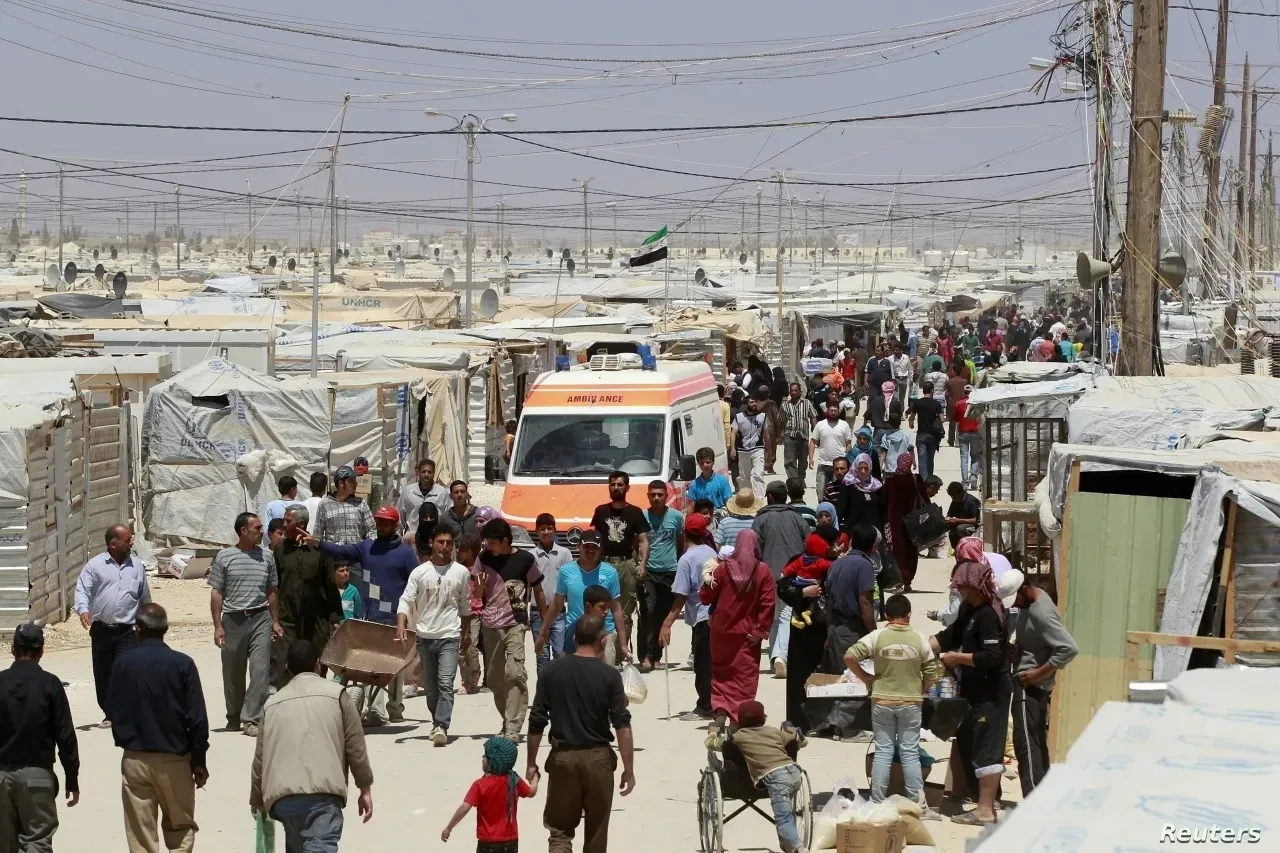
Khaberni - Last week saw the return of 2500 refugees registered with it to Syria, compared to 2800 refugees the preceding week, making a total of 5300 refugees over the two weeks.
Last week's figure represents a decrease of 11%, compared to the week before, according to the United Nations High Commissioner for Refugees.
According to the commission, as of the 15th of this month, more than 170,000 refugees registered with the commission have returned from Jordan to Syria since December 8 of last year, with the demographic composition of the returnees remaining similar to previous weeks, where women and girls represented 49% of the total returnees, while children accounted for 43%, and men between 18 and 40 years old made up 19%. The majority of returnees were residing among host communities, particularly in Amman and Irbid, according to Al-Ghad.
As of the 20th of this month, the commission estimates that 1,246,037 individuals have returned to Syria from other countries since December 8 of last year, and as of the 13th of this month, it is estimated that 1,944,762 internally displaced individuals have returned to their original areas, including 1,062,229 who left IDP sites in northwest and northeast Syria.
According to the commission, a survey on the intentions of displaced persons' movements in Syria conducted between September 7 and 26 of last year, indicated that 27% of the families interviewed plan to return to their original areas (their usual previous residences), while 57% plan to stay at their displacement locations.
The main barriers to return mentioned include: lack of basic housing or concerns about property/housing; lack of basic services such as electricity, water, and health services; lack of employment opportunities and lack of financial resources for return.
While the commission does not encourage widespread return to Syria, it provides support for refugees who choose to voluntarily return, after informing them about the situation in their original locations or in an alternate area of their choice.
Given the ongoing uncertainty in Syria, most Syrian refugees hosted by Jordan do not plan to return in the foreseeable future.
Regarding the remaining refugees in Jordan, the commission continues to provide registration and documentation services, among other protection services, and assistance in meeting basic needs.
According to the commission, "the refugee response in Jordan currently faces a critical funding gap", therefore, it is working closely with the government, donors, and partners to maintain basic services and enhance long-term support for refugees and host communities as long as they need support in Jordan.
The commission had forecasted a decrease in the number of Syrian refugees residing in Jordan to reach 290,000 registered by the end of next year.
It confirmed that since the fall of the previous regime (Assad regime), a large number of Syrian refugees residing in Jordan have expressed their desire to return home, albeit with great caution. While the commission does not encourage large-scale return under current conditions, it supports refugees who choose voluntary return after informing them of the situations in their original areas, or alternative areas inside Syria. According to commission data, the situation of Syrian refugees in Jordan remains very fragile, as 67% live below the poverty line, while 9 out of 10 refugees resort to borrowing to cover their basic needs such as rent, food, and medicine, indicating that continued donor support is crucial to maintaining service levels for refugees, including their registration and documentation, and ensuring their access to basic services, enabling partners in the humanitarian response to plan and deliver aid efficiently.
According to a commission survey in June last year, 80% of Syrian refugees residing in Jordan express their intention to return to their country someday, yet the decision to return remains linked to multiple economic and security factors.
The survey revealed that 36% of those who do not intend to return attribute their decision to the destruction and damage of their homes, while 23% cited the absence of job opportunities and income sources, and 12% related to security and safety concerns, while 9% said that the lack of financial resources prevents them from returning, and 7% cited the lack unavailability of adequate services in Syria.