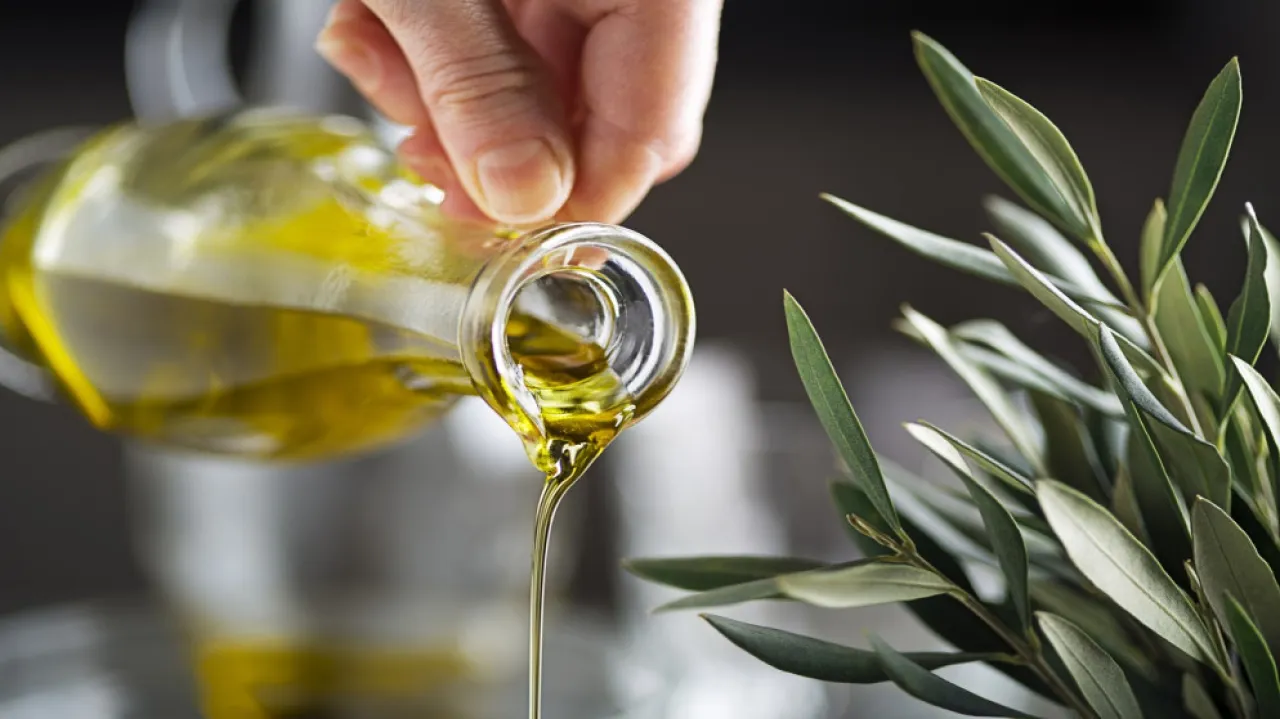
Khaberni - Tayseer Al-Najdawi, the head of the olive press owners and producers syndicate, expects the import of olive oil into Jordan to begin before December 31, in order to cover the shortage of locally produced quantities during the current season, anticipating that the prices of imported oil canisters will range between 80 and 90 dinars.
Al-Najdawi explained in a statement to "Al-Mamlaka" channel that Jordan would turn to importing olive oil from member countries of the International Olive Council such as Greece, Spain, and Tunisia, noting that these countries also experienced production delays this year.
He added that about 20 to 25 institutions, olive presses, and packing companies have obtained licenses to import an estimated 4,000 tons of olive oil, to cover the local market needs in the first phase.
He also clarified that military and civil institutions were allowed to import 2,000 tons, while the private sector "from olive press owners and packing companies" was allowed to import another 2,000 tons.
Al-Najdawi asserted that the imported quantities will not flood the local market, but aim only to bridge the demand gap, emphasizing that the importation will be organized and limited to the necessary quantities.
Regarding quality, Al-Najdawi stressed that the imported olive oil will undergo precise testing in the country of origin before being supplied to Jordan, to ensure compliance with Jordanian and international standards.
It will also be re-examined inside Jordan by the relevant authorities, including the Jordan Food and Drug Administration and the Jordan Institution for Standards and Metrology, before being offered to the consumer.
Al-Najdawi pointed out that Jordan's annual need for olive oil ranges between 23 and 25 thousand tons, while it is expected that the current season's production will only be between 18 and 20 thousand tons, making imports necessary to ensure market stability and meet consumer needs.
A 25,000-dinar judicial guarantee for olive oil importers to not sell outside the Jordanian markets
The Ministry of Agriculture published a set of instructions regarding the import of olive oil, particularly requiring a judicial guarantee valued at 25,000 Jordanian dinars to not sell the shipment outside the Jordanian markets.
The guarantee instructions also stipulate the necessity to refrain from mixing or repacking it for trading in the local market or re-exporting it.
According to what the ministry published, the package size must not exceed 4 liters.
It outlined that the required documents include the shipment being accompanied by either an original certificate of origin or a certified copy thereof from the country of origin.
About the package specifications, according to the instructions, the metal containers must be internally coated with food-grade paint and hermetically sealed, and the oil quantity inside the package must not be less than 90% of the total water capacity.
According to the instructions, all sides of the package must be printed with the following:
The name of the product, type of oil (extra virgin), country of origin, production and expiration dates, package weight, agricultural season (2025/2026), name of the producing company.
It also clarified that the required laboratory analyses include attaching certificates and results of tests issued by internationally accredited laboratories, which cover the following tests:
Acidity test: ≤ 0.8 (expressed as oleic acid/100g).
Peroxide test: ≤ 20 milliequivalents of peroxide oxygen/kg of oil.
Adulteration test (GC): according to Jordanian Standard No. 3/2012.
Sensory test: median of fruitiness > zero, and defects median = zero.
Pesticide residue test: the shipment must be free from any pesticide residues.
Also, the imported oil must belong to the first category (extra virgin olive oil) and comply with the Jordanian Standard No. 3/2012 issued by the Jordan Institution for Standards and Metrology.
It also explained the border inspection procedures, which will involve taking samples from the shipment at the border center to test for the absence of pesticide residues and compliance with quality standards and adulteration tests, to be sent to the Jordan Institution for Standards and Metrology laboratories to verify compliance with Standard No. 3/2012.
According to the instructions, the shipment cannot be removed from the border center before the laboratory test results are available.
In terms of follow-up, the customs declaration is not completed until the Agricultural Marketing Directorate in the Ministry of Agriculture is provided with the sales invoices within a period not exceeding 3 months from the date of entry of the shipment.
The instructions concluded by stating that the ministry reserves the right to refuse or cancel any shipment in the event of any health situation that necessitates this during the validity period of the license.