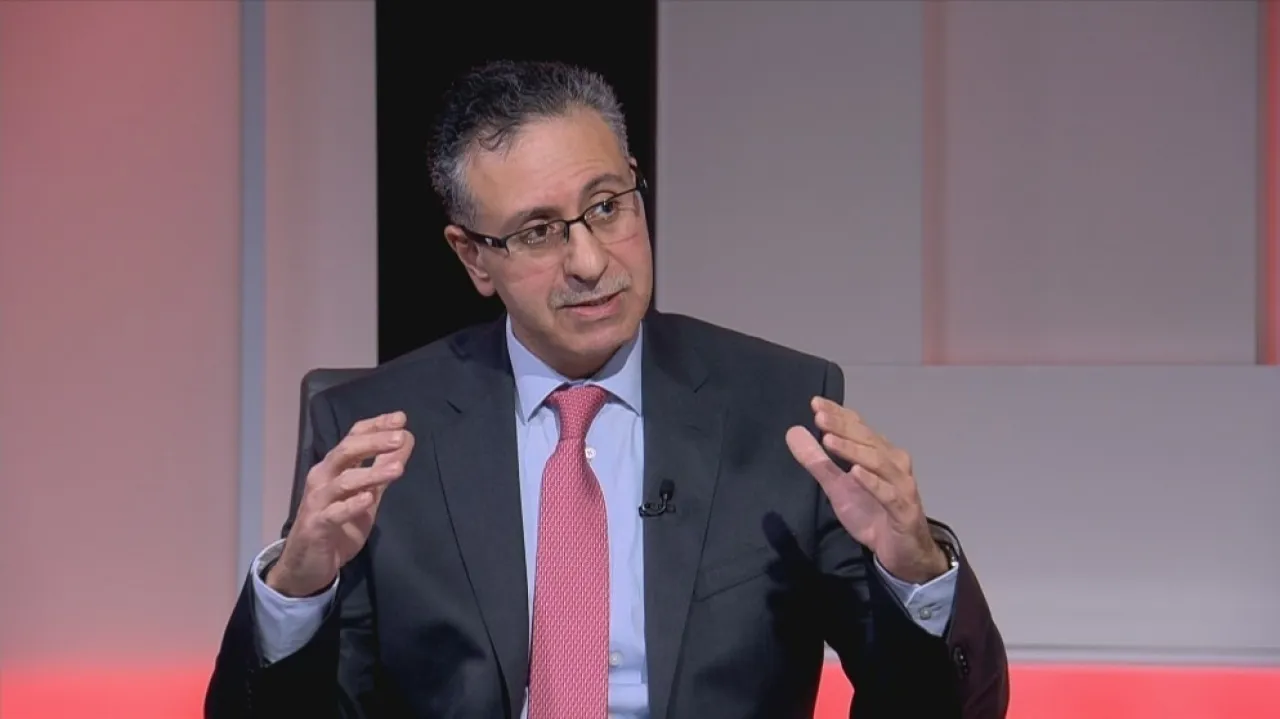
Khaberni - The Minister of Industry, Trade and Supply, Yarub Al-Qudah, confirmed on Tuesday that the resumption of operations at the Bab al-Hawa crossing between Syria and Turkey has now begun for transit movements; this requires the relevant parties to intensify efforts in exports.
Al-Qudah said during the meeting of the Financial Committee in the House of Representatives that Jordan can serve as a gateway for Turkish goods to the regional markets, while Turkey represents a main gateway for Jordanian products to Europe, especially with the opening of the Bab al-Hawa border crossing.
He also emphasized the importance of enhancing the trade and industry sector in Jordan, pointing out several key points that contribute to supporting the national economy and expanding the horizons of foreign trade.
According to the general budget plan for the fiscal year 2026, the budget of the Ministry of Industry, Trade and Commerce amounted to about 21 million dinars, with an increase in current spending by about 1.1 million dinars, and a decrease in capital expenditure by approximately 14.3 million dinars, alongside a reduction in industrial support allocations by about 17 million dinars.
This decline led the committee to request clarifications about the reasons for the decrease and its direct impact on the ministry's programs and services.
Postal Parcels
Al-Qudah explained that the value of postal parcels that arrived in Jordan last year amounted to about 350 million dinars, pointing out that these parcels are not counted within the gross domestic product despite their large volume, which reflects the importance of e-commerce in the national economy.
He confirmed that the ministry is working on creating an electronic platform dedicated to selling products from small national projects, with the goal of supporting these projects and encouraging them to reach wider markets, thus enhancing their contribution to the national economy and contributing to the development of the local industrial sector.
He explained that increasing exports from the Jordanian industrial sector is one of the main solutions to reduce the trade deficit.
Al-Qudah added that the ministry follows a productive plan aimed at increasing the competitiveness of local industries, in line with market needs and the aspirations of the industrial sector and chambers of industry.
He pointed out that the Industrial Support Fund contributes to empowering the industrial sector, noting that the fund will continue over the next three years without the government incurring any additional financial burdens, reflecting the ministry's commitment to providing the necessary support to the industrial sector without affecting public finances.
Foreign Trade
Al-Qudah confirmed that the African market is promising for Jordanian industries, noting that entering the African market is not easy; however, the ministry has focused on East Africa, specifically Rwanda, to sign a preferential trade agreement next April.
He added that this agreement will be an important gateway for Jordanian industries to enter the African market.
Al-Qudah announced the ministry's plan to enter the Asian market through a trade agreement with Uzbekistan after the upcoming Eid al-Fitr, reaffirming that this agreement will contribute to enhancing trade exchange with Asian markets, thus opening new markets for Jordanian industries.
Al-Qudah emphasized the importance of ongoing cooperation between the government and the private sector in order to enhance the competitiveness of Jordanian industry on both the local and international levels, explaining that the ministry will continue working to improve the business environment and provide the necessary support to the industrial sector amidst current economic challenges.