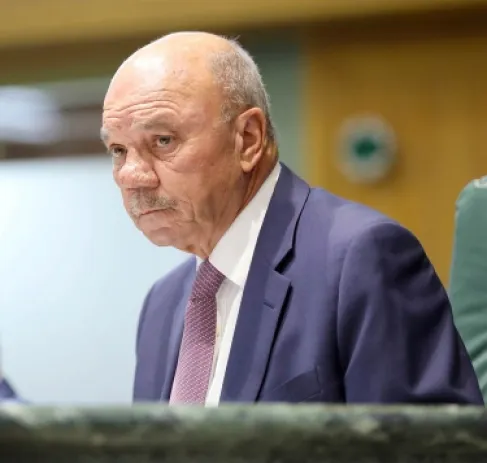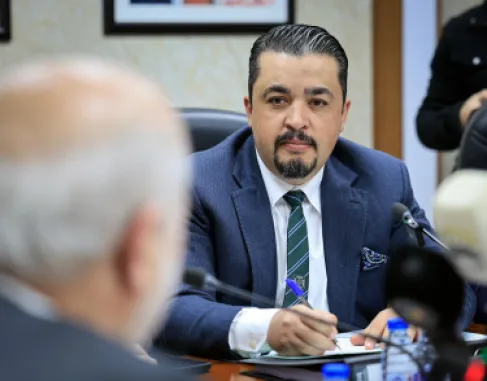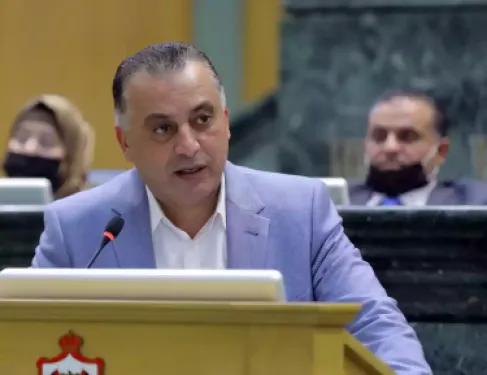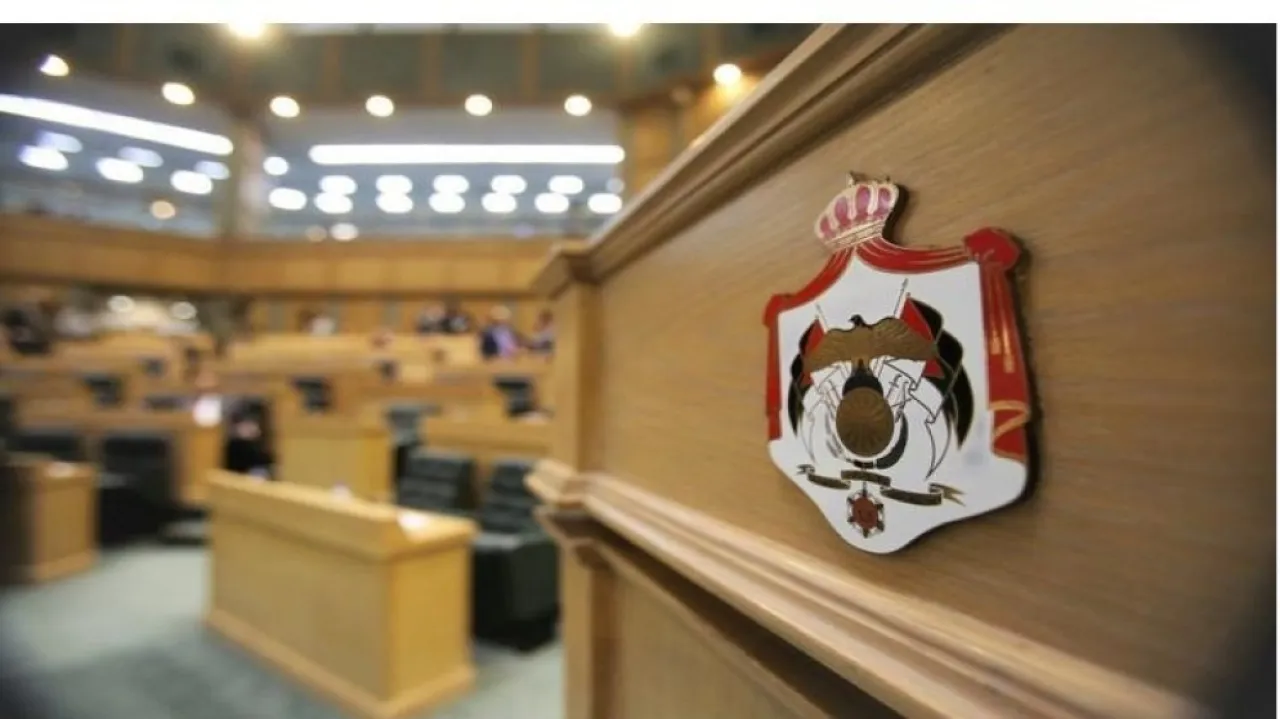
Khaberni - The Parliamentary Finance Committee discussed, on Tuesday, under the chairmanship of Deputy Nimr Al-Saleihat, the draft law of the general budget for the Ministry of Finance and its departments for the year 2026, in a meeting that was attended by the Speaker of the Parliament Mazen Al-Qadi, the Minister of Finance Abdul-Hakeem Al-Shibli, the Central Bank Governor Adel Sharkas, and the Directors General of the Income and Sales Tax Hossam Abu Ali, Customs Ahmed Al-Akayleh, and Lands Khaldoun Al-Khalidi, along with the acting Director General of the Budget Department Ayman Abu Al-Rub.
At the beginning of the meeting, Al-Saleihat stressed the importance of precise study of all budget items, praising the royal efforts to enhance international relations during the Asian tour and the resulting economic support and investment attraction.
He requested that the committee be provided with all assumptions related to revenues, expenditures, allocations for economic modernization programs, deficits, and public debt, affirming that preparing a balanced budget forms a crucial base for supporting growth and improving service levels.
On his part, Al-Shibli explained that the revenue estimates for 2026 are based on positive economic indicators, while the increase in current expenses is linked to social commitments and protection and development programs.
He pointed to the ministry's direction to replace costly debts with less costly ones, which leads to reducing financial burdens on the treasury, in addition to providing opportunities to finance developmental projects.
He affirmed that the government is committed to reducing the debt trajectory and achieving a ratio of 80 percent of the Gross Domestic Product by 2028.
He emphasized that the Debt Department in the Ministry of Finance is one of the best debt departments in the Arab region, according to the International Monetary Fund, noting that the ministry maintains the highest levels of transparency in publishing public debt data.
In turn, Abu Ali presented a detailed report showing that estimated income tax revenues are around 1.9 billion dinars, with growth of 175 million dinars, while the proceeds from the general sales tax reach 5.2 billion dinars, an increase of 464 million dinars, resulting from enhancing electronic billing, expanding the tax base, improved company performance, and combating tax evasion.
Meanwhile, Al-Akayleh presented customs revenue estimates of 360 million dinars, noting that penalties increased by 15 million dinars and the total growth rate reached 40 percent amounting to 112 million dinars, resulting from restructuring car fees, tightening measures against evasion, and decisions related to mail parcels, in addition to developing electronic systems.
The Customs Department estimated its current expenses at 94.4 million dinars and capital expenses at 11 million dinars, in addition to 55 million dinars allocated for grants to non-financial institutions.
On his part, Al-Khalidi explained the improvement in real estate trading during 2025 and expectations of continued recovery in 2026, where the property sale tax was estimated at 134 million dinars and land registration fees at 175 million dinars, with the department's current expenses amounting to 20.3 million dinars and capital expenses to 3.7 million dinars.
Abu Al-Rub said that the department's budget amounted to 3.5 million dinars (current and capital), noting that an increase in current expenses was accompanied by a decrease in capital expenses due to the completion of ongoing projects.
For his part, Sharkas confirmed the robustness of foreign reserves and the strength of the banking sector, pointing out the impact of reducing the interest rate by half a percentage point on economic activity, in addition to supporting financial technology and green finance pathways.
On their part, committee members emphasized the importance of the budget reflecting the priorities of economic growth and improving the service level for citizens, insisting on the continuation of combating tax and customs evasion, raising the efficiency of public spending, and improving employee salaries, demanding the cancellation of fees imposed on mail parcels planned to be implemented starting February next year.