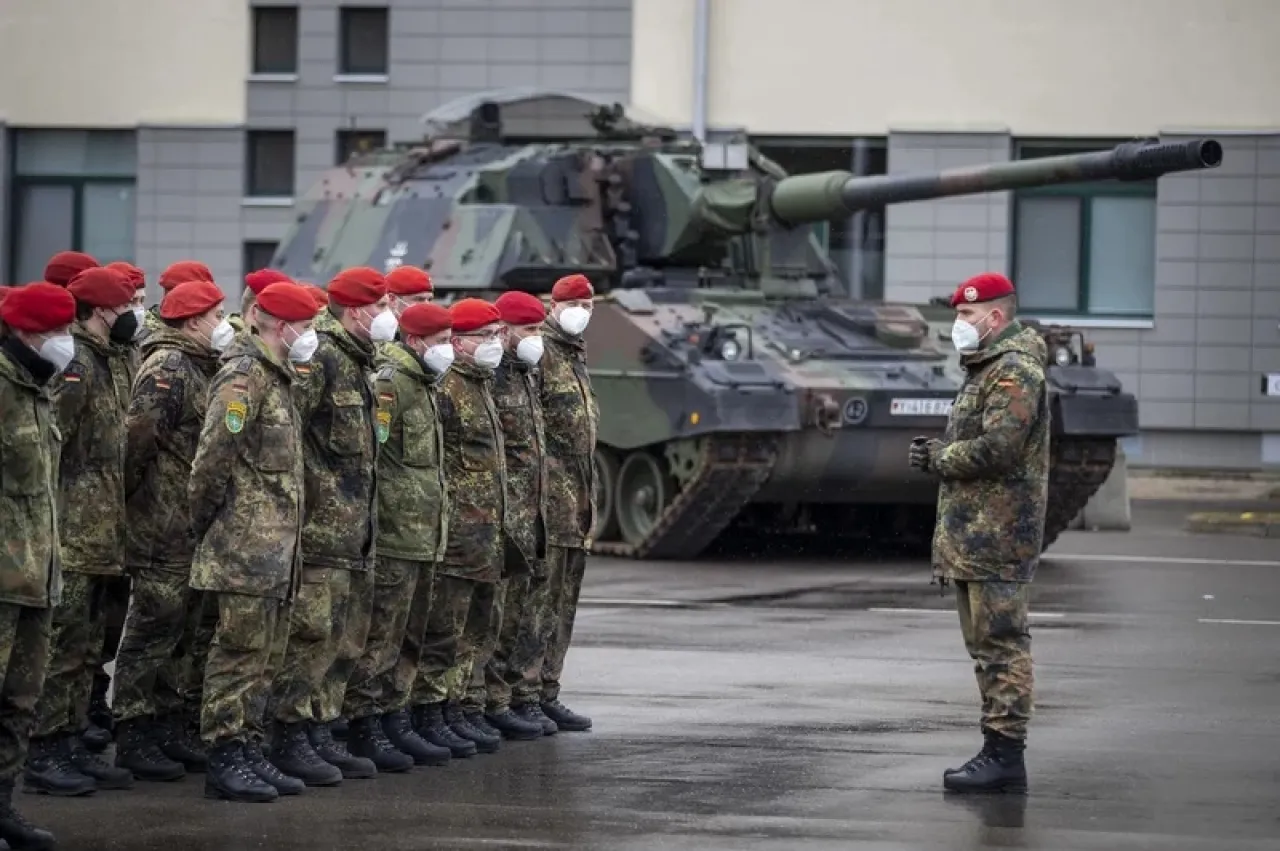
Khaberni - As fears of the Russian threat increase and reliance on American support declines, Germany is seeking to implement its largest military reform in decades, aiming to build the "strongest army in Europe" by 2035, according to German Chancellor Friedrich Merz.
Last week, the coalition government approved a new bill aiming to increase the number of German army personnel to 260,000 soldiers, up from about 180,000 currently, in addition to 200,000 reserve soldiers.
Recruitment Plan
According to a report by the American network "CNN", the plan will start by expanding the volunteering base, with financial incentives being one of the highlights, including raising the monthly salary of new recruits to 2600 euros, an increase of 450 euros over the current level.
The plan includes the possibility of resorting to "mandatory conscription" if the required numbers are not achieved, with all young people at the age of 18 starting next year receiving a survey about their desire to serve, which is mandatory for males. Mandatory medical examinations for men will also be imposed starting in 2027.
This comes amid increasing American pressure on Europe to take responsibility for its security, the ongoing war in Ukraine, and warnings of a potential Moscow attack on a NATO country.
In an interview with the British Broadcasting Corporation in June, German Army Chief of Staff General Carsten Breuer said, "NATO must prepare for the possibility of a Russian attack within 4 years, possibly by 2029", and urged member countries to prepare.
Welcoming and Opposition
Before the approval of the new bill, the partners in the ruling coalition, the Christian Democratic Union (CDU) and the Social Democratic Party (SPD), had disagreed for weeks about the form of military service before finally agreeing.
The "military lottery" proposal was abandoned in favor of a plan focused on incentives, as confirmed by Defense Minister Boris Pistorius, who emphasized that there is "no need to worry", asserting that enhancing defense capabilities reduces the likelihood of becoming involved in any conflict.
The new plan requires ratification by the German Parliament (Bundestag) before it can take effect on January 1, 2026.
A poll revealed that German satisfaction with the performance of their new government has dropped to the lowest level since the government assumed its duties on May 6.
Despite governmental support, the plan continues to provoke controversy domestically, particularly among the German left.
An October poll by the newspaper "Die Welt" showed that 80% of supporters of the Left Party (Die Linke) oppose the return to mandatory conscription. Requests for the status of "conscientious objector" have also seen a significant increase this year, reaching their highest level since the suspension of conscription in 2011.
Doubts about Fighting
While European affairs expert at Chatham House, Mina Olander, sees that Germany is capable of playing a pivotal role in European defense if the plans to increase the number of soldiers are completed, she warned that imposing mandatory service on a conservative society could enhance extremism among young people.
The network noted the clear reluctance of young people in Germany to undergo mandatory conscription. A 17-year-old young man admitted to "CNN" the importance of Germany being able to defend itself, while expressing doubts about his desire to fight.
On the other hand, Leonid Bekjarov, aged 21, supported increasing investment in the German army, saying: "It has become very weak and neglected." He also expressed doubts about mandatory conscription, adding "I also think that Russia's attack on Ukraine is a terrible thing. But I totally oppose the war, and a little boosting of the army is good, but imposing mandatory military service on everyone, forcing them to go there, I think that's a mistake."
This shift comes after decades of German military spending falling below NATO targets, before the war in Ukraine completely changed the scene.
When Chancellor Olaf Scholz announced "a turning point" (Zeitenwende) at the time, a special fund worth 100 billion euros was approved to modernize the army. Germany also celebrated its first "Veterans Day" since World War II last year.
Since Merz took over the chancellorship earlier this year, the government has intensified its approach towards strengthening military power, stating that Russian President Vladimir Putin "understands only the language of power".