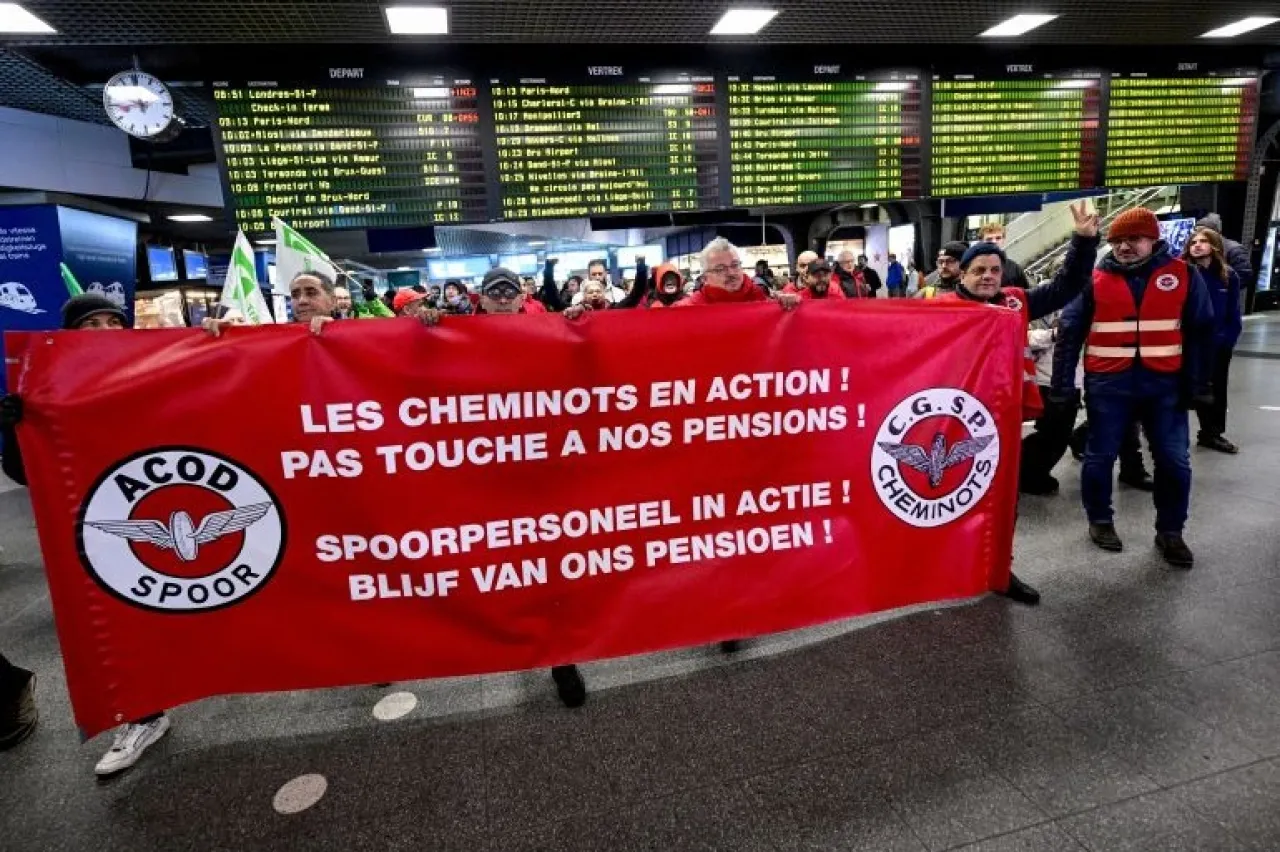
Khaberni - The strike in Belgium started today, Monday, and will last for 3 days, called for by the country's main labor unions, in protest against the reforms planned by the De Wever government to balance public finances, with severe disruptions expected in railway services and public services as well as air navigation.
The protest movement is organized in 3 stages, starting with the disruption of public transport and rail services on Monday, and the Belgian Railway Company (SNCB) expects to operate no more than half or even a third of train trips depending on the lines, and many trips via "Eurostar" trains connecting Brussels to Paris will be canceled.
The Belgian news agency (Belga) reported that peak hour trains will be particularly affected by the strikes, with passenger service disruptions expected to continue until Wednesday.
Public services are expected to join on Tuesday, with schools, daycare centers, postal services, public transport, waste collection, government offices, healthcare, and hospitals shutting down, before a planned national comprehensive strike day on Wednesday, when the strike is expected to expand with many private sectors joining.
Brussels and Charleroi airports, the two largest airports in Belgium, announced that no flights will depart from them on Wednesday, while strikes by security personnel and airport ground service workers are expected to affect incoming flights.
These strikes come in the backdrop of an announcement by Belgium's center-right coalition government late Sunday night, early Monday, about an agreement for wide-ranging austerity measures aimed to save 10 billion euros ($11.5 billion) by 2030.
The agreement raises the savings level compared to what the ruling coalition had planned at the start of 2025, and includes some new income sources, including doubling the tax on investment accounts or raising the value-added tax on some products.
Belgium, along with Greece, Italy, and France, experiences some of the worst debt levels in the Eurozone and needs to save billions of euros in public spending to comply with European Union rules regarding public debt and budget deficit levels.
The government is facing increasing pressure from labor unions and opposing public sectors against the mentioned measures, and in October last year, approximately 100,000 people participated in protests against austerity measures.