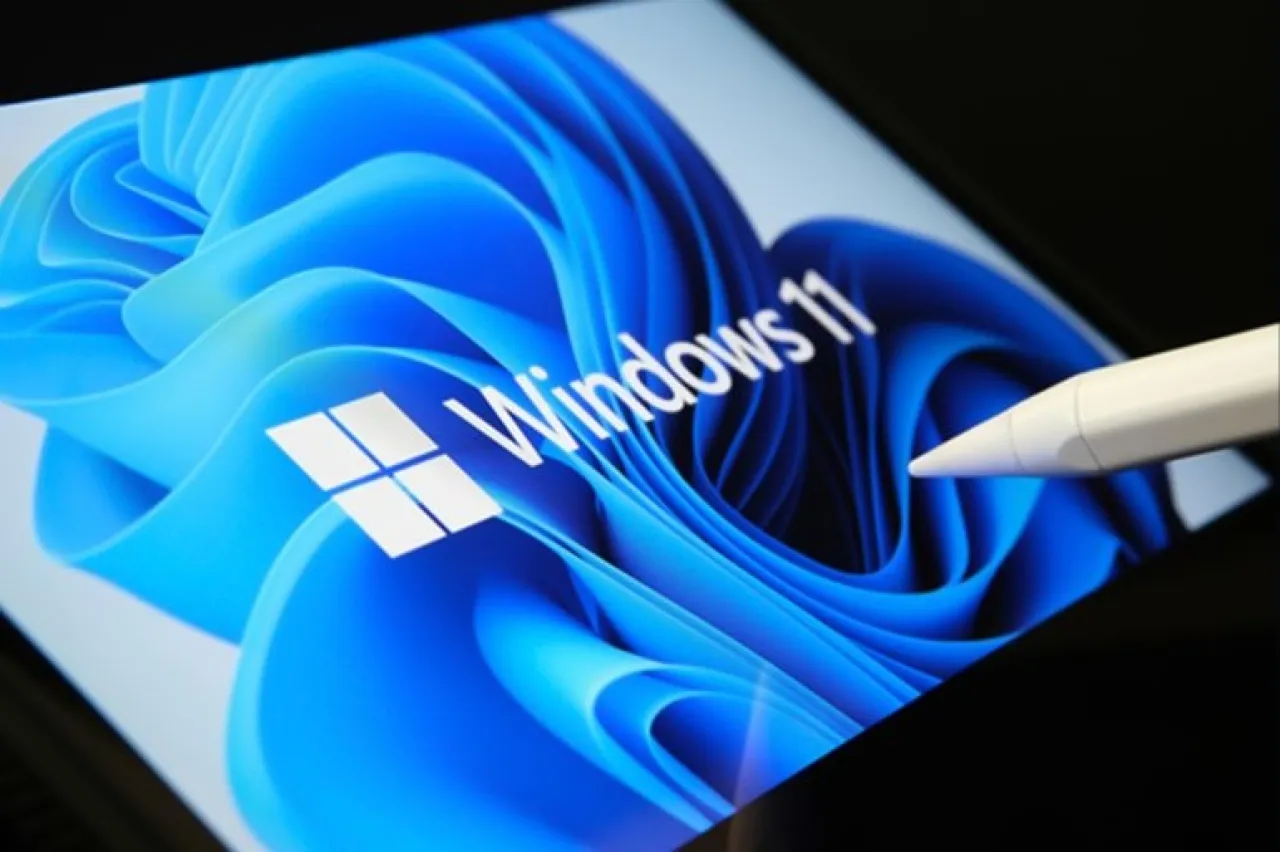
Khaberni - The announcement by "Microsoft" about the end of official support for "Windows 10" has sparked widespread controversy, as it means the stoppage of security updates and free technical support.
Although ending support is a natural step in the life cycle of any software system, "Microsoft" is facing a storm of criticism this time, not because of the decision itself, but because of the way the transition to "Windows 11" has been imposed.
"Windows 10" emerged a decade ago and was widely used in homes, companies, and government institutions.
The end of support marks a major turning point in the technology industry, forcing millions of users around the world to upgrade to "Windows 11" or abandon their current devices.
"Microsoft" promotes the "Windows 11" operating system as a necessary step to enhance security and performance, but the stringent upgrade requirements render millions of computers incompatible.
This upgrade has sparked debate about planned obsolescence and the environmental responsibility of major corporations, with many users viewing it as a disaster due to its wide-ranging environmental, economic, and social repercussions.
Reasons for Ending Support
"Windows 10" appeared as an operating system as a service, with continuous updates instead of major new releases, and the company promised long-term support.
However, the company announced in 2021 that official support ends in October 2025 with "Version 22H2" being the final release.
September figures indicate that 4 out of 10 "Windows" users worldwide are still using it despite the launch of its successor "Windows 11" in 2021.
"Microsoft's" main reasons for ending support include focusing on the development of "Windows 11," which supports advanced features like artificial intelligence, and the need to reduce support for older versions to save resources.
"Microsoft" offers an "Extended Security Updates" (ESU) program that provides only critical and important security updates, but without new features, non-security fixes, or technical support for general issues.
The cost and duration vary greatly depending on the user type, whether it is an individual consumer or a commercial institutional client.
To win user loyalty, the company offered the option of getting the first year's updates for free, but this option is not entirely free, as it requires linking the device to the "Windows Backup" service and syncing the settings with the cloud through "OneDrive".
The company follows a policy of turning security into a service by linking important security updates to its cloud system.
Backup operations often exceed the free limit, forcing the user to purchase monthly or annual storage plans, thus turning the free option into a process of selling cloud services.
Stringent Requirements Hinder Compatibility
"Windows 11" imposes strict technical requirements, notably support for "Secure Boot" and the second generation of "Trusted Platform Module" (TPM).
The supported "Intel" processors are limited to the eighth-generation processors, while the "AMD" list includes the "Ryzen 2000" series and above.
"Microsoft" claims that these requirements enhance the system's security against certain attacks, such as key storage theft or boot-level software tampering.
Doubts have arisen that these requirements are unnecessary and debatable, as the system operates on devices that do not have them, albeit without some advanced security functions.
Users have succeeded in bypassing these requirements and running "Windows 11" on unsupported devices using official and unofficial methods, proving that the system operates without them without major issues.
This suggests that the requirements may be a tool for enforcing planned obsolescence, especially as "Microsoft" has relaxed some restrictions in recent releases.
These requirements led to the exclusion of millions of devices, making them ineligible for an upgrade despite surpassing the basic performance requirements and being capable of running day-to-day tasks efficiently, thus intensifying the debate on sustainability.
Some believe that the real purpose of implementing these requirements is to control the lifecycle of devices and stimulate the new device market, rather than enhancing security.
Instead of being a tool to extend the lifespan of devices and improve their efficiency, the update has become a means to impose their obsolescence deliberately.
Electronic Waste Disaster
According to a study by "Canalys", the end of support for "Windows 10" is expected to turn about 240 million computers into electronic waste, equivalent to the weight of 320,000 cars.
The process of recycling electronic waste requires significant energy and specialized facilities to handle it safely.
When electronic devices are not recycled, they typically end up in landfills, where toxic materials such as lead, mercury, and cadmium leak into the soil.
These chemical substances pollute the soil and affect its quality, making it unfit for agriculture, posing risks to drinking water supplies and aquatic ecosystems, and moreover, the burning of electronic waste releases harmful vapors into the atmosphere.
Many users have expressed opposition to this decision, considering it an environmental disaster, with calls to boycott "Microsoft" or switch to "Linux".
Campaigns, such as the "Restart Project", urge "Microsoft" to prevent waste production, as a technical step ostensibly for security updates may lead to an increase in global electronic waste.
At a time when major tech companies are moving to reduce their carbon footprint, "Microsoft's" step contradicts all environmental sustainability slogans, turning the software update into an environmental disaster.
The impact of this policy is not limited to the environment but extends to the economy, especially in developing countries that rely on used devices, as buying a new computer costs hundreds to thousands of dollars.
Many users indicate that this forced upgrade is undesirable, with a preference to stay on "Windows 10" despite the risks.
Ongoing Microsoft Issues
"Windows 11" faces privacy criticisms, as it collects large amounts of diagnostic data and sends it to the company's servers, without sufficient transparency regarding the nature of this data or how it is used.
The new "Outlook" app is accused of uploading all email messages to the company's servers for scanning by artificial intelligence as soon as a non-Microsoft email account is logged in.
The "Microsoft Photos" app contains an edit button that uploads the photos the user views to the cloud without explicit confirmation or approval.
Paying for the operating system license is not the only cost, as "Windows 11" displays paid advertisements and marketing recommendations in places that should not be commercial promotion sites.
The company tested the appearance of ads in the Start menu, and ads and promotional alerts appear on the lock screen, alongside pop-up windows that try to prevent users from switching to browsers other than "Microsoft Edge".
"Microsoft" integrates its AI-based tools, notably "Copilot" and its cloud services "OneDrive" extensively and forcibly, where the "Copilot" button is inserted in the taskbar and in search tools.
The insistence on integrating these features forces users to interact with "Microsoft's" cloud and AI system even if they do not wish to do so.
In conclusion, the end of support for "Windows 10" is not just a technical event, but an environmental and financial disaster revealing the policies of planned obsolescence in the technology industry, while "Microsoft" offers security benefits, but the upgrade to "Windows 11" appears unnecessary and undesirable for many with alternatives like "Linux".