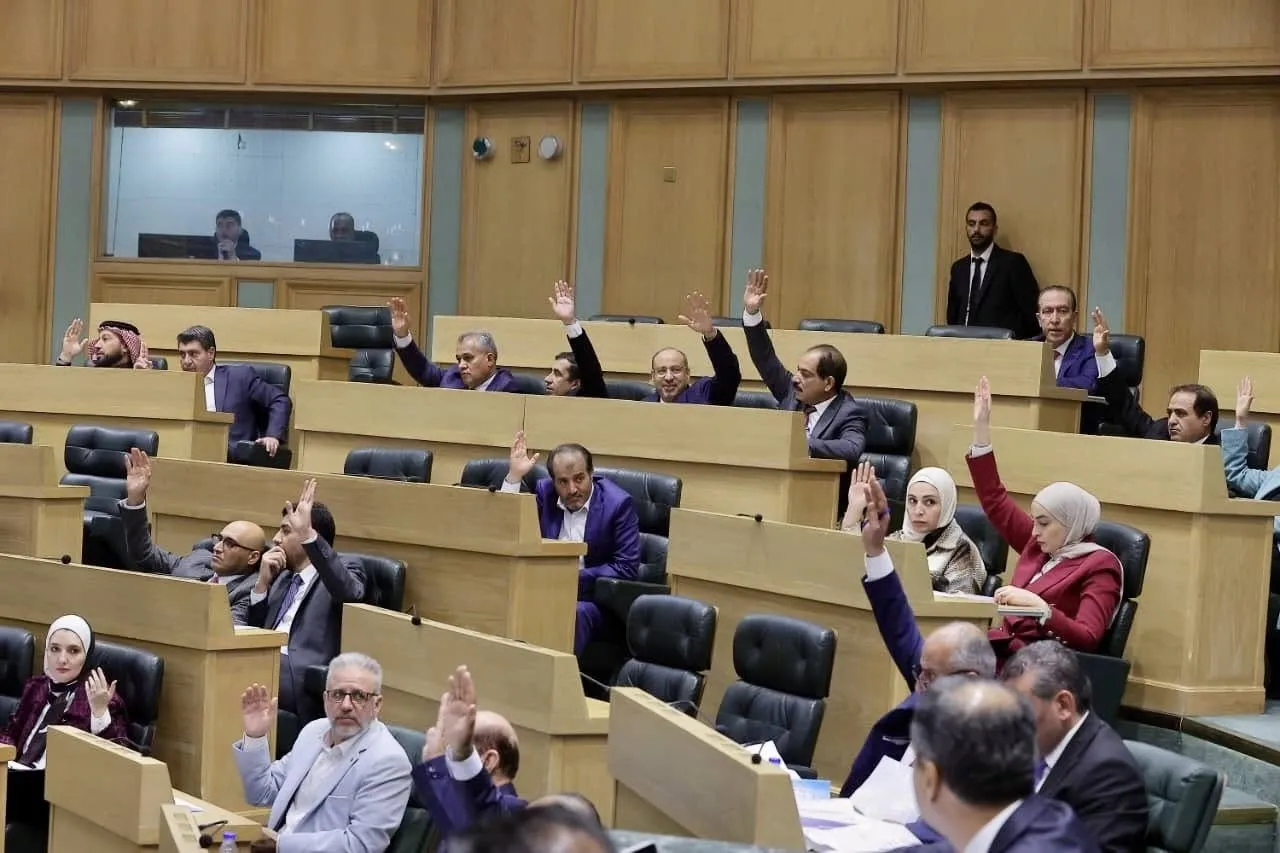
Khaberni - The House of Representatives, by a majority, agreed to refer 11 legislative proposals to the specialized parliamentary committees.
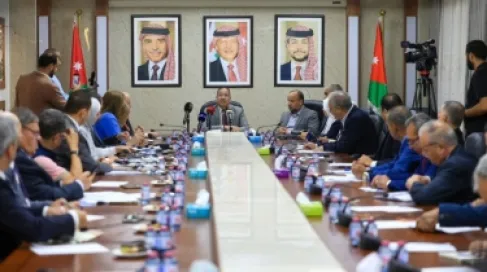
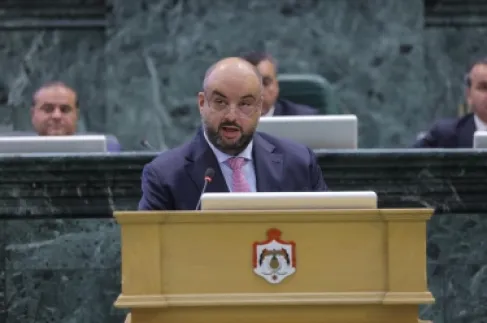
This occurred during a legislative session held today, Monday, chaired by the council president Mazen Al-Qadi, with a part presided over by the council's first deputy, Khamis Atiyah, and attended by the Prime Minister Jafar Hassan and members of the government team.
The council referred an amendment bill for the Electronic Transactions Law for the year 2025, to the parliamentary committees: Digital Economy and Legal.
The cabinet had decided in a session held on August 28, to approve the reasons justifying the “Electronic Transactions Amendment”, paving the way for its referral to the Legislation and Opinion Bureau for proceeding with the enactment procedures according to the regulations.
The bill comes to keep pace with the rapid development in the field of information technology, within the framework of the government’s approach and its vision in the electronic transformation program, empowering all institutions to keep up with these necessary transformations to facilitate services provided to citizens and service recipients.
According to the justifying reasons for the "Electronic Transactions Amendment", it aims to expand the application scope of the Electronic Transactions Law by canceling the exemptions contained in it, which prevent the provision of certain services electronically, and to grant legal validity to electronic information and electronic records that meet the conditions stipulated in the law.
Alongside the adoption of electronic authentication certificates issued by foreign entities outside the kingdom from the Ministry of Digital Economy and Entrepreneurship, according to the procedures and controls specified in the instructions issued for this purpose.
The council also referred an amendment bill for the Notary Law for the year 2025, to the Legal Parliamentary Committee.
The cabinet had ratified in a session held on September 8 the “Notary Amendment”.
The bill aims to improve the quality of public services provided to citizens by allowing the notary to perform transactions submitted from outside the kingdom electronically, while also authorizing the use of electronic means in notary transactions and granting them the legal status set for paper transactions.
According to the amendments, the geographically jurisdictional scope of the notary will expand to include all provinces without being confined to the jurisdictional rules of the court to which it belongs, thereby reducing the time , effort, and costs for citizens and service recipients and enabling them to complete their transactions electronically or at the nearest available location.
Regarding the amendment bill for the Law of Endowments and Islamic Affairs and Holy Sites for the year 2025, it was referred by the House of Representatives to the National Guidance and Media Parliamentary Committee.
The cabinet had approved, in a session held on April 28, the "Endowments Amendment" which aims to reorganize the Council of Endowments and Islamic Affairs and Holy Sites, so as to enhance the investment of movable and immovable endowment funds and properties, ensuring the endowment's interest according to the provisions of Islamic law and the conditions of the endowers and replacing bonds with sukuk.
The bill also aims to regulate the properties and funds of the Hajj Fund, add the Holy Quran printing program to the endowment programs, aimed at expanding the printing of copies of the Quran and spreading them in the kingdom.
According to the justifying reasons for the "Endowments Amendment", the adjustments will cancel the Fatwa Affairs from the tasks of the Ministry of Endowments and Islamic Affairs and Holy Sites, as it has become a jurisdiction of the General Iftaa Department according to the Public Iftaa Law.
The House of Representatives also referred an amendment bill for the Sharia Execution Law for the year 2025, to the Legal Parliamentary Committee.
The cabinet had approved, in a session held on May 4, the amendment bill for the Sharia Execution Law for the year 2025, which comes to simplify the procedures for executing Sharia rulings, expedite the delivery of rights to their rightful owners, give the convicted a chance to work and earn to fulfill their rights, and reduce resorting to imprisonment where possible, in addition to developing methods of Sharia execution in dealing with the convicted.
Regarding the Gas Law bill for the year 2025, it was referred by the House of Representatives to the Parliamentary Committee on Energy and Mineral Resources.
The cabinet had approved, in a session held on August 10, the Gas Law bill for the year 2025, which forms a modern legislative framework that regulates gas sector activities and hydrogen derivatives in the kingdom, and enhances the national infrastructure for energy.
The project includes various types of gas, such as natural gas, biogas, biomethane, and hydrogen, reflecting legislative flexibility to accommodate the global shift towards clean energy.
The bill covers main gas activities, including import, transport, distribution, storage, wholesale, and retail, within an integrated system that enables shared or self-use of facilities.
It enables the implementation of major economic and strategic projects and encourages investment in the sector through a clear regulatory environment and streamlined licensing procedures covering all project stages.
The new bill aims to stimulate the transition to natural gas, thanks to the existence of a regulating law and streamlined procedures that encourage investment in transport and distribution networks and storage.
It sets clear mechanisms for calculating fees and grants licensees the freedom to sign investment and sale agreements within a transparent and equitable competitive environment.
The council also referred an amendment bill for the law on the ratification of the treaty on the extradition of persons between the Hashemite Kingdom of Jordan and the Kingdom of Spain for the year 2025, to the Legal Parliamentary Committee.
The cabinet had approved, during a session held on August 17, the bill on the ratification of the treaty, which comes in the context of enhancing cooperation between Jordan and Spain in the field of combating crime, reducing it, ensuring that criminals do not escape justice, and facilitating the extradition of persons in accordance with constitutional principles.
The council also referred to the Parliamentary Committee on Energy and Mineral Resources.offsetTop