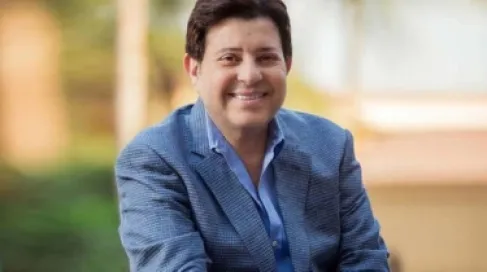
Khaberni - Egyptian star Amro Diab is preparing to embark on a new dramatic experience that will portray chapters from his artistic and human biography for the first time, through a series inspired by a literary novel written by journalist and novelist Ibrahim Issa titled "Amro.. Where There is Solitude".
Issa announced that the novel, which spans about 600 pages, is based on extensive dialogue sessions with Amro Diab that lasted for about 16 hours, during which "El Hadaba" discussed pivotal milestones in his artistic and personal journey, providing rich material that blends narrative, historical, social, and artistic dimensions, according to the website "Cairo 24".
Issa explained that the work does not present a traditional biography, but rather a comprehensive narrative vision that documents the career of an artist who formed an exceptional Arab musical phenomenon, in a dramatic project that is expected to see extensive collaboration during the stages of development, preparation, and production.
It should be noted that Amro Diab's last cinematic appearance as an actor was through his famous film "Laughter, Play, Seriousness and Love" in 1993, featuring Youssra and Ezzat Abu Auf, and written by Tamer Habib, directed by Tarek El-Telmisany, before he completely dedicated himself to his singing career thereafter.
Throughout more than four decades in the artistic scene, Amro Diab has maintained his position at the forefront of Arabic singing, benefiting from his continuous ability to renew his music and keep up with new generations.
In the year 2025, his brilliance continued with the release of his new album "Ibtedaina", which achieved wide spread on digital platforms, and topped the listening charts in a number of Arab and international countries.
Among the most prominent songs of the album came the song "Khatfooni" which sparked significant interaction after his daughter Jana Diab participated in its performance, alongside the song "Baba" which achieved wide spread and once again reinforced the presence of "El Hadaba" as one of the most prominent icons of contemporary Arabic music.