Khaberni - Environment Minister Dr. Ayman Suleiman confirmed that the ministry will not be an obstacle to investors, but will have a regulatory role, through coordinating with the concerned sectors to address challenges and impediments in a way that benefits the national economy and stimulates economic sectors.
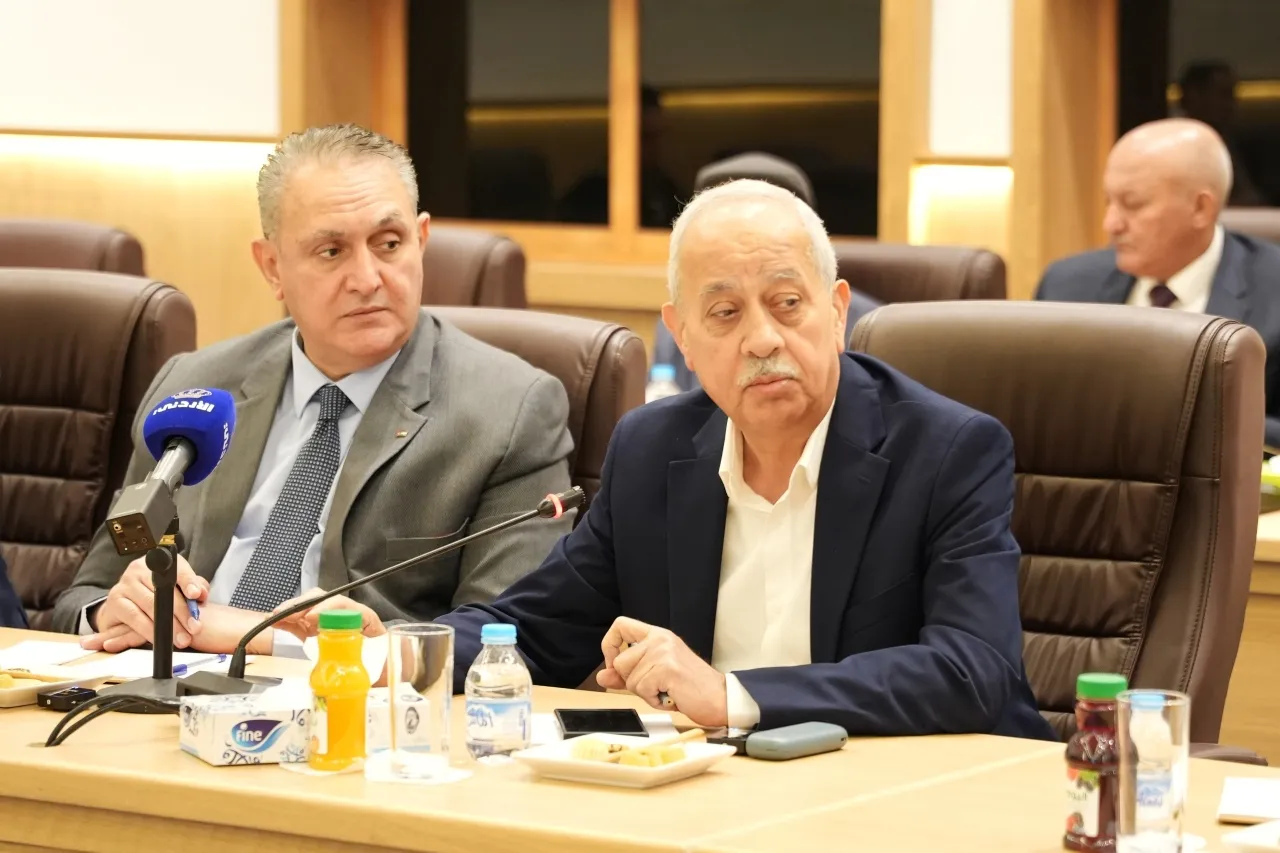
Suleiman added during a meeting in the Amman Chamber of Industry, attended by a number of industrialists from various sectors, with the presence of the Secretary-General of the Ministry of Environment Dr. Omar Arabiyat, that the Ministry of Environment is currently working on simplifying its procedures through amending the environmental classification and licensing system to create a suitable business environment and remove obstacles facing industrialists by balancing sustainability of investment projects and environmental protection, adding that issues raised during this meeting will be addressed.
For his part, the president of both Jordan and Amman chambers of industry, Engineer Fathi Al-Jaghbeer, emphasized the reality that industry is the main support for the Jordanian economy and is most capable of creating job opportunities for the nation's sons, stressing the need for prior coordination between the ministry and the chambers regarding decisions related to industrial work.
Al-Jaghbeer praised the new approach adopted by the Ministry of Environment in studying the issues of industrialists, by adopting the principle of partnership and cooperation to solve their issues, in a manner compatible with the laws followed in the kingdom.
During the meeting, the environmental classification and licensing system was discussed, in terms of the inappropriateness of the classifications for the nature of different industrial activities, as well as the issue of classifying some light industries as if they were high-risk industries, where industrialists requested an update of the system to reflect the nature of industrial activities.
Regarding the oversight on iron and metal factories, the attendees discussed imposing ambient air readings for factories in cases that do not warrant it, whereby factories are burdened with responsibilities not related to actual sources of pollution, as these measures indicate that these factories are responsible for this pollution, not emissions from diesel trucks.
Industrialists called for adopting a gradual approach regarding the application of specific instructions for the use of plastic bags, emphasizing the involvement of factories when making decisions regarding these bags.
Industrialists called for encouraging recycling investments through congratulating a flexible and stimulating regulatory environment for projects working in recycling.
Industrialists stressed the need for unifying the tests applied to local products so that they include imported products, as local factories are subjected to tests not imposed on imported products, with an example discussed being the carpet industry, where lab tests on PET granules in local carpets are conducted without these tests being conducted on imported carpets.
Industrialists demanded exemptions for factories from conducting environmental studies as long as they possess international certifications like ISO.
Regarding the inspection mechanism for factories, attendees discussed the role of the Public Safety Committee, clarifying a clear overlap in the powers and tasks of this committee and legally competent entities, with the necessity of coordinating with industrial chambers and the Ministry of Industry when inspecting factories.