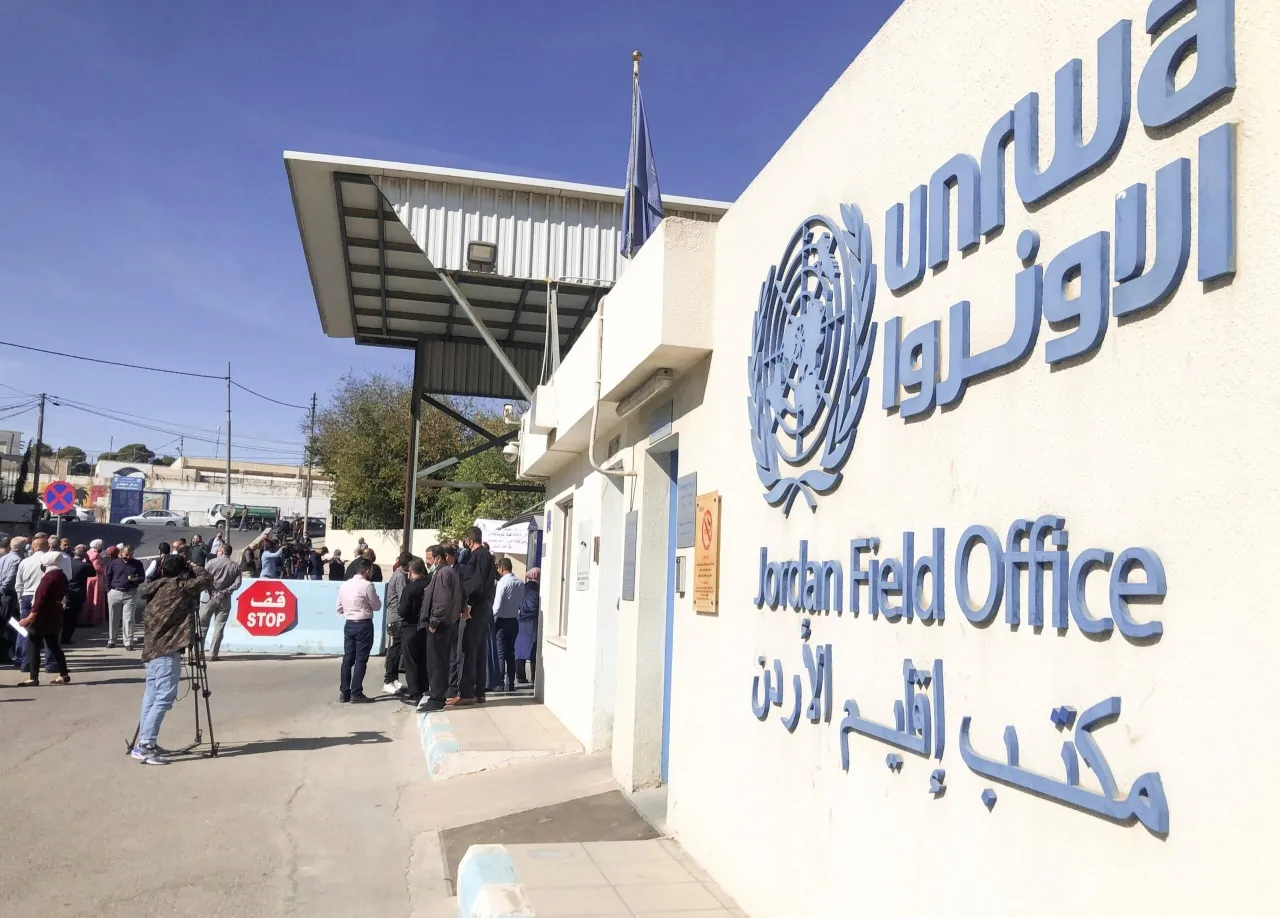
Khaberni - The funding crisis has become one of the most urgent and impactful issues affecting the ability of the United Nations Agency for Relief and Works Agency for Palestine Refugees (UNRWA) to continue its core missions in Jordan, Lebanon, and Syria, especially after the suspension of US support for it.
According to a recent report on its operations in the region, which highlighted the scale of the financial and humanitarian challenges that have hindered its work in the first half of this year, and affected the reality of the refugees, especially the most vulnerable among them, the agency confirmed that with the increasing economic and social pressures in the three countries, and the exacerbation of the consequences of conflicts in the region, it is facing an unprecedented financial gap that threatens to deplete its vital services for millions of refugees, according to Al-Ghad.
According to the report, UNRWA's funding to implement its projects in Jordan for the first six months of this year constituted 20% of the funding requirements, as it received 5.4 million dollars out of 27.2 million dollars funding requirements.
While the total funding it received since the beginning of this year until June 30th was 53.9 million dollars, which is 12% of the funding requirements, estimated at 464.3 million dollars in those countries.
The report stated that in the first half of the current year, the three countries experienced a state of ongoing uncertainty; in Syria, scattered acts of violence continued, while violations of the ceasefire by the Zionist occupation are still ongoing in Lebanon, as Jordan continued to face the accumulated effects of regional instability, including economic pressures and the prolonged presence of refugees.
The vulnerable groups, including former Gaza residents and Palestinian refugees from Syria, faced ongoing barriers in accessing legal status, livelihoods, and basic public services.
Among the 19,578 Palestinian refugees who fled the Syrian conflict and continued to reside in Jordan until June of the current year, 2,946 of them lacked official documents.
Most of the Palestinian refugees from Syria, numbering 402 who reside in Jerash Camp. It indicated that 69% of the Palestinian refugee households from Syria in Jordan rely on cash assistance from "UNRWA" as a primary source of income, and there are 11,664 thousand Palestinian refugees affected by the crisis targeted with primary healthcare consultations and referrals to secondary and tertiary care supported by "UNRWA", and 5 thousand affected by the crisis targeted by protection interventions.
The repercussions of conflicts in Gaza, Lebanon, and regional tensions have weakened tourism, exports, and revenues, creating pressure on public finances and already limited livelihoods.
In this context of hope and vulnerability, the region experienced significant population movements, including the return of large numbers to extremely difficult conditions.
Amid continuing regional vulnerability, UNRWA continued to provide essential humanitarian aid to the most vulnerable Palestinian refugees in the three countries, amid prolonged displacement, increasing return movements, and social and economic pressures.
Regarding Palestinian refugees returning to areas destroyed by conflict, hoping to rebuild their lives, the agency supported shelter, education, health, and protection services.
A larger number of Palestinian refugees affected by the crisis, who remained displaced, relied almost entirely on "UNRWA" for essential services, which include: Multi-Purpose Cash Assistance (MPCA) and protection support, including legal assistance to address ongoing barriers to obtaining legal documents, and those related to legal status settlement.
The Multi-Purpose Cash Assistance remained a flexible lifeline for vulnerable families struggling to meet the costs of rent, food, and other basic needs.
Similarly, 25,348 Palestinian refugees from Syria, 22,616 in Lebanon, and 2,732 in Jordan, received Multi-Purpose Cash Assistance.