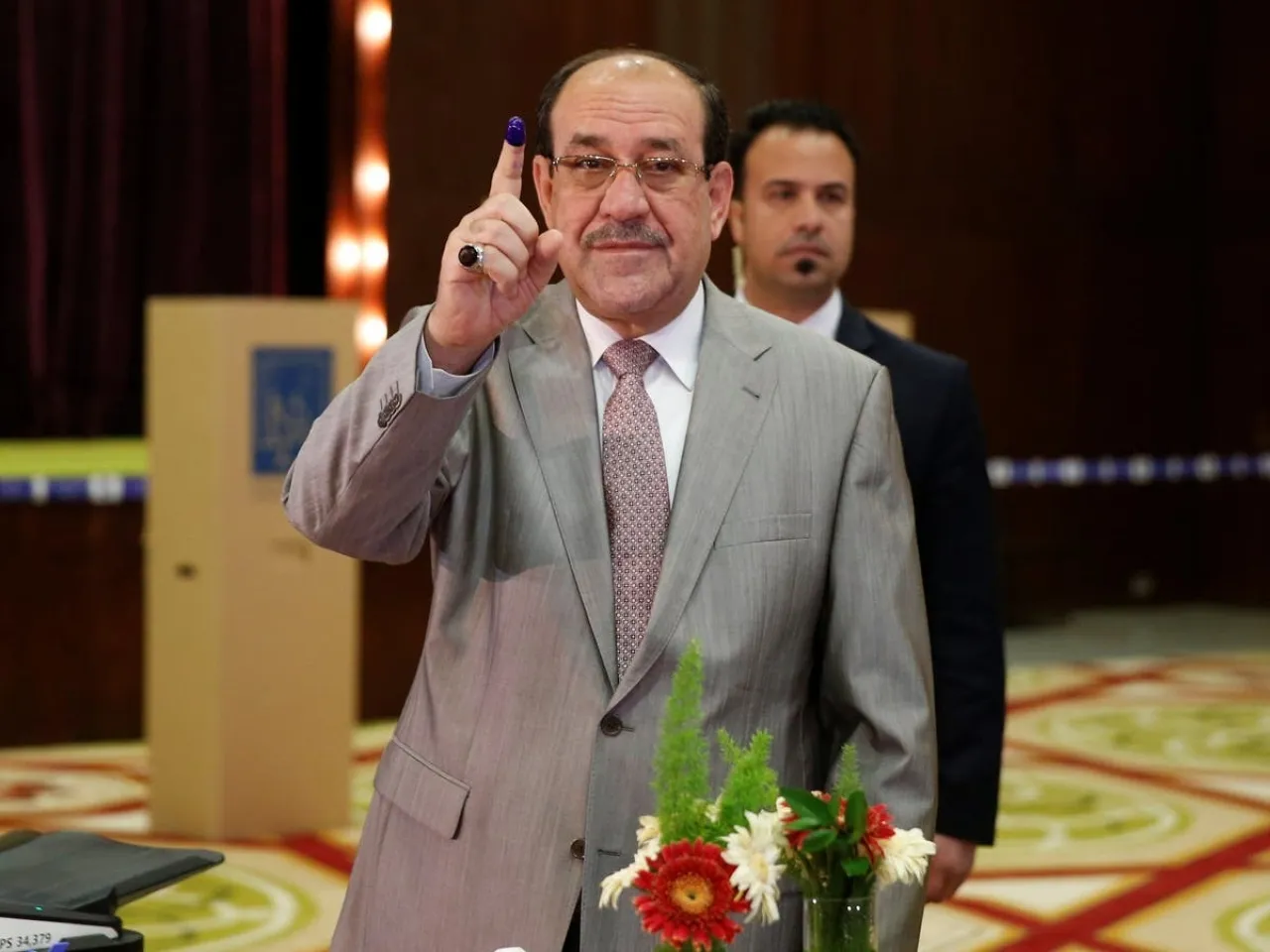
Khaberni - The Shura Council of the Islamic Dawa Party nominated its General Secretary, Nouri Al-Maliki, for the position of Prime Minister in Iraq, according to a responsible source today (Saturday).
The nomination decision coincided with Al-Maliki's visit, who led the "State of Law Coalition" during the parliamentary elections, competing against the bloc of the caretaker Prime Minister Mohamed Shia' Al-Sudani, to Erbil to negotiate with leaders of the Kurdistan Democratic Party about forming the government and choosing the three presidencies after the parliamentary elections held on November 11th.
The "Coordination Framework" coalition resolved its position and presented itself as the largest bloc in the Parliament, thereby holding the authority to nominate a candidate to form the government after forming a leadership committee from the Frame members, including: Ammar al-Hakim, head of the Wisdom bloc; Sheikh Humam Hamoudi, head of the Supreme Shiite Council; and the Islamic Virtue Party to conduct interviews with candidates for the government's presidency, with conditions set by the coalition leaders, most notably that the candidate should not have future ambitions to renew for a second term in the government.
Al-Sudani, whose coalition "Reconstruction and Development" topped the election results, urged last Thursday to expedite completing the requirements and forming a government capable of implementing the priorities of the phase, and continuing the path of reforms, reconstruction, and development across all provinces of the country.
During a consultation tour with a delegation from the Kurdistan National Union Party, headed by the former Minister of Environment Nizar Mohammad Said Amidi, Al-Sudani emphasized "the necessity to enhance partnership and cooperation among the national forces to expedite completing the requirements and forming a government capable of implementing the priorities of the phase."
The political blocs and parties still have more time to discuss the updates of the political process, especially since the Election Commission has about two weeks to decide on the challenges against the election results which exceeded 130 appeals, and then the Supreme Federal Court will ratify the names of the winners, after which the constitutional timelines for electing the presidencies and forming the new government for the next four years will begin.
In the absence of an absolute majority, any coalition capable of negotiating with allies to form the largest bloc will nominate the next Prime Minister.