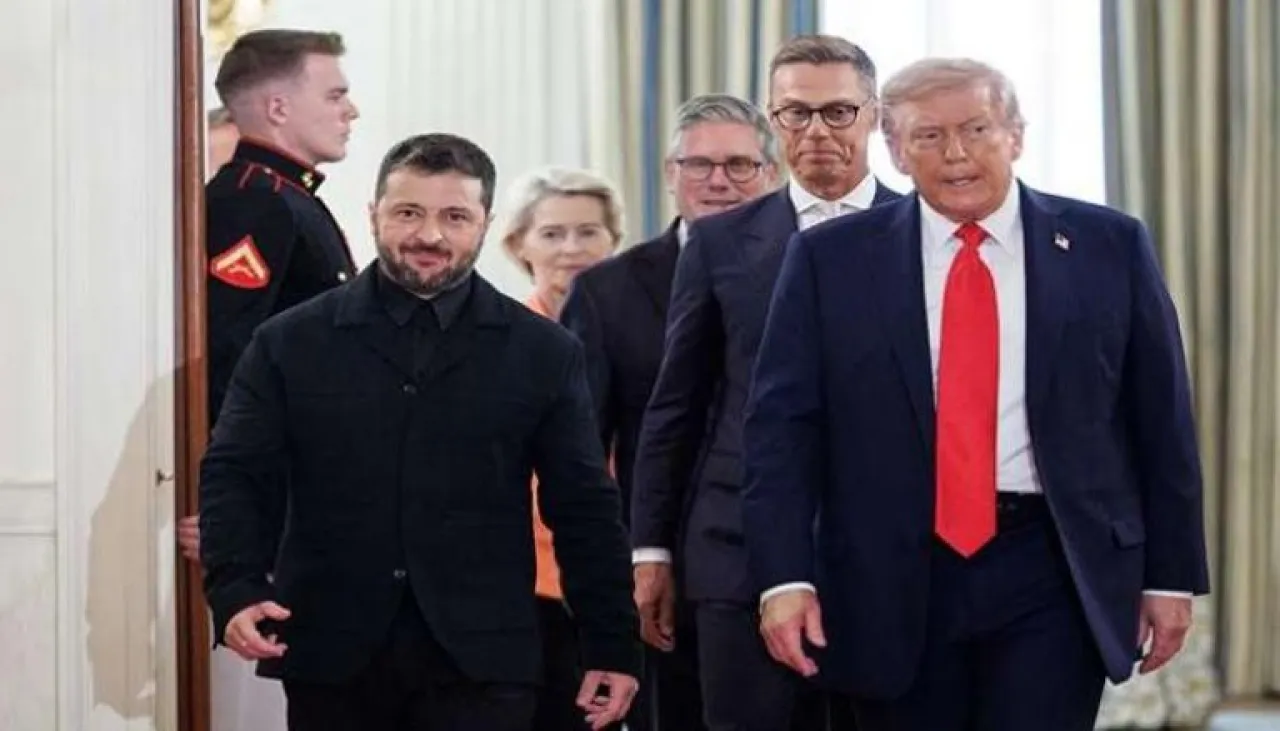
Khaberni - The administration of US President Donald Trump is racing against time to push a new peace path between Russia and Ukraine, inspired by the same approach that Washington employed
in reaching a ceasefire between the resistance and the entity in Gaza.
According to the American network "CNN", the White House is working on preparing a peace plan based on the "binding points" model previously used by Trump, aiming to end the ongoing war since February 2022.
The US Vice President confronts Ukraine with "the truth" as Trump's deadline begins
The network reported from informed sources that efforts to resume negotiations between Moscow and Kyiv have returned to occupy a priority for Trump in recent weeks, following Washington's success in mediating a ceasefire in the Gaza Strip.
A source confirmed that Trump wants to accelerate the timeline for ending the Ukrainian war, which he previously said would be "easy," hoping to reach an agreement before the end of the year.
Administration officials confirm that the White House is indeed seeking a peace agreement between Russia and Ukraine based on the same model used in Gaza, which includes a clear list of points imposing mutual obligations on both parties, including a ceasefire and international funding for reconstruction, with the establishment of a supervisory body led personally by Trump.
According to sources, the similarity between the Gaza and Ukraine plans is "overwhelming" in the initial draft reviewed by "CNN," which includes controversial clauses that Kyiv had previously rejected, such as: conceding areas not currently controlled by Russia, reducing the size of the Ukrainian army, and including in the Ukrainian constitution a formal commitment not to join NATO.
The draft also stipulates the creation of a "peace council" chaired by Trump to oversee the implementation of the agreement, which is the same structure included in the Gaza proposal.
European concern
Reports this week indicated that Trump's envoy, Steve Witkoff, has been working directly for months with Kirill Dmitriev, the Russian special envoy and head of the Russian sovereign fund, to draft the plan.
Six European sources revealed that this cooperation has raised widespread concerns in Brussels, as European officials have not received an official briefing on the developments, despite the European Union's principle of "no negotiations on Ukraine without Ukraine."
European concerns intensified after reports circulated that Witkoff was working "exclusively" with the Russian side, before the intervention of US Secretary of State Mark Rubio to defuse tensions, with a tweet affirming that ending the war requires "serious and realistic ideas," and that the administration is still "developing a list of potential ideas" without presenting a final proposal yet. A European diplomat described the tweet as a "signal of the plan’s non-finality."
On its part, the White House spokesperson Caroline Levitt explained that Witkoff and Secretary of State Mark Rubio had been working on the plan "quietly for months," confirming that the draft "is still in development," and that the administration benefits from the experience gained in the Gaza agreement. She added that the envoys communicate with both Russia and Ukraine "equally" to understand the extent of each party's readiness to provide commitments.
Despite the American reports, the Kremlin denied any joint operation with Washington regarding the peace plan. Kremlin spokesman Dmitry Peskov said: "There are no consultations… there are contacts, but they do not rise to the level of consultations."
Conversely, the Ukrainian presidency officially received the American draft for review, without indicating an acceptance or rejection stance.
During his pre-scheduled visit to Kyiv, US Army Secretary Dan Driskoll presented the draft to Ukrainian officials in an effort to "reinvigorate the diplomatic path," a move considered by some Europeans as an indication that Washington is serious about advancing the negotiation process.
Potential diplomatic vacuum
These developments coincide with reports of corruption spreading in Ukraine, which some US administration officials consider a factor that may weaken Kyiv’s negotiating position. European capitals fear that Washington might exploit this weakness to extract greater concessions from Ukraine.
The additional ambiguity shrouds the identity of the official who will oversee direct communication with Kyiv in the next phase, after US Special Envoy Keith Kellogg informed close associates that he plans to leave his position at the beginning of next year, potentially creating a diplomatic vacuum at a sensitive moment.
Between the "Gaza Plan" model and the "Ukrainian Peace" draft, the Trump administration seeks to draft an agreement that puts an end to the most bloody war in Europe since World War II. However, the controversial clauses of the plan, the absence of international consensus, and the conflicting interests among the parties, make the task extremely complicated… and the upcoming weeks may determine whether Trump can indeed achieve a "diplomatic breakthrough" before the end of the year, or if the process will remain suspended amid a complex international calculation network.