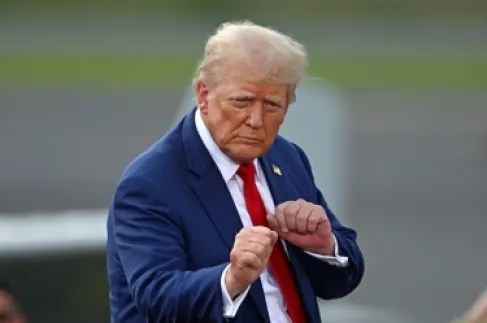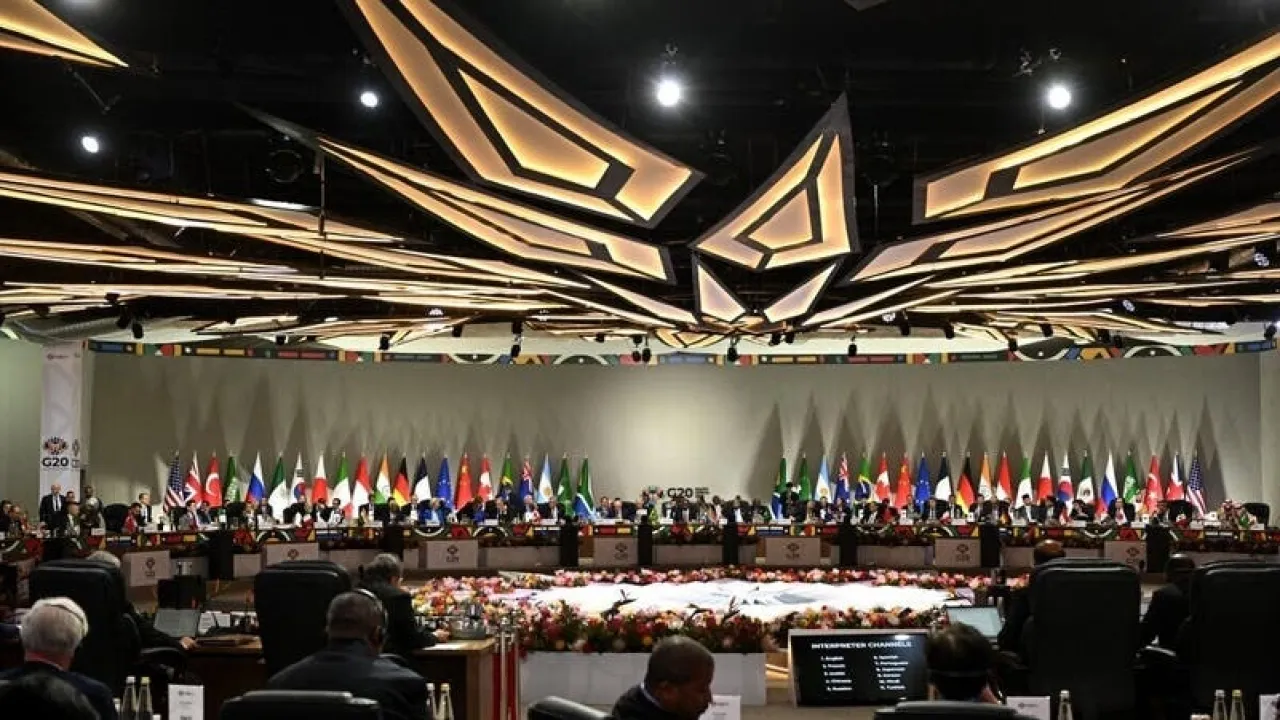
Khaberni - The first G20 summit to be held on African soil opened in Johannesburg today, Saturday, amid a noticeable absence of the United States following the decision by US President Donald Trump to completely boycott the meetings, in an unprecedented move reflecting deep political tension with the host country, South Africa, and widening the gap between Washington and the rest of the major economies on issues of climate and development.
"White Persecution" Accusations
The crisis openly began when Trump accused the South African government of "adopting racist policies against whites" and "persecuting the Afrikaner minority," in statements that relied on inaccurate narratives and were quickly rejected by the United Nations and several Western governments.
Trump went even further, considering that his country's attendance at the summit would be tantamount to "legitimizing a discriminatory regime," prompting him to issue a presidential order to completely boycott the summit, including barring any high-ranking American official from participating.
Although the United States did not provide formal evidence to substantiate these allegations, the political decision marked a peak of a long dispute between Washington and Pretoria over climate, debt, and global governance issues.
Clash with Johannesburg's Agenda
As the host country, South Africa set an agenda focused on four main pillars: doubling the funding directed to support poor countries in facing climate disasters, reducing debt burdens on developing economies, accelerating the transition to clean energy, and ensuring that African countries benefit from their wealth of vital minerals.
However, these priorities directly clashed with the new American stances. U.S. Secretary of State Marco Rubio described the summit's agenda as being "preoccupied with diversity and climate issues more than American taxpayers' interests," announcing in February a boycott of the pre-summit foreign ministers' meetings.
Washington views the excessive focus on climate as "deviating" the group from its economic role, while countries of the global south speak of a "historic moment" to achieve economic parity, further increasing the distance between the two sides.
Implications of the American Absence
While the absence of the United States—the world’s largest economy and one of the group's founders—dealt a major blow to the summit's progress for the following reasons:
1- Weakening International Consensus:
The summit operates on the principle of full consensus, and Washington's absence complicates reaching a unified final declaration. Diplomatic sources say the United States exerted pressure on South Africa to avoid issuing an official statement in its absence, which caused an angry reaction from President Cyril Ramaphosa who confirmed: "We will not be blackmailed... and we will issue a declaration with those who attended."
2- Redirecting the Group's Role:
Moreover, what makes the summit more sensitive is that it comes weeks before the United States takes over the rotating presidency of the group. Observers fear that the Trump administration will "undermine" the momentum related to climate and development, especially after announcing that next year's summit will be held at Trump's Doral resort in Florida.
3- Leadership Vacuum Exploited by Other Powers
Washington’s absence created space for the European Union to adopt a bolder stance on climate, China to reintroduce itself as an "ally of the global south," and India and Brazil to push for financial reforms that benefit developing economies. According to diplomats, "the United States left its chair empty, and other powers are quick to fill it."
Does the Absence Affect the Summit’s Outcomes?
Despite initial pessimism, negotiators managed to draft a declaration without American participation, a move described by Washington as "disgraceful." Reports indicate that the text of the declaration contained clear references to renewable energy and climate, despite American objections.
Experts believe that while the absence of the United States "will not prevent progress in discussions," it will render any decisions weak in implementation, given the American economy's weight in financing green transitions and debt restructuring.
In the end, Trump's boycott of the G20 summit is not an isolated step, but reflects a profound shift in American foreign policy, and a desire to redefine the United States' role in the international system. Although the summit continues, one chair remained vacant... and it was the most influential.