Khaberni - The American "Wall Street Journal" revealed on Saturday a plan pushed forward by the United States, aimed at establishing "residential complexes" for Palestinians in the areas controlled by the occupation in the Gaza Strip, in an effort to withdraw civilians from areas under Hamas control.
"Green Zone" and implicit recognition
The newspaper, citing U.S., "Israeli," and Arab officials, indicated that preparations are being made through the "Civil-Military Coordination Center" in southern Israel, led by the U.S. Army.
The report clarified that engineering teams have started planning and debris removal, in a step that is considered an "implicit recognition" that disarming Hamas and removing it from power as per the Trump plan will not be achieved soon.
Thus, Washington is striving to create "alternative safe complexes" known as the Green Zone where services are available to attract residents.
Rafah and "the Yellow Line"
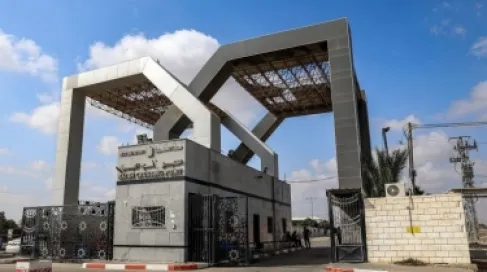
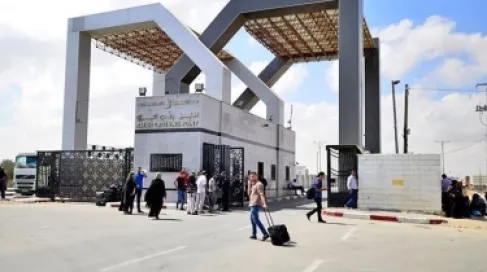
The city of Rafah on the Egyptian border serves as the starting point, where the so-called "Yellow Line" that divides the sector into two halves, a western half for Hamas and an eastern one for the occupation, is being reinforced through the deployment of forces and tanks and barricades, and extending electricity and water networks in the side controlled by the occupation.
Security challenges and "militias"
Also read: The occupation bombs "the Yellow Line" from Rafah to the central city amid intense ground and air movements
The security file remains the most significant hurdle, with estimates of about 100 Hamas fighters in the tunnels of Rafah.
In this context, the report revealed the proposal of "controversial" ideas, including the use of "Palestinian militias hostile to Hamas" and supported by the occupation to secure these communities.
It also pointed to the emergence of armed groups led by figures like Yasser Abu Shahab who received arms and support, despite Western warnings that they are "outlaws".
Arab concerns and Hamas rejection
The plan raises concerns in Arab capitals, fearing "the division of the sector".
Egypt expresses special concerns over the intensification of the population presence in Rafah, fearing their eventual push towards Sinai.
For its part, Hamas rejects this vision, considering that the American project "undermines the political rights of the Palestinian people" and aims to impose security arrangements that do not reflect their will.