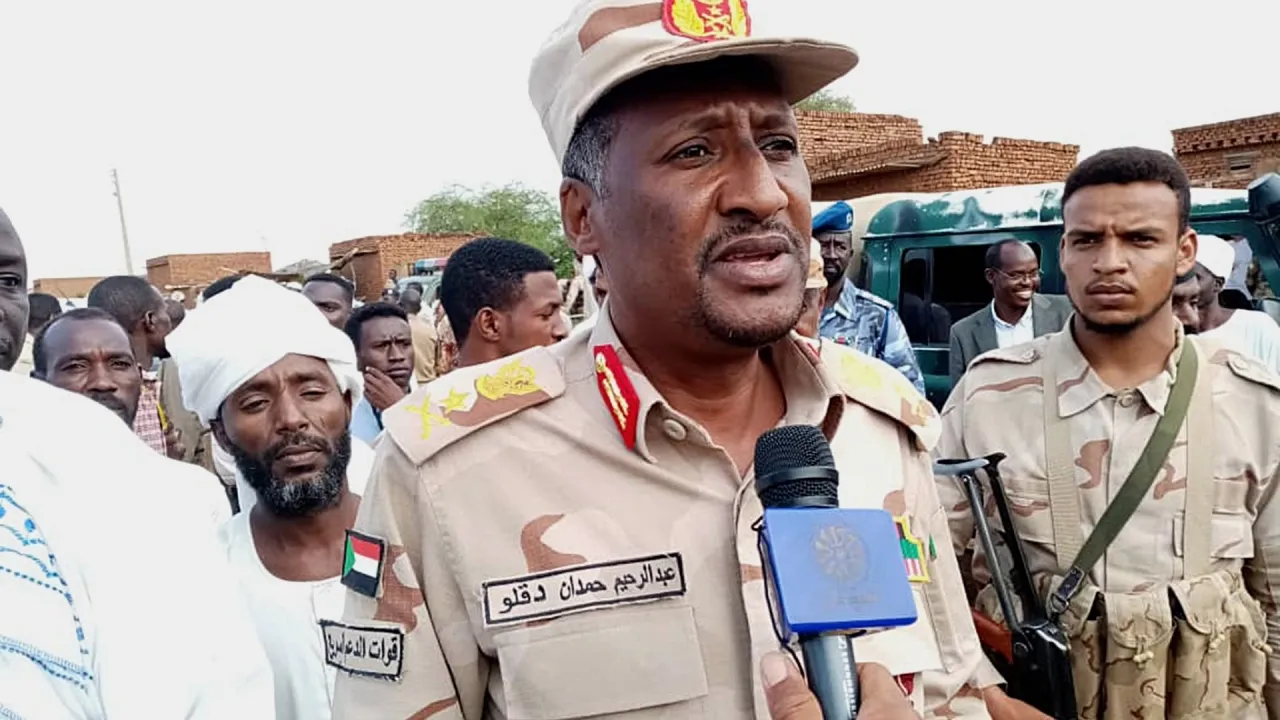
Khaberni - The European Union announced the imposition of sanctions on Abdul Rahim Hamdan Dagalo - the second in command of the Rapid Support Forces and brother of its leader Mohammed Hamdan Dagalo, known as Hamidti – for committing human rights violations.
The sanctions include a travel ban to EU countries and freezing of his assets. The statement on Thursday said that "the European Union strongly condemns the severe and ongoing atrocities committed by the Rapid Support Forces in Sudan, including those committed following the seizure of the city of Al-Fashir."
The statement pointed out that ethnically motivated killings and systematic sexual violence "may constitute war crimes and crimes against humanity."
Since it erupted in April 2023, the war between the Sudanese army and the Rapid Support Forces has left tens of thousands dead and caused about 12 million people to be displaced.
After an 18-month siege, the Rapid Support Forces took control of the city of Al-Fashir in the Darfur region of western Sudan on October 26, last year. Survivors spoke of massacres, ethnic violence, kidnappings, rape, and sexual assaults.
On the other hand, "Reuters" reported yesterday that a leader in the Rapid Support Forces said investigations are ongoing, and anyone found to have committed violations will be held accountable, adding that "reports of violations in Al-Fashir are exaggerated by the army and its allies," according to him.
In response to the European decision, the Rapid Support Forces considered these sanctions unfair and not following proper procedures.
The European Union's foreign policy chief, Kaya Kalas, said after a meeting in Brussels with foreign ministers of the bloc that "this sends a signal that the international community will pursue those responsible" for the violations.
However, she noted that the European Union agreed to enhance its engagement with countries that contribute to fueling the conflict, aiming to halt the flow of weapons.
The war has caused what the United Nations describes as the world's largest humanitarian crisis, at a time when global aid budgets are shrinking.