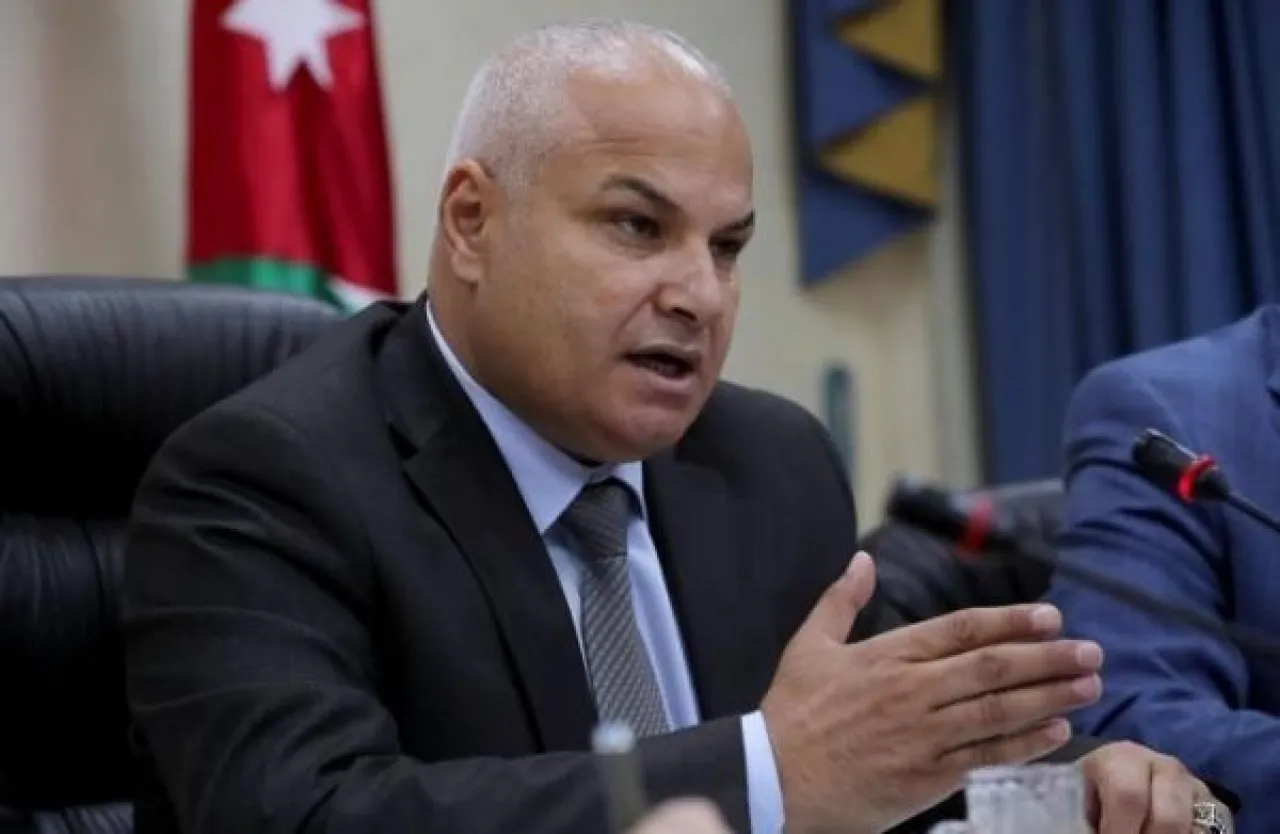
Khaberni - On Thursday, the results of the fourth phase of the project to enhance national capacities to reduce child labor were announced. The project was implemented by the Queen Zein Al-Sharaf Institute for Social Development in Mafraq governorate, sponsored by the Minister of Labor Khalid Al-Bakkar, in partnership with the Empowerment for Legal Assistance and Human Rights Foundation and supported by the Regional Development and Protection Program (RDPP). This coincides with World Children's Day.
Al-Bakkar stated that Jordan is keen on protecting and caring for children because the natural place for a child is in school, not the labor market.
He emphasized that the Ministry of Labor makes annual efforts in cooperation with all partners from governmental and non-governmental entities and civil society institutions to reduce child labor to ensure that children receive proper care in the place they belong—school.
Al-Bakkar explained that the principles contained in the international conventions ratified by Jordan are reflected in Jordanian Labor Law No. (8) of 1996 and its amendments, which prohibit employing minors who have not completed sixteen years of age in any form, as well as their employment in dangerous or strenuous jobs or those harmful to health before they reach eighteen years of age. These jobs are specified by a special decision issued by the Minister of Labor.
He pointed out that the Labor Law punishes employers who violate any of these provisions with a fine of no less than (300) and no more than (500) Jordanian dinars, which doubles in case of recurrence, noting that national efforts have launched a national slogan this year, "A child who learns... A progressing Jordan," to reduce child labor and focus on the importance of education for children and its role in advancing Jordan.
The minister clarified that the role of the Ministry of Labor in the National Strategy to Combat Child Labor 2022-2030 is to enhance inspection procedures regarding work conditions and terms, refer cases of child labor to relevant authorities, and ensure the rights of working children are protected from all forms of exploitation, reduce wage deterioration, and ensure decent work conditions for working children aged 16 to 18 according to legal frameworks.
The project director, Huda Al-Zeitawi, confirmed that the project continues its efforts to combat child labor by focusing on education as a fundamental driver, despite the marked progress in literacy rates in Jordan, especially as there are still families and communities suffering from a lack of awareness of the importance of education.
She indicated that the project adopted a comprehensive methodology that included documenting the conditions of working children in terms of the type of work and place of residence, then evaluating the economic situation of deserving families, noting the provision of integrated services including psychological and social counseling and motivation to re-enroll in school, through direct coordination with the Directorate of Education in Mafraq Al-Qasbah.
Regarding the main recommendations of the project, Al-Zeitawi noted that the project recommends removing children from dangerous sectors and integrating them into appropriate educational programs, whether through formal education or informal education at the association's location, in support of the Ministry of Labor's commitment to implementing its national strategy to combat child labor and in alignment with the royal directives of His Majesty King Abdullah II, which focus on child protection and enhancing educational opportunities.