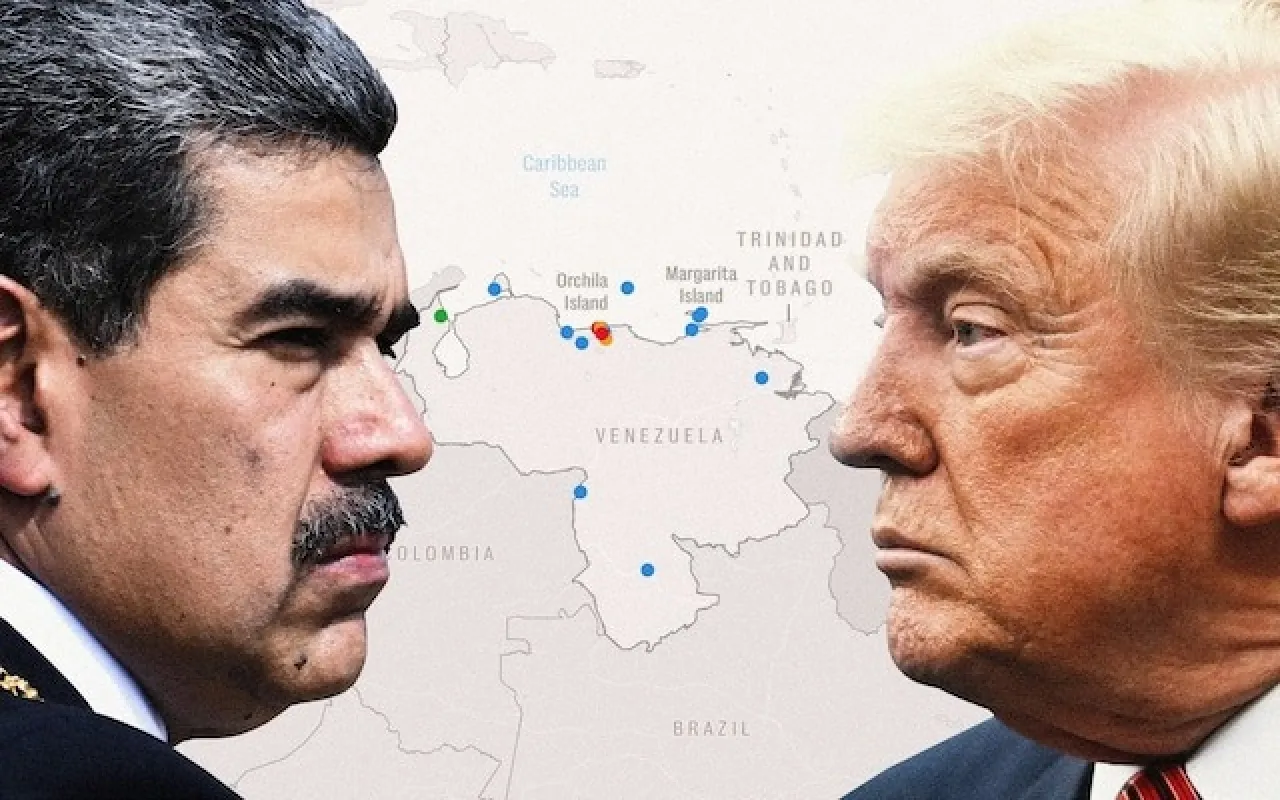
Khaberni - The New York Times revealed, based on knowledgeable sources, that U.S. President Donald Trump agreed to a series of new measures aimed at increasing pressure on the Venezuelan government, amid the presence of the major U.S. aircraft carrier USS Gerald Ford in the Caribbean Sea and the deployment of more than 15,000 soldiers in the region as part of a wide military operation called "Southern Spear".
According to the newspaper, Trump approved plans for the Central Intelligence Agency (CIA) that allow the execution of covert operations within Venezuelan territory, believed to be aimed at preparing the ground for more severe steps in a later stage, which might include electronic, psychological, or media operations.
American military planners also prepared lists of potential targets, including facilities suspected of being linked to drug manufacturing, in addition to plans to strike military units close to President Nicolás Maduro. The sources confirmed that Trump has not yet authorized the deployment of ground forces in Venezuela.
Secret Consultations
The New York Times reported that Trump held two meetings last week in the White House Situation Room, discussing possible scenarios for dealing with the Venezuelan situation with his military and security advisers.
Alongside the military escalation, the newspaper stated that Trump gave the green light to start a new round of secret negotiations with the Maduro government, after a brief suspension of communications last month.
In these back-channel discussions, Maduro—according to the newspaper's sources—showed willingness to allow American energy companies access to Venezuela's oil wealth as part of a potential understanding.
Venezuelan officials also conveyed to Washington that Maduro might be open to stepping down after a transitional period of two or three years, a proposal rejected by the White House, which demands an immediate departure from power.
This comes at a time when the U.S. Department of State announced its intention to designate "Cartel de Los Soles" as a terrorist organization, a move seen by the newspaper as a means to consider part of the Venezuelan government structure as a terrorist organization, enabling additional military or legal options for the U.S. administration.
Ambiguity in Trump’s Final Stance
According to the New York Times, Trump has not yet finalized the U.S. approach towards Venezuela, with options ranging from reaching a diplomatic agreement that grants American companies oil privileges, convincing Maduro to step down voluntarily, or resorting to direct military action.
Despite the public escalation, Trump hinted at keeping the dialogue open, saying, "We may have some discussions with Maduro… We’ll see how things go."
The newspaper also reported that the United States conducted 21 maritime strikes against boats the administration said were linked to drug smuggling operations, resulting in the deaths of at least 83 people.
These attacks, carried out without congressional authorization, sparked legal criticisms because some of the targets might have been civilians or unarmed suspects. Initially, Trump confirmed that the boats were transporting fentanyl, but military officials disclosed in closed briefings to Congress members that the cargoes contained cocaine, not fentanyl.