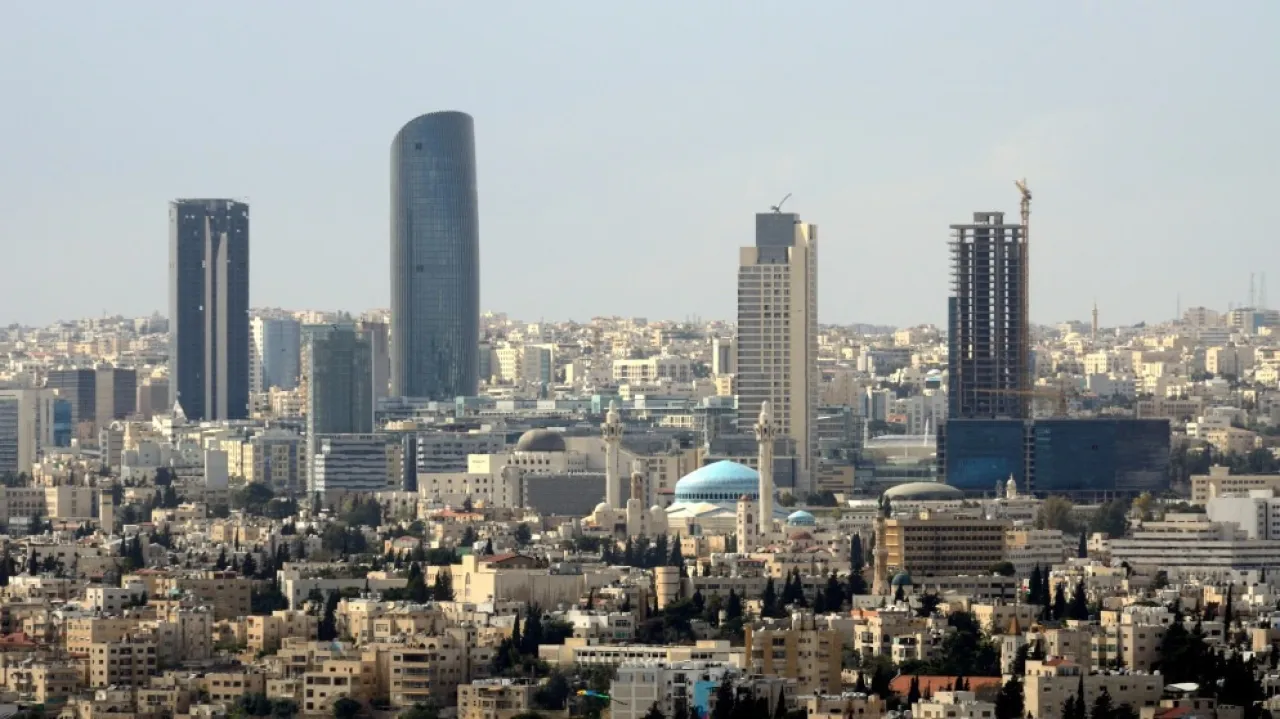
Khaberni - The advisory committee meetings of the United Nations Relief and Works Agency for Palestine Refugees (UNRWA) in Amman will commence on Wednesday, with the participation of about 30 donor countries, in addition to representatives from the host Arab countries of Palestinian refugees, the European group, and the League of Arab States.
Ahmed Abu Holly, a member of the Executive Committee of the Palestine Liberation Organization and head of the Department of Refugee Affairs, said that the advisory committee meetings for UNRWA are held amidst complex challenges facing UNRWA's operational, financial, and political contexts, and their immediate and future impact on the lives of Palestinian refugees in its five areas of operation, and on the mandate of UNRWA and the stability of the region.
He added that the advisory committee will discuss ways to enable UNRWA to carry out its mandate in its five areas of operation as mandated by Resolution 302 and how to leverage the significant political support that UNRWA received from member states in the United Nations General Assembly which adopted the New York Declaration and its annexes last September, which clearly affirmed in article (14) the indispensable role of UNRWA, and the commitment of member states to continue supporting it, including through adequate funding, in executing its mandate, in addition to the advisory opinion issued by the International Court of Justice that obligates the Israeli occupying authorities to cooperate with UNRWA, and President Trump's plan announced last September which included 20 items to end the ongoing war for two years in Gaza, and items (7) and (8) which facilitate the entry of all relief materials without delay through the United Nations and its agencies including UNRWA.
Abu Holly continued: The operations of UNRWA in Gaza after the announcement of stopping the war of extermination will be present in the meetings, and UNRWA will provide a briefing about its operations in Gaza and its emergency humanitarian interventions including its relief, health, and educational services, and recovery plans for its relief, educational, and health operations and the challenges it faces in its work in light of the ongoing Israeli targeting to prevent UNRWA from performing its tasks.
He added that the reforms adopted by UNRWA in its program operations and its responsiveness to the previous recommendations issued by the advisory committee will be discussed, along with reviewing the progress made in implementing the recommendations contained in the external review group report (Colona Report) including the revised implementation plan and results framework, pointing out that the advisory committee will adopt the closing of 20 recommendations that have been fully implemented by UNRWA out of a total of 50 recommendations included in the Colona report, in addition to proposing necessary measures to ensure the sustainability of the reforms that had been closed previously.
Abu Holly clarified that the advisory committee will adopt a set of recommendations co-drafted by the Department of Refugee Affairs with the member states in the UNRWA sub-committee, noting that these recommendations will form a roadmap for UNRWA to protect its mandate and the continuity of its operations and to empower it to overcome operational, political, and financial challenges facing it, and an appropriate framework to support the operations and regular budget of UNRWA with greater efficiency and flexibility, and to ensure resource allocation that maximizes its impact in meeting the basic needs of Palestinian refugees.
Abu Holly confirmed that the Palestinian delegation will work to mobilize support and urge donors and member states at the meeting to support UNRWA to be among the key parties involved in the recovery plan and reconstruction of Gaza Strip, and to face any pressures to exclude UNRWA from this.
According to Abu Holly, the Palestinian delegation will urge UNRWA to innovate new avenues for mobilizing financial resources to cover the financial deficit estimated at $200 million to cover its operational requirements for the current month of November and the upcoming December, and the operational requirements for the first quarter of 2026, and urging member states to increase their funding and sign multi-year funding agreements with UNRWA to secure adequate and sustainable funding, and some donor states will be requested to lift restrictions on their funding for UNRWA after the International Court of Justice ruled that UNRWA does not violate the principle of neutrality and the Israeli accusations are unfounded.
Abu Holly emphasized that the delegation will request member states to urge their governments to support the renewal of the UNRWA mandate for three more years, starting from June 30, 2026, to June 30, 2029, and to ensure that the renewal is accompanied by the necessary funds to execute its mandate, to maintain regional stability, and protect the right of return, affirming that there is no alternative to UNRWA as long as the political resolution to the refugee issue is absent and denied by the state of occupation.