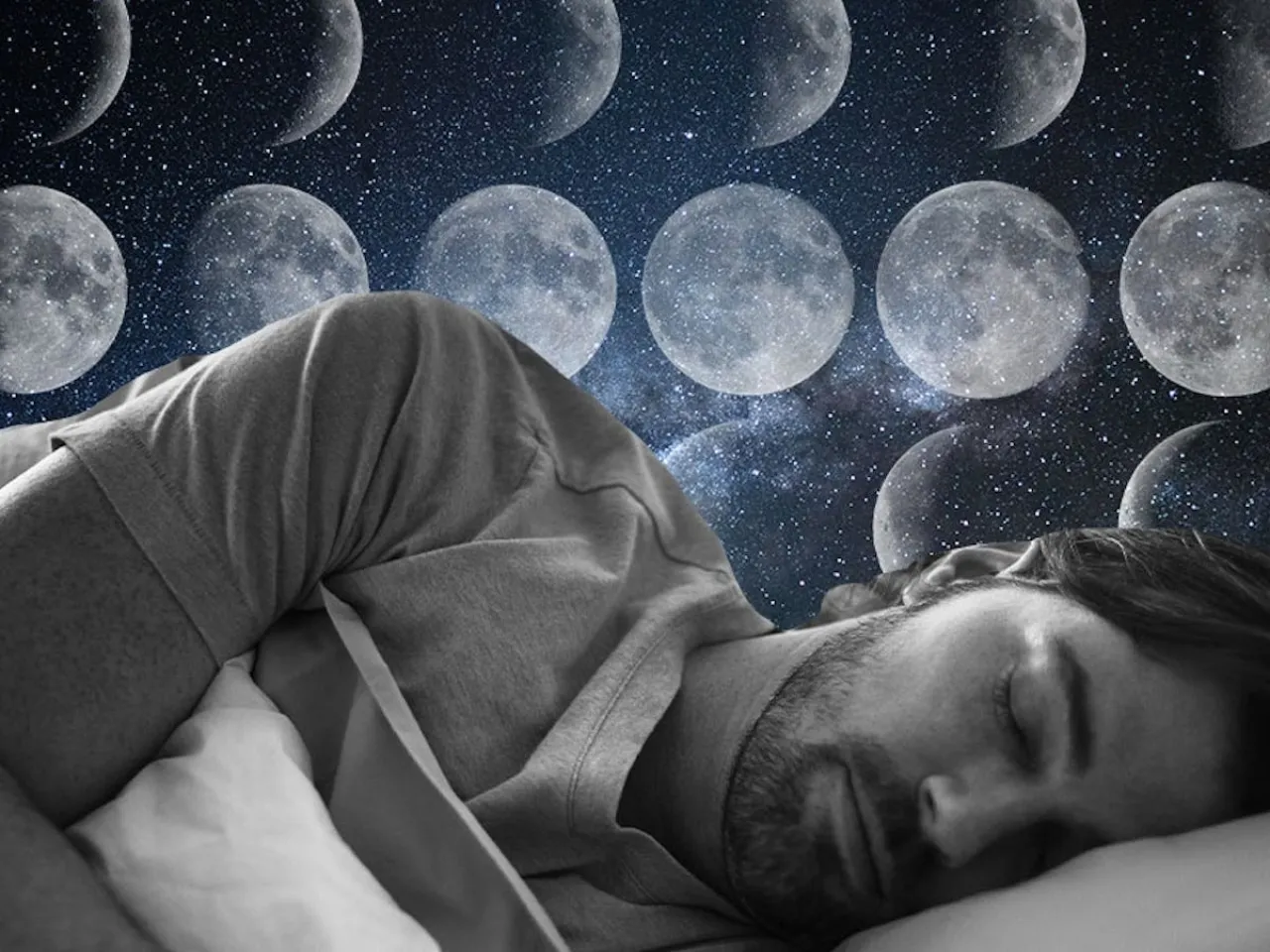
Khaberni - Since ancient times, the moon has been associated with many natural phenomena and human behaviors, from tides in the seas to changes in mood and sleep.
With the advancement of science, the question has become more precise: Does the moon really affect our sleep and mood? Or is it just a myth?
The Moon and Sleep: What Does Science Say?
Recent studies suggest that moon phases, especially during a full moon, may slightly affect sleep quality, showing that people sleep about 20 minutes less on moonlit nights, and the production of the sleep-regulating hormone melatonin decreases.
Scientists suspect that this effect is linked to the intensity of moonlight which may disturb the human biological clock, especially in those who sleep in rooms that are not completely dark.
However, not all studies agree on this effect, as other research has found no clear relationship between the moon and sleep, making it a subject of ongoing scientific debate.
The Moon and Mood: Between Science and Myth
The moon and mood have been a popular topic in various cultures, where it is said that a full moon increases stress and excitability and leads to behavioral disturbances or even an increase in anxiety levels.
Scientifically, some researchers believe that the effect of the moon on mood is indirect, possibly resulting from lack of sleep or excessive light during the full moon, which leads to disruption in the body's biological rhythm, and thereby mood swings.
In addition, psychological and social factors play an important role, as the suggestion that the moon affects mood may lead some to interpret any slight change in their psychological state as due to the moon, known in psychology as "suggestive effect".
The Moon and Mental Health
Despite limited conclusive scientific evidence, some studies have linked the moon to mental health, especially in individuals suffering from mood disorders like depression or bipolar disorder.
It is believed that moon phases may sometimes coincide with periods of psychological activity or dormancy in these individuals, but it is not definitively stated that there is a direct causal relationship; rather, experts believe that sleep disturbances caused by moonlight may be the real factor behind these psychological changes.
Is Light the Real Cause?
Modern humans live in an environment filled with artificial light sources, such as phones and computers, making moonlight less impactful than in the past. However, in rural or natural areas, where there is no artificial light, the effect of the moon may be more evident on sleep and mental rest.
From here, experts emphasize the importance of adjusting room lighting and using blackout curtains to minimize the impact of any external light, whether from the moon or otherwise.
The Moon and Biological Rhythms
The human biological clock is influenced by natural factors such as light and darkness, and since the moon reflects sunlight and causes periodic changes in nighttime lighting, it is natural that it has a slight impact on the biological rhythm.
However, this effect does not compare with the impact of the sun or electronic devices, which affect melatonin production and sleep regulation more significantly.
Tips for Overcoming Sleep Disruptions on Moonlit Nights
1. Avoid looking directly at the moon just before sleep or sitting in very bright places.
2. Use blackout curtains to block external light in the bedroom.
3. Keep electronic devices away at least an hour before sleep to reduce brain stimulation.
4. Practice relaxation techniques such as deep breathing or meditation before bed.
5. Maintain regular sleep schedules to help stabilize the biological clock.
Although the moon remains a mesmerizing element in nature and has its clear astronomical effects, its impact on sleep and mood is still limited scientifically. While some studies indicate a slight relationship between a full moon and sleep disruptions, others believe it is more related to environmental and psychological factors.
Nevertheless, being aware of the effects of moon phases and the importance of regulating sleep and avoiding light sources at night can help improve sleep quality and maintain overall mental health. So, the moon may not directly control our moods, but it always reminds us of how connected we are with the rhythms of the nature surrounding us.