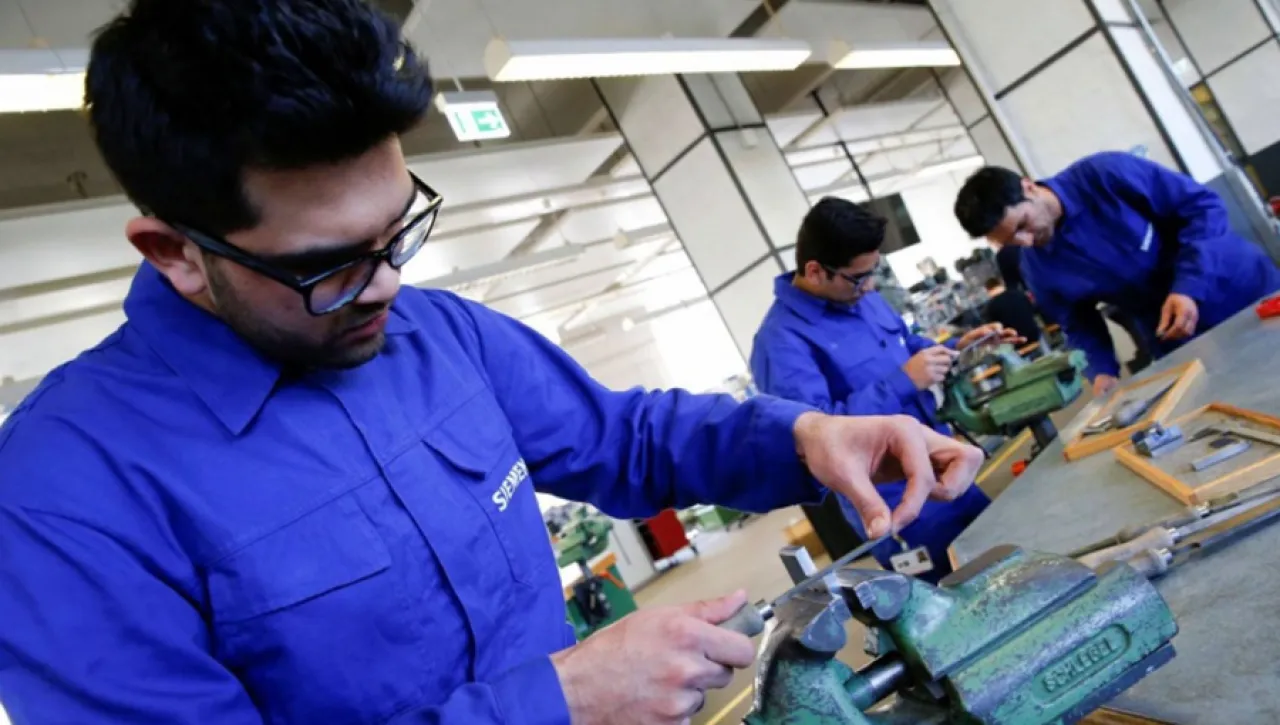
Khaberni - The Ministry of Education is introducing 3 new specialties within the BTEC vocational and technical education program starting from the next academic year, including early childhood care, electronic sports and gaming, and aviation engineering. Educational experts see these as educational and economic pillars that enhance the readiness of societies for the future, as they contribute to achieving sustainable development, meeting the dynamic labor market needs, and embedding 21st-century skills, in addition to building human capital capable of creativity and leadership in the digital age, according to what was published by the daily newspaper Al-Ghad.
These experts explained in separate talks to "Al-Ghad" that these specialties achieve comprehensive development in student competencies, by embedding scientific and analytical thinking, enhancing innovation and technical imagination, and developing collaborative working and professional communication skills.
They clarified that the vision of the Ministry of Education in expanding this pathway represents a correct and important step towards modern education that keeps up with the future, noting that vocational education is no longer an alternative today, but has become a fundamental pillar for building the future of modern states.
Ibrahim Al-Ramadhneh, the acting director of vocational and technical education department and advisor to the Minister of Education for vocational and technical education affairs, revealed during a seminar held by the Government Communication Forum recently under the title "Education and Teaching.. Achievements and Development", about the introduction of 3 new specialties within the vocational and technical track (BTEC), starting from the next academic year, represented by "aviation engineering, electronic games and sports, and early childhood specialization."
Transformations that require updating
In this context, educational expert Hanan Al-Amri confirmed that the world is witnessing profound transformations in the structure of the economy and society as a result of the fourth industrial revolution and the acceleration of technological development, and vocational and technical education is a strategic path to respond to these transformations, by providing quality specialties directly linked to the needs of the local and global labor market, and the requirements of 21st-century education and sustainable development goals.
Al-Amri pointed out that the specialties of early childhood care, aviation engineering, and electronic games represent pivotal models for these fields, due to their scientific, economic, and social impact.
She explained that early childhood is a crucial stage for cognitive, emotional, and social development, where the basic building blocks of intelligence, language, identity, and behavior are formed, noting that specialists in this field contribute to enhancing cognitive and language growth, developing early thinking and problem-solving capabilities, and fostering social and communication skills, as well as supporting the psychological well-being of the child.
She mentioned that this specialty participates in the early detection of learning difficulties and developmental disorders, and provides educational therapeutic interventions that improve future educational success chances, reflecting directly on the quality of life and supporting women's economic participation through the provision of professional and safe nursery services.
Al-Amri saw that the specialty of early childhood care represents a tool for achieving sustainable development goals, especially the fourth goal related to quality education, and the third goal related to health, in addition to promoting educational justice and building strong and sustainable human capital.
She said that the specialty of aviation engineering contributes to increasing the efficiency of air transport and supporting the national economy, in addition to expanding the job market in the fields of maintenance, engine design, and air manufacturing, noting that it aligns with the 21st-century requirements focused on STEM, and serves the sustainable development goals related to industry, innovation, and infrastructure, and enhances countries' competitiveness in the global economy.
She added that the electronic gaming industry has become an economically and culturally growing field based on digital technology and artistic creativity, as this specialty provides job opportunities in game design, programming, animation, virtual reality, and interactive technologies.
According to Al-Amri, this field also contributes to developing educational and training solutions based on simulation, in addition to supporting the knowledge economy and technical entrepreneurship, noting that it aligns with global market trends that require advanced digital skills capable of producing innovative entertainment and educational content, thus enhancing digital transformation and achieving sustainable economic growth.
She noted that these specialties achieve comprehensive development in student competences through embedding scientific and analytical thinking, enhancing innovation and technical imagination, developing collaborative working and professional communication skills, and instilling mental flexibility and the ability to adapt, in addition to fostering digital culture and continuous self-learning.
Al-Amri pointed out that these new specialties represent educational and economic pillars that enhance the readiness of societies for the future, as they contribute to achieving sustainable development, meeting the dynamic labor market needs, and embedding 21st-century skills, and building human capital capable of creativity and leadership in the digital era.
She considered that investing in these specialties, within the vocational and technical education track, is an investment in a competitive future that supports quality of life, enhances innovation, and strengthens and enhances the country's position in the global economy.
Opening prospects for youth
Meanwhile, educational expert Faisal Tayeh saw that the ministry is moving towards expanding the vocational and technical track in the kingdom's schools, by introducing new specialties within the (BTEC) program, with the aim of equipping students with practical skills and applied knowledge that match the requirements of the modern labor market.
He added that this step represents part of a comprehensive strategy to enhance vocational and technical education, and open wider prospects for youth to acquire skills that enable them to face future challenges and actively contribute to national development.
He explained that in the context of the qualitative transformation witnessed by the ministry towards education linked to life, work, and production, the step of introducing new specialties within the vocational and technical track, as a practical translation of a national vision aimed at building a human being possessing both skill and knowledge, as this strategic direction reflects a deep awareness that sustainable development cannot be based solely on traditional education, but on education capable of making change and preparing a productive and creative citizen.
He pointed out that this step is in line with the application of the (BTEC) program, which is one of the most prominent modern educational models in the world, as it relies on project-based learning, practice, and continuous realistic assessment, and focuses on enabling students to possess practical thinking skills, innovation, teamwork, and effective communication.
Tayeh considered that this approach not only transmits knowledge but builds competence, and transforms the school into a laboratory for life, where the student learns how to think, work, solve problems, and create solutions, as this approach contributes to forming the student's confident personality, proficient in 21st-century skills, such as critical thinking, communication, innovation, and teamwork.
He explained that the expansion in vocational and technical education reflects the state's orientation towards a national economy based on added value, knowledge, and production, and supports the youth's ambition to engage in modern and advanced fields that enable them to actively contribute to the nation's renaissance.
He noted that vocational education today is no longer an alternative path, but has become a fundamental pillar for building the future of modern states, as it combines thought and action, theory and application, ambition and skill, noting that the vision of the Ministry of Education in expanding this pathway represents a correct and important step towards modern education that keeps up with the future.
Response to the vision of modernization
For his part, educational expert Ayesh Al-Nawayseh said that the development of vocational education in the kingdom came in response to the royal directives in the economic modernization project.
Al-Nawayseh explained that the application of the "BTEC" system in schools began from the academic year 2023/2024, and initially included six major specialties at that time, and continued to expand until the number of offered specialties reached 12 now.
He saw that introducing new specialties starting from the next academic year is a vital response to the future needs of the labor market and support for the economic modernization vision.
He explained that the early childhood specialty enhances the quality of care and basic education for children, and fills the gap in qualified personnel in this vital sector, while aviation engineering aims to build national capabilities that serve the growing aviation sector locally and regionally, and attract investment, especially in the context of the development of drone use in civilian life.
He considered that the electronic gaming specialty represents a step towards the knowledge economy, as it equips youth with high digital and creative skills required in one of the fastest-growing industries globally, opening up new job prospects in line with the digital transformation, noting that these specialties collectively make vocational education more flexible, quality, and tied to future requirements.
He confirmed that the success achieved in previous specialties encouraged the ministry to move forward in developing the program through linking and aligning it with the labor market, as the "BTEC" system excels in developing self-learning skills and improving competencies required for the labor market, in addition to enhancing competency-based learning and providing greater practical hours.
He referred to that this system relies on assessment through achievements and tasks, which prepares students for future professions, and helps them develop their practical, scientific, and personal skills to meet the labor market requirements.
Al-Nawayseh pointed out that this system contributes to improving the quality of technical and vocational education, and achieves the ministry's vision in raising the enrollment rate in vocational and technical education to 50%, as the "BTEC" system is a vocational technical program that focuses on applying projects through study materials and practical assignments, and integrates both theoretical and practical aspects, with a greater focus on practical applications in evaluating students' performance, noting that this system grants students a certificate that qualifies them to enter the labor market or continue their studies in colleges and universities.