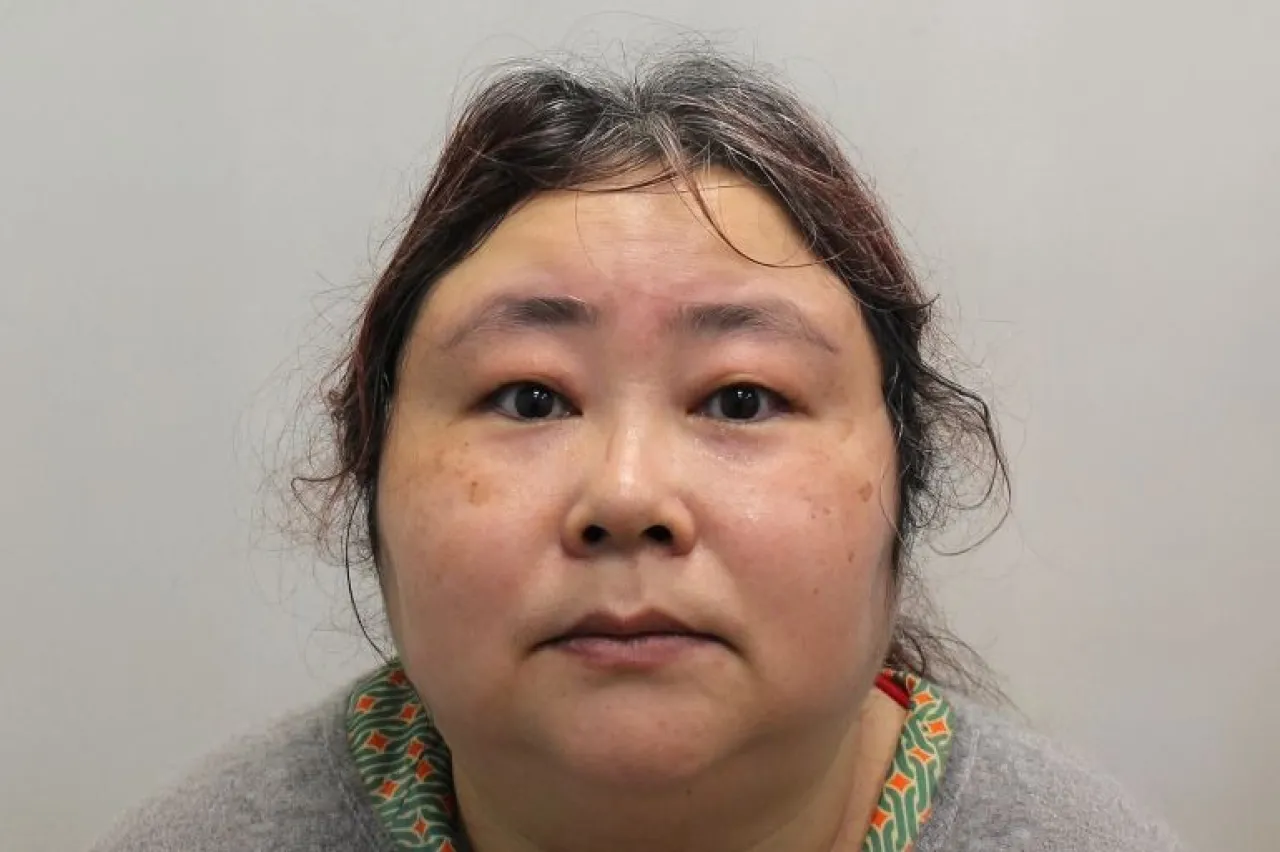
Khaberni - After years of investigations, British courts have sentenced Qian Qimin, known as the "Cryptocurrency Queen," to 11 years and 8 months in prison following her conviction for leading a fraudulent network that gathered tens of thousands of stolen bitcoins. This sentence is the culmination of a 7-year investigation that began with her first arrest in 2017.
According to the Metropolitan Police, the defendant had about 61,000 bitcoin, valued at about $7.3 billion, making this the largest seizure of cryptocurrency in the history of the United Kingdom, surpassing similar actions witnessed in other countries in recent years.
The beginning of the story: From promises of wealth to the collapse of hopes
The story began in China in 2013 when Qimin founded her company "Lantian Geyue" (Blue Sky), which claimed to be involved in electronic mining and the development of high-tech medical devices. However, authorities later confirmed that the company was a front to defraud over 100,000 investors, most of them retirees, collecting more than 40 billion yuan ($5.6 billion) from them.
The British Broadcasting Corporation (BBC) reported one of the victims, Mr. Yu, as saying, "They paid us very small daily profits, about 100 yuan ($14), which made us believe we were actually making money, so we kept investing more and more until we lost everything," adding that his loss led to the collapse of his marriage and estrangement from his son.
Chinese investigations later revealed that the profits distributed to investors were not the result of mining, but were funded by the money of newcomers to the platform, in a classic pyramid scheme.
Lavish life funded by the money of the elderly
Qimin (47 years old) fled to the United Kingdom with a forged passport in September 2017 after the investigations against her began in China. According to British police, she rented a luxurious mansion on the outskirts of Hampstead Heath for £17,000 a month ($22,000), presenting herself as a wealthy businesswoman specializing in the trade of diamonds and antiques.
BBC explained that the defendant recruited a personal assistant - who had previously worked in a small restaurant - to convert bitcoins into liquid assets by purchasing properties, jewelry, and cars. Last year, the assistant was sentenced to 6 years in prison for money laundering.
In her diaries found by the police, Qimin set out an "ambitious six-year plan" which included establishing an international bank and buying a castle in Sweden, as well as approaching a British nobleman. She also wrote down a provocative goal of becoming "Queen of Liberland," an unrecognized small area between Croatia and Serbia.
From poetry to nightmare.. How did she deceive thousands of Chinese?
BBC report revealed that Qimin's company exploited the patriotic sentiments of the elderly in China, holding large conferences and writing poems about "love of country" and "caring for the elderly as the first love," which earned her people’s trust. Public figures, including the son-in-law of the late leader Mao Zedong, also participated in promoting the company, thus enhancing its false credibility.
One of the investors named Li said, "For us, Qimin was the goddess of wealth. She promised us prosperity for three generations within just three years," adding that he and his family invested more than 10 million yuan ($1.3 million) before the company suddenly collapsed.
Historic seizure and expansive investigations
After trying to purchase a large mansion in Totteridge Common, north London, British police initiated a broad investigation into the source of her funds. Upon raiding her home in Hampstead, digital storage devices containing tens of thousands of bitcoins, then valued at more than £5 billion, were found.
British police stated that the evidence showed that Qimin was the "mastermind" behind the network, exploiting her victims' vulnerability and limited ability to understand modern financial technology.
In April last year, she was arrested in the city of York, northern England, where she was living with four people she had illegally brought from abroad to work on domestic and security tasks.
Destiny of the loot.. Victims between hope and disappointment
The British Crown Prosecution Service states that there are more than 120,000 victims in the case, and a civil lawsuit will be initiated early next year to determine the victims' entitlement to recover their money.
However, lawyers representing some of the investors told the BBC that the task "will be extremely complicated" because many of the victims did not transfer their money directly to Qimin's accounts but to local brokers who later passed it on to the parent company.
It has not yet been decided whether compensation will be calculated based on the original amounts or according to the current value of the bitcoin, which has risen more than 20 times since the defendant fled to Britain.
In case it is difficult to determine the claimants or prove their ownership, the seized funds will revert to the British Treasury, as mentioned in the report, noting that the Treasury Department has not yet commented on how these amounts will be handled.
Human tragedy behind the numbers
Among the victims of the fraud are painful stories, as Mr. Yu says one of the investors from Tianjin city in China died of cancer after failing to afford the treatment costs, adding, "She asked me before her death to write a eulogy for her. I indeed wrote it and said in it: Let's be pillars that raise the sky, not sheep that are led and misled."
While the victims in China and Britain await the outcomes of the trial, the case has become a symbol of the transformation of digital currencies from a promising technological tool to a cross-continental fraud tool, transcending the boundaries of regulation and revealing the fragility of legal systems in the face of the new world of money.