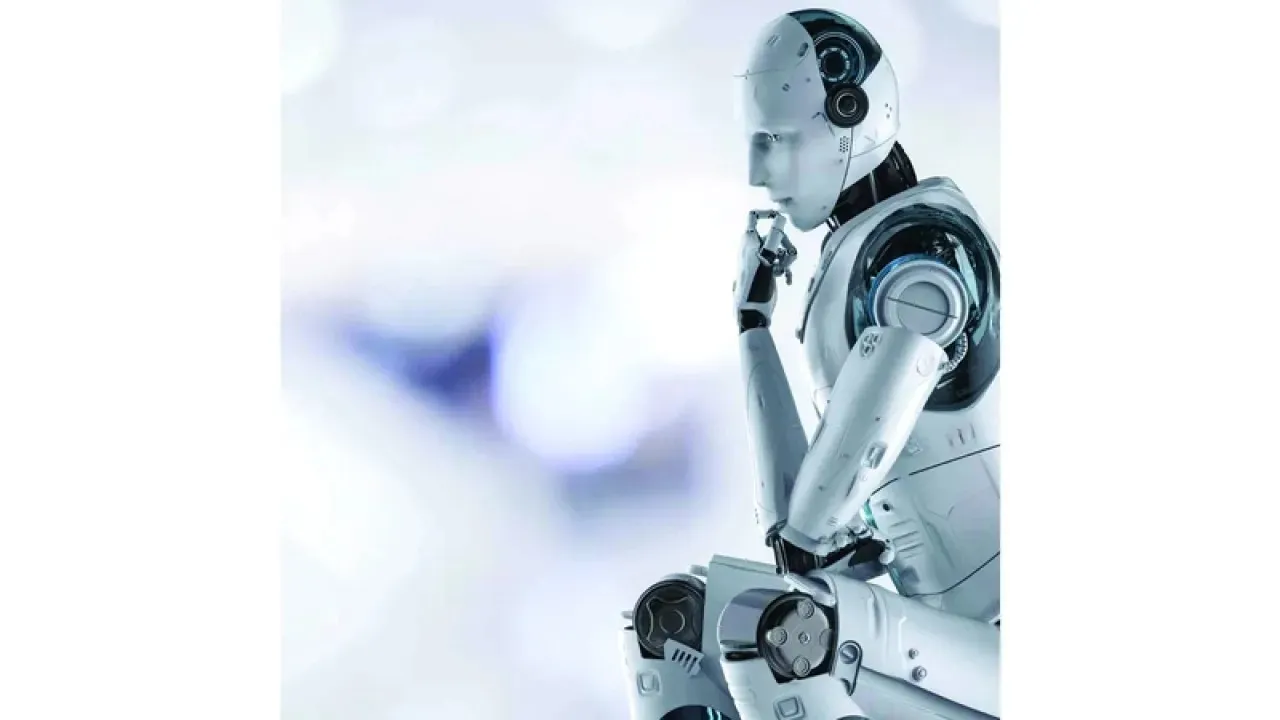
Khaberni - Technology Revolution and Human Concern
In recent years, artificial intelligence in medicine has transformed from a fictional idea to a tangible reality that is changing the shape of modern medicine and healthcare around the world. Medical devices are no longer just tools used by doctors; they are now "electronic brains" capable of analyzing imaging scans, detecting diseases, and even suggesting precise treatment plans within seconds.
However, with this significant leap in medical technology, the debate has begun:
Are we facing a revolution that saves lives through faster and more accurate diagnosis?
Or are we opening the door to new medical risks that could threaten patient privacy or place critical decisions in the hands of a machine that lacks emotions?
How did artificial intelligence enter the world of medicine?
The story began when researchers realized that intelligent systems could handle massive amounts of medical data in record time, a task that previously took doctors long hours of analysis.
Through machine learning algorithms and deep learning, artificial intelligence can now examine thousands of x-ray images or MRI scans, identifying precise patterns that indicate early-stage disease diagnosis.
Today, hundreds of hospitals around the world use artificial intelligence systems to assist doctors in:
Detecting cancerous tumors early.
Analyzing heart and lung images with high precision.
Monitoring chronic patients moment by moment.
Predicting complications before they occur.
Faster Diagnosis: Saving Time and Lives
One of the most important benefits of artificial intelligence in medicine is the incredible speed of diagnosis.
In the past, analyzing a single x-ray image could take a long time and require significant expertise, but today, an artificial intelligence program can analyze it in seconds, comparing it with millions of similar images stored in massive databases.
For instance, "Google Health" has developed a model that can detect breast cancer from imaging scans with accuracy that sometimes surpasses that of specialized doctors. Some smart healthcare systems use biometric data analysis techniques (like blood pressure and heart rate) to predict heart attacks hours before they occur.
In this way, medical technology has become a strong ally for doctors, helping to reduce human errors and save more lives.
Artificial Intelligence Does Not Sleep or Tire
Among the benefits of artificial intelligence is that it does not get tired and does not need rest or shifts.
It can monitor thousands of patients at the same time, analyzing their vital signs around the clock. For example, in intensive care units, devices are connected to smart systems that monitor breathing rates and blood pressure and issue immediate alerts to the doctor if any abnormalities are detected.
These systems do not replace the doctor, but they provide an additional vigilant eye, enhancing the quality of smart healthcare and making it safer and more efficient.
Medical Technology with Unprecedented Precision
Medical technology is no longer limited to mechanical devices or surgical tools.
Today, artificial intelligence has entered into the fine details of medicine, such as:
Analyzing genes to identify hereditary diseases with astonishing accuracy.
Early diagnosis of diseases such as Alzheimer's, diabetes, and cancer.
Surgery assisted by robots that operate with millimeter precision.
Imagine a surgical robot driven by artificial intelligence that can remove a precise brain tumor without damaging any healthy cells! This is no longer science fiction, but a reality experienced daily in modern medicine.
But... Is There a Dark Side?
Despite all these achievements, the use of artificial intelligence in medicine is not without medical risks and ethical debates,
While some welcome the technological revolution, others are concerned about the excessive reliance on machines in decisions that may relate to human life.
Main concerns include:
Errors in Diagnosis:
The system may err if the data is incomplete or biased, leading to incorrect diagnosis or inappropriate treatment.
Loss of Human Touch:
A doctor does not only treat symptoms but also comforts and offers hope to the patient. This human aspect cannot be replaced by any algorithm.
Privacy and Data Protection:
Artificial intelligence requires millions of medical records to learn, and therein lies the danger. Who ensures that this data is not used outside the medical framework?
Diminishing Role of Doctors:
There is fear that intelligent systems may replace doctors in the future, raising significant professional and ethical questions.
Modern Medicine Between Collaboration and Balance
The solution is not to reject artificial intelligence or rely completely on it but to achieve a balance between humans and machines.
Artificial intelligence cannot replace the doctor, but it can be a powerful assistant, giving them time to focus on the human aspects of treatment.
The near future indicates that smart healthcare will rely on a "collaboration between humans and machines" model, where the doctor uses technology to analyze data quickly while retaining the human decision in diagnosis and treatment.
Successful Experiences from Around the World
In the United Kingdom, artificial intelligence was used to identify eye diseases resulting from diabetes with accuracy comparable to ophthalmologists.
In the United States, artificial intelligence systems help identify types of cancer from tissue images.
And in Japan, some hospitals rely on smart robots to deliver medications and accompany elderly patients.
These experiences prove that the future of medicine will depend more broadly on medical technology, but with strict human supervision to ensure safety and fairness for every patient.
Can Artificial Intelligence Replace Doctors?
Simply put: no.
Artificial intelligence lacks the doctor's sensitivity, and cannot understand human pain or anxiety. Its role is to accelerate disease diagnosis and assist doctors in making more accurate decisions, but it cannot replace the human heart that empathizes and feels.
Medicine is not just a science, but also an art and compassion, and these values cannot be translated into numerical codes.
Faster diagnosis... but with greater caution
It appears that artificial intelligence in medicine indeed represents an unprecedented scientific revolution, providing us with amazing tools for faster and more accurate diagnosis, reducing the burden on doctors and improving the level of smart healthcare.
But this great technological power must be used cautiously and responsibly. Every algorithm, no matter how intelligent, still requires human supervision and meticulous review to ensure patient safety and respect their humanity.
In the end:
The future of medicine will be smarter, but it also must be more humane.
Technology may detect diseases before they manifest, but it cannot smile at patients or reassure them about their recovery.