Khaberni - Iran is suffering from its worst water crisis in decades, prompting officials to warn that Tehran could soon become uninhabitable if the drought sweeping the country continues.
President Masoud Bazshkyan said the government would have to ration water in Tehran, home to more than ten million people, if it does not rain by December.
He had said on November 6, "Even if we ration (consumption) and it does not rain, we will have no water at all. People will have to evacuate Tehran."
* Reducing Water Pressure
A drop in rainfall is not the only reason behind Iran's water crisis after a particularly hot summer.
Dozens of critics and water experts, on state-run media dominated by the crisis in recent roundtable discussions, said that mismanagement over decades, through excessive dam building and illegal well drilling and ineffective agricultural practices, has depleted reserves.
The government attributes the crisis to various factors, such as "policies of previous governments, climate change, and excessive consumption."
Despite no signs of protests so far due to the water crisis, Iranians are already suffering under the economic strain caused by sanctions linked to the disputed nuclear program.
The ongoing water shortage is intensifying pressure on households and local communities, increasing the likelihood of disturbances as the religious establishment already faces international pressures; due to its nuclear ambitions. Iran denies seeking to possess nuclear weapons.
The water crisis is worsening across Iran, from high-rise apartments in the capital to small towns and cities.
Citizen Mahnaz received no warning and also had no chance to store water when it was cut off from the taps in her apartment in East Tehran last week.
She said, "It was around 10 PM, and the water did not return until 6 AM."
With no pump or water tank available, Mahnaz and her children had to wait for tap water to return, using bottled water to brush their teeth and wash their hands.
State media reported that the national water and sanitation company denied reports of official rationing in Tehran but confirmed that it reduces water pressure in the capital at night, which could reach zero in some areas.
Bazshkyan also warned in July of excessive consumption. At that time, water authorities said that 70 percent of Tehran's population consumes more than the usual 130 liters per day.
* Tehran's Reservoirs Nearly Half Full
Iranians have suffered frequent power outages and shortages of gas and water during peak demand months in recent years.
Shahla (41 years old), a teacher and mother of three, said over the phone from central Tehran, "One hardship after another, one day without water and the next without electricity. We don't even have enough money to live. This is because of mismanagement."
Last week, state media quoted Mohammad Reza Kavianpour, head of the Iranian Water Research Institute, as saying that rainfall last year was 40 percent less than the amount that falls annually on average in the country over the past 57 years, and that forecasts indicate that dry conditions will continue until the end of December.
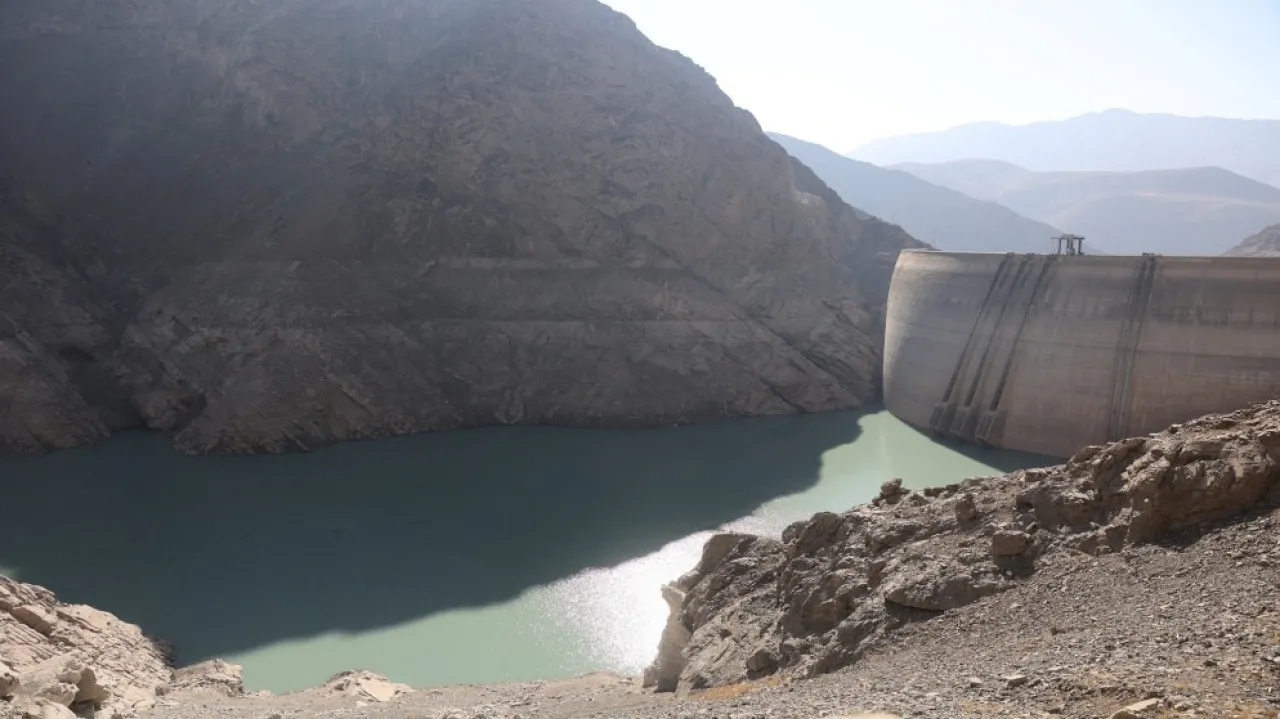
The capital relies entirely on five reservoirs fed by rivers outside the city, but river flows have declined. Behzad Barsa, the general manager of Tehran Water Company, said last week that water levels have dropped by 43 percent from last year, making the Amir Kabir dam only store 14 million cubic meters, only eight percent of its capacity.
Barsa added that the reservoirs in Tehran, which collectively have a capacity of nearly 500 million cubic meters, now barely contain 250 million cubic meters, roughly half, and they could dry out within two weeks at current consumption rates.
The crisis extends beyond Tehran as water has already dried up beyond 19 main dams across the country, about 10 percent of the total number of dams in Iran. Water reserves have dropped to below three percent in Mashhad, the country's second-largest city with a population of four million.
Reza (53 years old), a resident of Mashhad, said, "The pressure is so low that we literally find no water during the day. I have installed water tanks but for how long can we continue this way? It's all because of mismanagement," he added, noting that it also affects his work in carpet cleaning.
Like others I spoke with, Reza withheld his family name.
* Climate Change Exacerbates the Water Crisis
The crisis follows record high temperatures and repeated power outages. In July and August, the government announced emergency public holidays to reduce water and energy consumption and closed some public buildings and banks as temperatures soared above 50 degrees Celsius in some areas.
The authorities say climate change has exacerbated the problem; as rising temperatures accelerate evaporation and reduce groundwater.
Some newspapers have criticized the government's environmental policies, pointing to the appointment of unqualified managers and politicization of resource management, which the government denies.
Calls for rain prayers have re-emerged.
State media quoted Mehdi Shamran, head of Tehran's City Council, saying, "In the past, people would go to the desert to perform the rain prayer. Maybe we should not neglect this matter."
The authorities are taking temporary measures to conserve what remains, including reducing water pressure in some areas and transferring water to Tehran from other reservoirs.
But they have urged the public to install storage tanks, pumps, and other devices to prevent major disruptions.
A university professor from the city of Isfahan, who asked not to be named, criticized the performance of government officials, saying they do "very little" and take "far too late" actions. "They only give promises, but we see no action... Most of these ideas are impractical."