Khaberni -
In the age of artificial intelligence and translation, technology is advancing at an unprecedented pace, and tools such as Google Translate and other machine translation programs are now capable of producing translated texts within seconds.
With this tremendous development, an important question arises: Can these tools replace human translators? Or does the human element still have an irreplaceable place in the world of the translation profession?
What is Machine Translation?
Machine translation is defined as the process of converting texts from one language to another using computer software without direct human intervention. This concept started in the mid-20th century, but it has developed significantly over the last two decades thanks to artificial intelligence technologies, deep learning, and natural language processing.
In the past, machine translation software used to produce literal texts full of errors, but today it has become more accurate thanks to context analysis and the use of massive databases of translated texts. The most famous machine translation tools currently are: Google Translate, DeepL, and Microsoft Translator.
The Development of Machine Translation Tools
The recent years have witnessed a real revolution in the field of machine translation, especially after the introduction of "Neural Machine Translation" (NMT) technologies that simulate the way humans think in understanding the general meaning of texts, making translations smoother and more natural compared to the old translations that were completely mechanical and literal.
Moreover, machine translation software has become capable of continuous learning through analyzing millions of translated sentences, increasing their accuracy over time.
At the same time, these tools have become available for free or at nominal prices, making them the first choice for the average user who needs quick translation without cost.
The Human Translator: An Indispensable Role
Despite the significant development in translation tools, human translators still possess qualities that machines cannot easily replicate: a deep understanding of culture, context, and emotion behind texts. Words are not translated merely by their literal meaning, but also by their cultural, social, and psychological significance.
For example, literary translation, or the translation of legal and medical texts, requires precise understanding of style, terminology, and context. Here, machine translation often fails because it does not discern subtle differences in meaning or cultural nuances.
The human translator also adds their creative touch and selects words based on the purpose of the text and the targeted audience—capabilities that no algorithm can perform perfectly even now.
Strengths in Machine Translation
Despite its limitations, the numerous benefits provided by machine translation cannot be denied:
-
Blazing speed: Thousands of words can be translated in a matter of seconds.
-
Low cost: Most translation tools are free or cost much less than hiring a human translator.
-
Ease of access: Thanks to the internet, anyone can use translation tools from their phone at any time and place.
-
Enhanced global communication: These programs have facilitated interactions between different peoples in a way that was not previously possible.
These advantages have made tools like Google Translate a daily utility used by millions of people around the world to overcome language barriers quickly.
Weaknesses in Machine Translation
But on the other hand, translation tools remain limited in several fundamental points:
-
Absence of cultural understanding: The machine cannot perceive jokes, sarcasm, or cultural symbols.
-
Errors in specialized translations: In legal, medical, or technical texts, a minor mistake can lead to disastrous results.
-
Literal translation: Despite advancements, some machine translations still lack fluidity or suffer from unnatural sentences.
-
Dependence on data: Machine translation learns from available data, and if that data is limited or incorrect, the output will be poor.
For these reasons, it is always advised to have human translators review sensitive or formal texts even after they have been translated by a machine.
Artificial Intelligence and Translation: A Relationship of Integration, Not Conflict
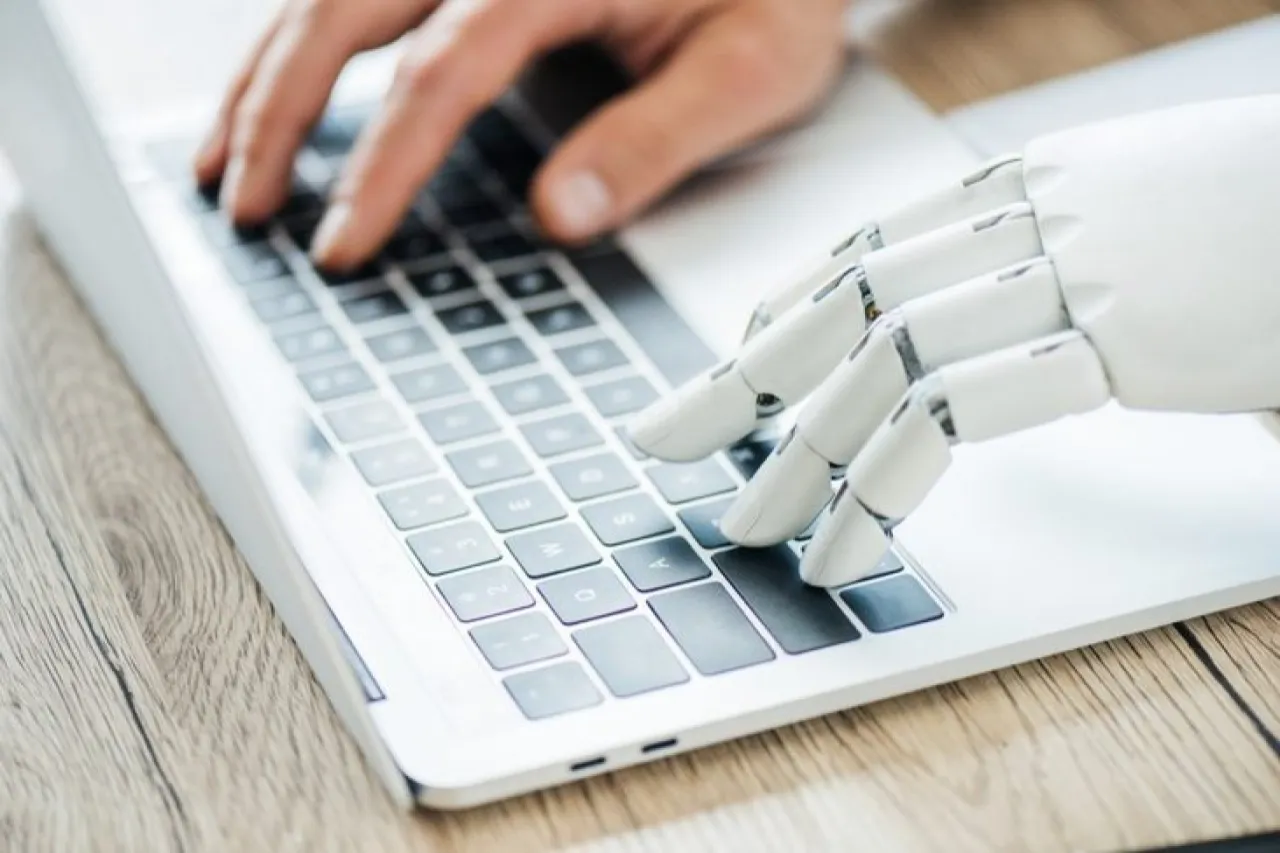
It is erroneous to view the relationship between artificial intelligence and translation as a zero-sum conflict between human and machine. The reality is that the future leans towards cooperation and integration between them, as professional translators already use translation software as a smart assistant to expedite their work and improve efficiency, without losing their creative touch.
Computer-assisted translation (CAT Tools) has now become an essential part of translators' work, allowing them to review and proofread texts translated automatically, thus combining speed and accuracy at the same time.
The Future of the Translation Profession
No doubt, technological development will change the future of the translation profession, but it will not eliminate it. While machines will handle simple and straightforward tasks, the human translator will remain responsible for creative and specialized translations that require a linguistic and cultural sense.
The translator of the future will not just be a word conveyor, but a linguistic and technical expert who uses artificial intelligence as a work tool. New specializations may emerge such as "machine translation review" or "language system training," roles that combine linguistic knowledge and technical expertise.
Although machine translation tools have advanced tremendously, they have not yet reached a stage where they can fully replace the human translator. They undoubtedly serve as a powerful tool to facilitate work and accelerate communication, but they lack the human sense, creativity, and ability to understand cultural and linguistic contexts.
However, the future of the translation profession does not seem threatened by extinction but is headed towards adaptation and evolution, where human and machine work side by side to provide more accurate and faster translations. In the end, true translation is one that “is understood by the heart before it is written by the hand.”