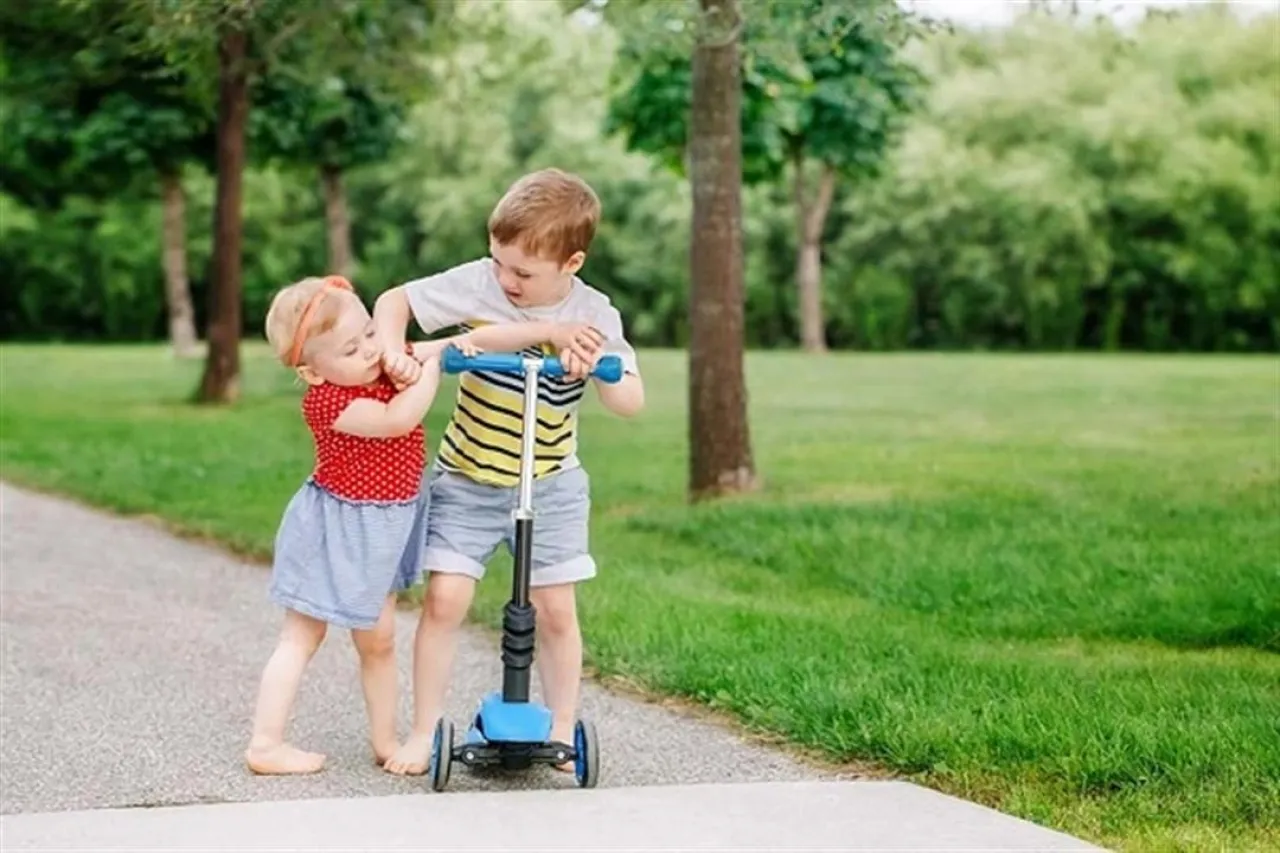
Khaberni - Parents may find themselves facing a real challenge when dealing with a selfish child, who tends to keep everything for themselves without considering the feelings of their siblings or others. This behavior drives them towards a love for dominance and a constant pursuit of only what they desire, ignoring the needs of those around them.
The result is often parents' frustration and difficulty in handling family situations, as relationships among siblings are affected and some may feel treated unfairly or undervalued, especially when parents weaken in the face of the selfish child's desires and cater to all their demands at the expense of their siblings.
Disruption of sibling relationships
Baraa Al-Jumaa, a specialist in mental health and psychosocial support, in a special statement to Sham News Network, indicates that the impact of the selfish child goes beyond personal boundaries, creating an unhealthy family and social environment.
Al-Jumaa explains that the selfish child makes their siblings feel mistreated and angry, as they are often asked to give in or succumb to the child's desires to avoid conflicts, generating negative and aggressive feelings in them. Over time, this behavior leads to disruption of sibling relationships and weakens the bonds of a family which should be based on cooperation and understanding.
Al-Jumaa adds that the continuation of this situation may encourage behaviors of "flattery" or "withdrawal" among siblings, where some try to appease the selfish sibling and get close to them in an attempt to secure their rights, while others choose to withdraw and remain silent, losing their confidence in their ability to defend themselves or express their needs within the family.
Consequences of Selfishness
Mr. Baraa Al-Jumaa says: "In the Syrian context, which relies on deep social bonds and sharing, selfish children are often ostracized from playgroups or activities because they refuse to adhere to the rules of the group or share their belongings."
Furthermore, the selfish child struggles to understand or empathize with others' feelings due to weak skills in this area. In environments that have experienced harsh conditions or suffering, this deficiency becomes clearer, hindering their ability to build supportive and stable relationships.
This behavior also affects their social interactions, finding it difficult to integrate into any future group activities, whether in school or in community initiatives, as they consistently expect to be the center of attention and the decision-maker.
Strategies for Dealing with a Selfish Child
Al-Jumaa suggests a set of strategies for dealing with selfish children, noting that selfishness in early childhood (under 4-5 years old) is a natural developmental behavior, as children are still focused on their own needs. However, if this behavior continues and worsens later on, it requires conscious educational intervention.
He adds that the correct psychological and social strategies for parents involve modeling altruism and sharing (leading by example), as a child learns through imitation. Parents should demonstrate sharing or giving up something for others or each other. In the Syrian environment, this can be implemented through participation in simple charitable acts or helping neighbors and relatives, making sharing a tangible and visible social value.
He continued that it is necessary to teach the child to differentiate between their right to meet basic needs (such as safety, food, and care) and their personal desires (such as playing or owning). When they demand something that may affect others, their request should be kindly denied with a logical and brief explanation, like: "This isn't yours right now, but you can play with your other toy."
He further stated that the language of "we" instead of "I" should be used to reinforce the concept of the family as a single unit. For example, instead of saying, "We bought this for you," one could say, "Our family bought something new we will all enjoy together."
Al-Jumaa also proposes dealing with the logic of "exchange," explaining that the selfish child should not get what they want until they show positive behavior towards others. For example: "You can take the new toy after you help your sister clean her room or play with her for ten minutes." This approach links enjoyment, giving, and responsibility.
Praise for Sharing Behavior
Additionally, it is essential to praise sharing behavior (positive reinforcement). Whenever any initiative to share or be altruistic is noticed, even if it is minor, it should be immediately and specifically praised. For instance: "I am very proud of you, champion, for sharing your favorite toy with your brother, that's wonderful work." This approach reinforces the desired behavior and limits selfishness.
Moreover, organizing group activities and involving the child in games that require cooperation and role-sharing is advised, which is easily applicable in the cohesive Syrian social fabric.
In conclusion of his remarks, Baraa Al-Jumaa stated that parents can turn selfishness from a negative trait into an opportunity to teach the child the values of giving and shared responsibility, benefiting from the family and community cohesion well-known in the Syrian environment.