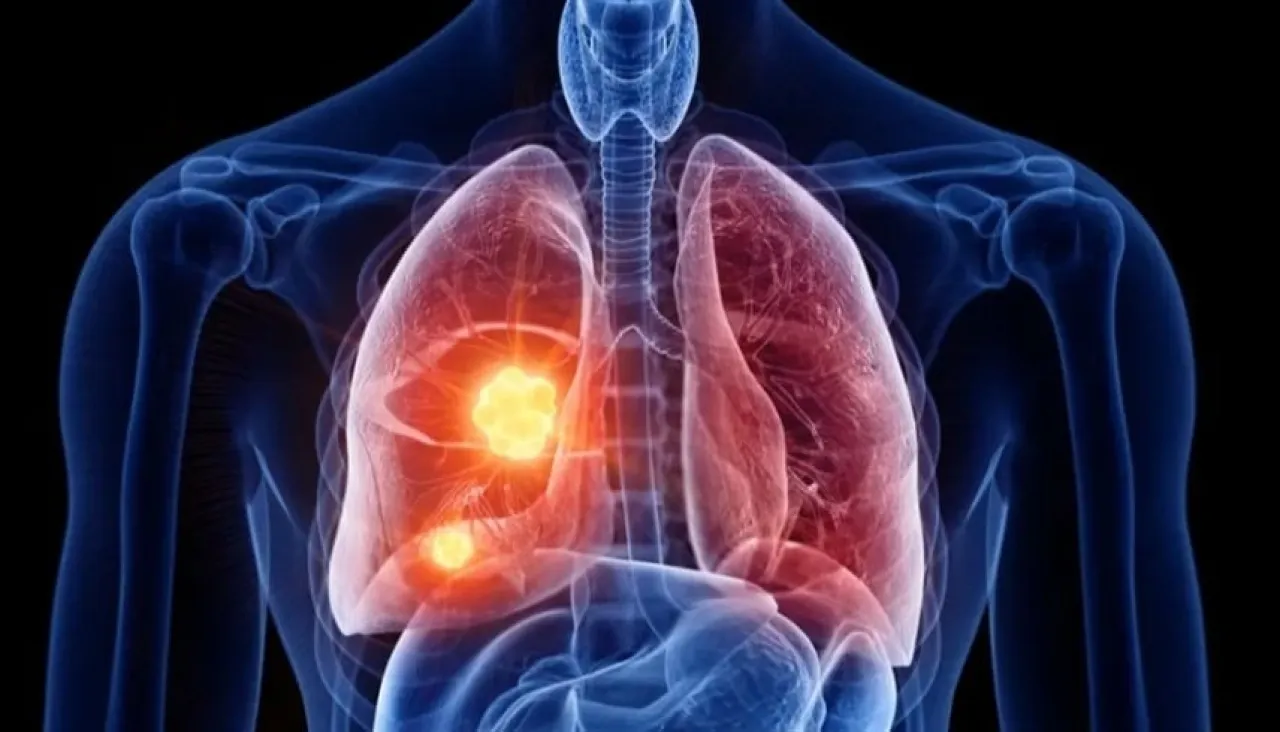
Khaberni - Researchers at the University of Texas at Dallas have developed a revolutionary device that may pave the way for an unprecedented ease in diagnosing lung cancer through a simple test that relies on breath analysis.
Lung cancer is the most deadly in the United States, claiming the lives of about 350 people daily, while only 30% of cases are detected in early stages due to the absence of clear symptoms until the disease worsens.
Currently available screenings rely on low-dose computed tomography and are procedures designated for high-risk individuals, besides being expensive, exposing patients to radiation, and carrying a high rate of false-positive results.
How does the new device work?
The innovation relies on a highly precise biosensor that searches for 8 biomarkers associated with malignant lung tumors. The patient breathes into a tube connected to a sealed bag, then the sensor analyzes the sample for volatile organic compounds (VOCs) that indicate the presence of cancer before the data is entered into an artificial intelligence program that compares the results with a known chemical fingerprint of the disease.
The device has been tested so far on 67 participants, including 30 with biopsy-confirmed breast cancer, and has succeeded in identifying disease markers with about 90% accuracy, in results considered highly promising, according to "New York Post."
Prasad explained that the technology might become part of the routine annual screening future: "Just as we conduct blood tests and physical exams, breath testing may become a fundamental step for early disease detection and saving lives." Dr. Ovidio Daiesco, who participated in the study, confirmed that the device combines advanced chemical analysis and a machine learning model capable of improving accuracy and reducing costs simultaneously.
The team continues to work on improving the technology and testing it in real medical environments, at a time when the American Cancer Society estimates that the year 2025 will witness more than 226,000 new cases of lung cancer diagnosed, with more than 124,000 expected deaths due to the disease.