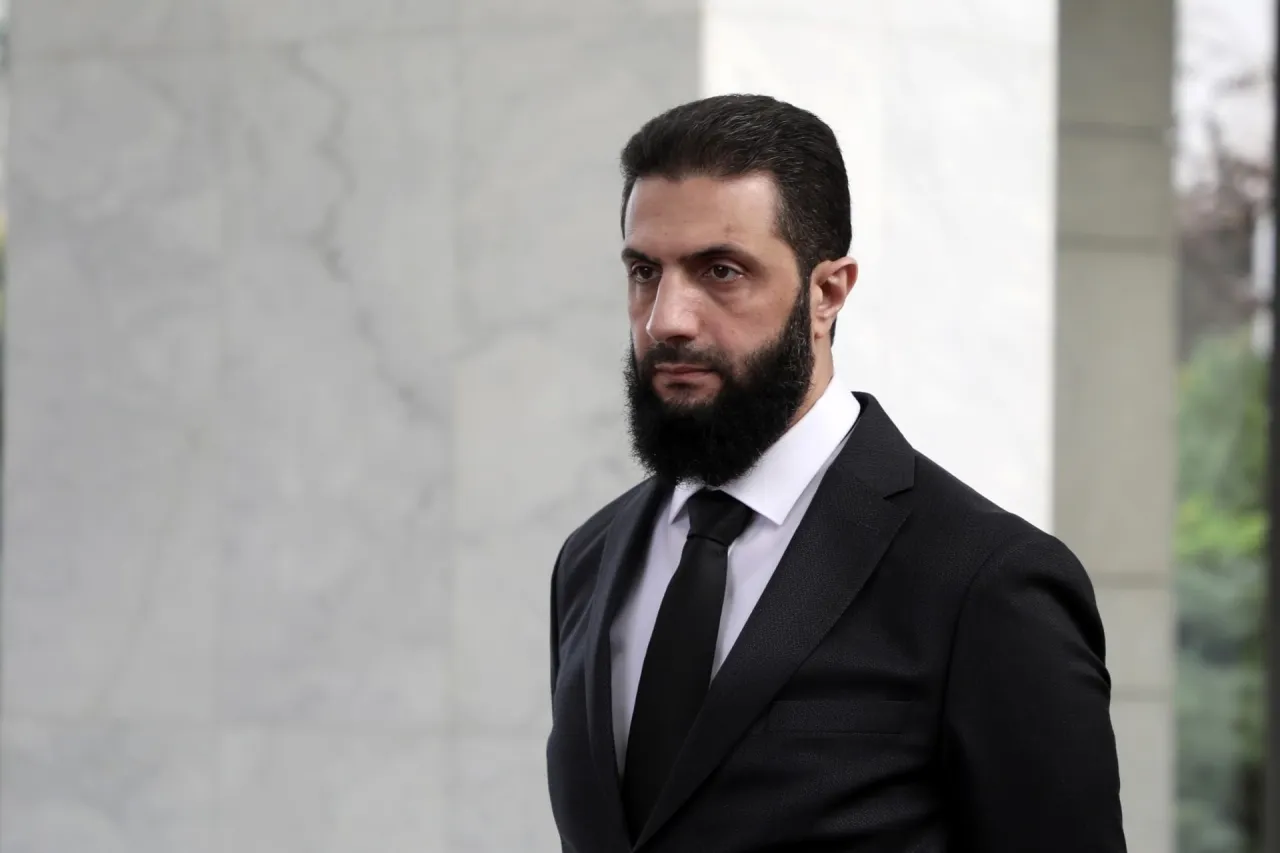
Khaberni - On Monday morning, US President Donald Trump will welcome Syrian President Ahmad al-Shar'a in a visit described as historic after years of diplomatic estrangement between Washington and Damascus. This marks the first visit of its kind by a Syrian president since the country's independence in 1946. The visit aims to restore relations and enhance cooperation in the field of counterterrorism.
This meeting represents the highest level of contact between the two countries since the Syrian Civil War began over 14 years ago, following Washington's removal of al-Shar'a and his Interior Minister from the terror list, lifting of US sanctions against Syria, and the submission of a petition to the UN Security Council to lift the international sanctions imposed on al-Shar'a and his administration. The Trump administration describes this step as one that will enhance regional security and stability.
The meeting between Trump and al-Shar'a, officially, is the second following their meeting in Riyadh last May facilitated by Prince Mohammed bin Salman, Crown Prince of Saudi Arabia, during which Trump announced he would lift the decades-long US sanctions against Syria.
The White House has prepared for this historic meeting with a list of demands and key points tabled for discussion, where officials stated that Trump's administration aims to persuade the new Syrian government to dismantle its chemical weapons stockpile, sign an agreement to join the International Coalition Against Terrorism consisting of 80 countries, wherein the Syrian government would take responsibility for combating ISIS, and agree on joint Syrian-American counterterrorism operation plans, solidifying Syria as a potential security partner rather than a pariah state, and cooperating in locating missing American citizens.
An agreement with Israel "without full normalisation" involves concluding a security agreement between Syria and Israel, guaranteeing potential accession to the "Abraham Accords," with security arrangements similar to the 1974 agreement between Syria and Israel, but without conceding the occupied Golan.
Since the fall of the Assad regime late last year, Israel has controlled a buffer zone previously overseen by the United Nations in southern Syria and has sought to establish a demilitarised zone extending to southern Damascus. Negotiations are ongoing about the possibility of reaching a security agreement that would provide al-Shar'a with American guarantees to pressure Israel to stop its aerial bombardments on Syria and withdraw forces from southern Syria, in exchange for a security deal that preserves Syria's sovereignty "without full normalisation."
According to leaks not confirmed by Washington or Damascus, the Trump administration is preparing to deploy American troops at military sites within Syria to aid in securing a potential security agreement between Syria and Israel, and monitor the execution of the security agreement without breaches. There is uncertainty regarding these locations and the number of American forces involved in this mission, and the timing of their arrival. Discussions are also ongoing about the complete control by the Syrian authorities of these bases, and reducing them to a single base near the capital Damascus.
The US envoy to Damascus, Tom Barrack, previously stated that the United States has reduced the number of its forces previously stationed in Syria, totaling 2000 soldiers, and has closed several military bases.
Caesar sanctions, and officials indicated that the Trump administration targets stabilizing the Middle East region by enhancing these counterterrorism initiatives, and testing the new Syrian government for its reintegration into the international system, and ending its prolonged isolation. The most pressing issue is the repeal of the Caesar Act, which imposed comprehensive sanctions on human rights violations committed by the Assad regime and its security forces.
The sanctions have already been lifted by a presidential order, but final repeal requires congressional voting. President Trump, in remarks to journalists a few days ago, expressed his desire to urge Congress to lift the sanctions, praising the Syrian president, saying: "It’s a tough area and he's a strong man, and I am very well in agreement with him, and considerable progress has been made with Syria."
President Trump faces reservations from some Republicans in Congress, where Representative Bryan Mast, the Republican Chairman of the House Foreign Affairs Committee, expressed his reservations about the complete repeal of Caesar sanctions. Senator Lindsey Graham is also pressing for conditions in exchange for repeal, recommending a gradual approach linked to providing security, representation of ethnic and religious minorities, and maintaining peaceful relations with other countries in the region, including Israel, and distancing foreign fighters from official institutions.
Al-Shar'a's goals
For his part, al-Shar'a seeks to leverage the visit to push the US administration to fully lift the remaining sanctions on his country, and assist in boosting the Syrian economy, and obtaining American and international aid. Al-Shar'a focuses on plans to rebuild war-torn Syria after a 14-year civil war, estimated by the World Bank to cost more than $216 billion. Lifting the remaining sanctions fully on Syria, including the Caesar Act, is a necessary step to attract foreign investments, and reintegrate Syria into the global financial system.
Al-Shar'a seeks American support and investments in oil and gas, and shows pragmatic flexibility regarding security cooperation with Israel, but he seeks an agreement that preserves Syria’s sovereignty without full normalisation with it.
Experts at the "Foundation for the Defense of Democracies" indicate that the meeting between Trump and al-Shar'a offers an opportunity to redraw the map of the Middle East, but it also carries many risks. Ahmed Shawqi, a researcher at the institute, said the security deal with Israel is 99 percent close, urging the Trump administration to continue pressuring the Syrian leadership to ensure the exclusion of extremists from the Syrian army.
Edmund Fitton Brown, a researcher at the institute, warned against giving up American leverage, cautioning that lifting all US sanctions might lead Syria back into chaos unless the new administration commits to combating terrorism and protecting minorities, amid concerns among American legislators that sectarian violence undermines confidence in al-Shar'a's government.
Regarding the security agreement with Israel, Jonathan Schanzer at the Foundation for the Defense of Democracies, predicted that the process of reaching this agreement would be gradual to build trust, noting that the Golan Heights remains a significant obstacle between the sides, especially since al-Shar'a refuses full normalisation with Israel, and only agrees to a security agreement without land concessions.