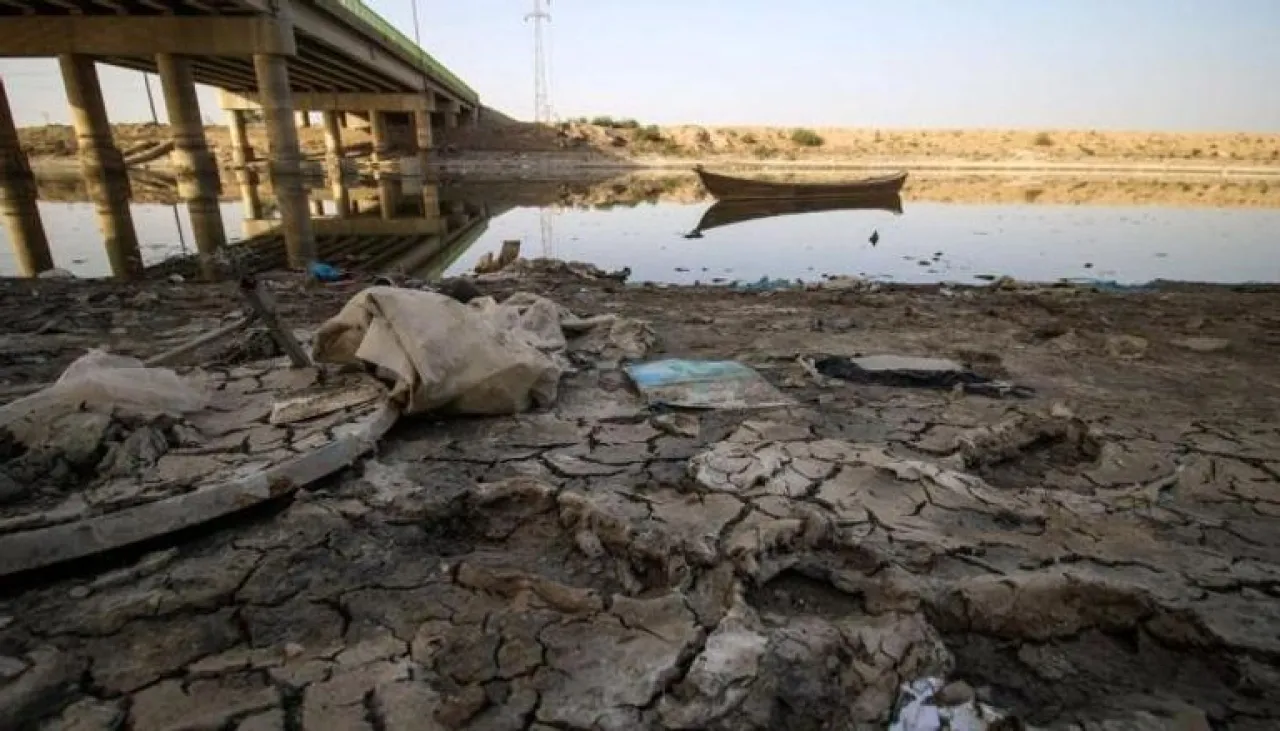
Khaberni - The water stocks in the four dams that feed Mashhad, the second largest city in Iran, have dropped to less than 3%, according to local media last Sunday, while the country is experiencing an unprecedented drought.
This year, Iran is facing an unprecedented drought in decades, with Tehran also seeing its rainfall levels recede to the lowest in a century, according to a local official last October.
Media reported that 15 out of 31 Iranian provinces have not seen a single drop of rain this autumn. As a result, the water stocks in the four dams for the city of Mashhad, which has a population of four million, have dropped to less than 3%, as stated by Hussein Ismailian, the head of the city's water authority, to the "ISNA" agency.
The city of Mashhad is located 900 kilometers away from Tehran, in a desert region. Its inhabitants consume 700,000 cubic meters of water daily.
At the beginning of the week, the authorities estimated the water reserves in the city's dams at forty million cubic meters, noting that at the same time last year the reserves were at 189 million.
In Tehran, the situation seems very critical. One of the five dams has completely dried up, while the reserves in another have dropped to below 8%, according to authorities.
Behzad Parsa, General Manager of Tehran Water Company, told the Iranian news agency (IRNA) a week ago that Amir Kabir Dam, one of the five dams supplying the capital with drinking water, "only stores 14 million cubic meters of water."
He added that a year ago, its reserves were about 86 million cubic meters of water, attributing this sharp decline to "a 100% decrease in rainfall" in Tehran and surrounding areas.
In light of this, authorities announced on Saturday that they would ration water distribution at night.
Tehran is located on the southern slope of the Alborz mountain range, with its summers being hot and dry. Rainfall often occurs in autumn, while its winter is snowy and harsh.
At this time of the year, the mountain peaks used to be covered with snow, unlike the current situation.
Meanwhile, Iranian President Masoud Bazeshkian warned on Thursday that the capital's residents might have to be evacuated by the end of the year if it does not rain, without specifying the form of evacuation or its means, noting that Tehran's population stands at ten million.
In October last year, the Mehr agency reported a water authority official saying that "19 major dams had dried up" in Iran, which is about 10% of the country's stock.