Khaberni - Nawaf Al-Ajarmeh, the Secretary-General of the Ministry of Education for Educational Affairs, emphasized the importance of student nutrition programs in increasing their enrollment rates in education, improving their academic performance, reducing dropout numbers, enhancing their health, and developing their positive behaviors, praising the existing partnership between the ministry and the World Food Programme in this field.
This came during his sponsorship on behalf of the Minister of Education at the workshop to launch the results of the study on the investment return of the national school nutrition program, which was prepared by the ministry in cooperation with the World Food Programme, in the presence of the Secretary-General of the Ministry of Social Development, Barq Al-Damour, the Deputy Country Director of the World Food Programme in Jordan, Zeinab Al-Khudairi, the General Director of the Royal Health Awareness Society, Amal Arefej, the Director of Education Management in the ministry, Ahmad Al-Masa'afah, and the Executive Director of the Development Coordination Unit, Khawla Hattab.
On her part, Ananda Bayes, the Director of Social Protection Programs, praised during the launch the cooperation, attendance, and support of the Ministry of Education and government representatives in preparing and implementing the analytical study aimed at determining the economic return on investment in the model of healthy meals, by comparing the costs and benefits.
The launch of the study on the investment return of the national school nutrition program aims to guide the policies and implementation paths for the national school nutrition program, as the Ministry of Education and the World Food Programme focused on producing evidence on the impact of the program and its contributions in various community sectors.
The study showed that the school nutrition program in Jordan achieves a clear and positive economic return on investment, significantly contributing to the social protection of local communities and the local economy, and the living standards of the beneficiaries.
The study indicated that for every dollar invested in the healthy meal model within the national school nutrition program, an economic return of 10.3 dollars is generated, benefiting students, female workers, and local farmers, with the students' specific return from this amount being 4.4 dollars over the lifetime of each beneficiary.
The total benefit that students receive from healthy meals within the program amounts to 2,672 dollars over their lifetime, while the program's cost does not exceed 607 dollars per student during the same period.
The study showed that school enrollment rates increase by 3.93%, attendance rates by 1.12%, and dropout rates decrease by 2% when school nutrition is available, representing a significant contribution to supporting student education in Jordan.
The study also showed that as a result of the increased time students spend in school and the improvement in their health outcomes associated with the diversified and nutritious school meals, their income throughout their lives increases by an average of 1,298 dollars, approximately 1 percent.
Thanks to the improvement in health and nutrition due to school meals, the cost of healthcare for the student during the 7 years they receive the meals decreases by an average of 80 dollars, or by 4%.
As for the female workers participating in the healthy meal model, the study showed that the total annual benefit for each worker, including the annual salary and the economic impact of increased income and contribution to providing indirect employment opportunities and investment in skill development, is approximately 13,608 dollars annually for each working woman.
As for the local farmers participating in the healthy meals model, the total annual benefit, including annual income and the economic impact of increased income and contribution to providing indirect employment opportunities, investment in skill development, and policy improvement, is estimated at about 18,692 dollars annually for each farmer.
Based on the positive return on investment, the study recommended expanding the scope of the healthy meals model in line with the goals outlined in the national strategy for school nutrition, with the first action being the expansion of the application of the healthy meal model to include students who are currently receiving date bars or fortified biscuits, due to the significant benefits associated with this model.
It also recommended implementing complementary supportive activities that enhance the positive effects of the healthy meal model, and providing complementary training for administrators and teachers in schools on food handling methods and safe distribution to students.
It also recommended expanding targeting to include additional beneficiaries, and opportunities to enhance the nutritional value of the menu of healthy meals, and to enhance locally produced school nutrition.
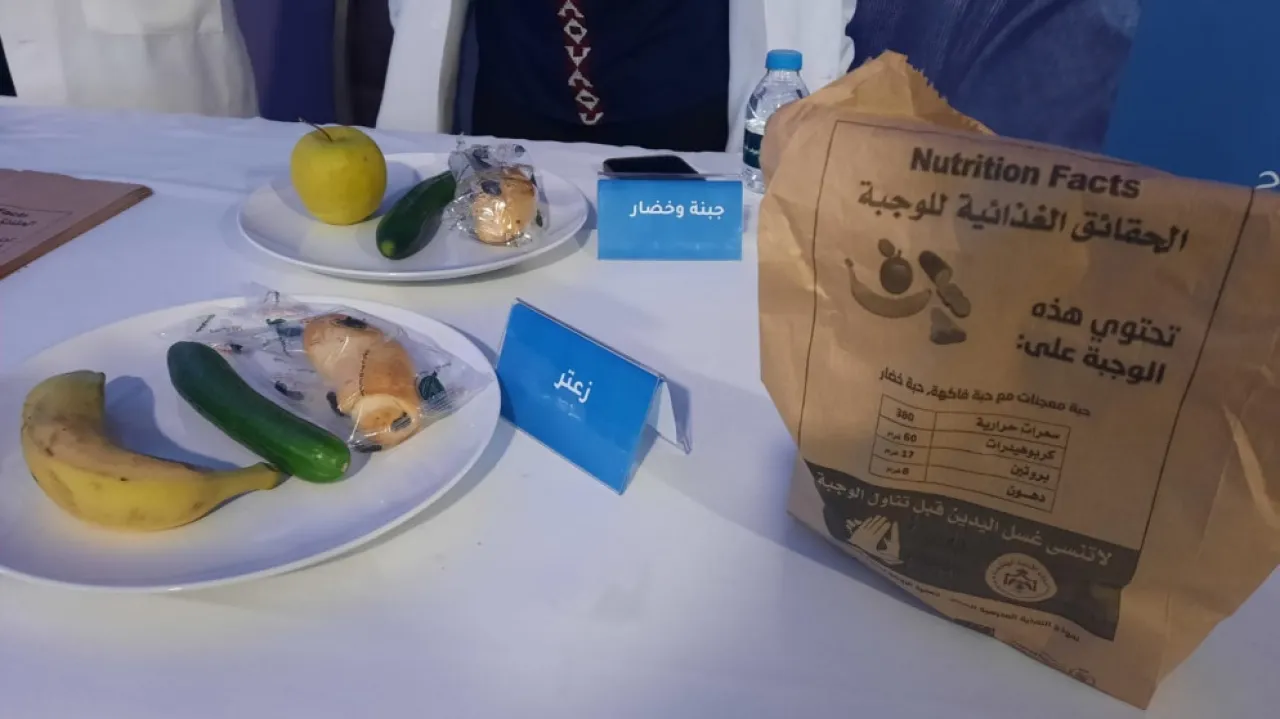
It is worth mentioning that the national school nutrition program in Jordan targets more than 500,000 students in poor areas and refugee camps, where the program was launched in 1975 and is implemented through two models: the first one is the healthy meals model, which provides balanced meals prepared from local bakery products and small farmers through 10 community kitchens employing about 250 women from vulnerable families, currently covering 90,000 students, and the model of date bars or fortified biscuits.