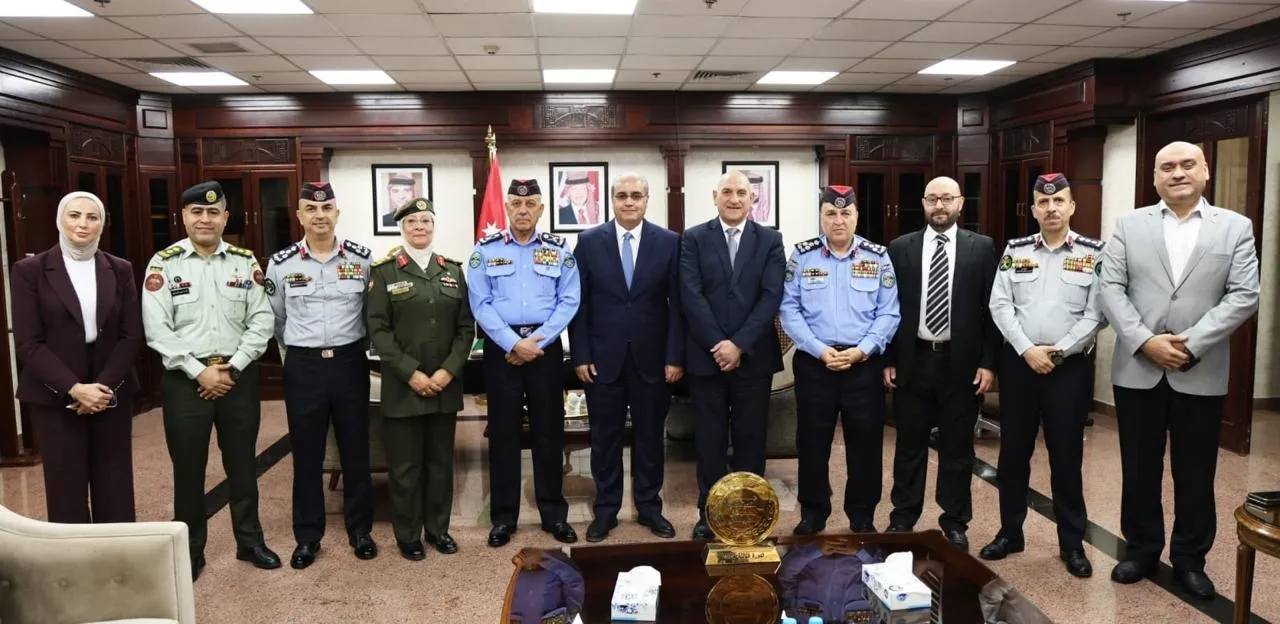
Khaberni - The Ministry of Health and the Public Security Directorate signed a joint cooperation protocol today, Saturday, in the field of pre-hospital emergency medical care, with the aim of improving the quality of services and enhancing response speed to critical situations for citizens.
The protocol was signed by the Minister of Health, Dr. Ibrahim Al-Badour, and the Director of Public Security, Major General Dr. Obeidallah Al-Maaytah, at the Ministry's building, in the presence of several officials from both sides.
Dr. Al-Badour emphasized that the signing of this protocol reflects the Ministry of Health's commitment to reinforcing continuous cooperation and coordination with the Public Security Directorate, which serves as a fundamental pillar in the national healthcare system, by providing comprehensive humanitarian services in the field.
He pointed out that this cooperation will contribute to enhancing the preparedness of medical and ambulance staff, and improving the speed of response to emergencies, which will positively reflect on the safety of citizens and the quality of health services provided to them. He confirmed that the protocol represents a qualitative leap in providing ambulance service according to the latest international standards.
In return, Major General Dr. Obeidallah Al-Maaytah confirmed that this cooperation is in line with the supreme royal directives of His Majesty King Abdullah II bin Al-Hussein, may God protect him, aimed at improving the services provided to citizens and elevating them to the highest levels.
He stated that the launch of the unified national ambulance protocol, in cooperation with the Ministry of Health, the Royal Medical Services, national universities, and experts from various specialties, embodies the royal vision in enhancing integrative institutional work and developing the national emergency response system.
Major General Al-Maaytah explained that the cooperation with the Ministry of Health will contribute to enhancing the efficiency of the Civil Defense field staff and developing their technical and medical capabilities, through the exchange of expertise and the implementation of joint training programs, which enhances field readiness and ensures a faster and more effective response in dealing with emergencies.
The signing of the protocol comes within the framework of both sides' keenness to develop joint field work mechanisms and unify national efforts in providing emergency medical care services in the pre-hospital stage, ensuring the best levels of humanitarian and medical service for citizens.