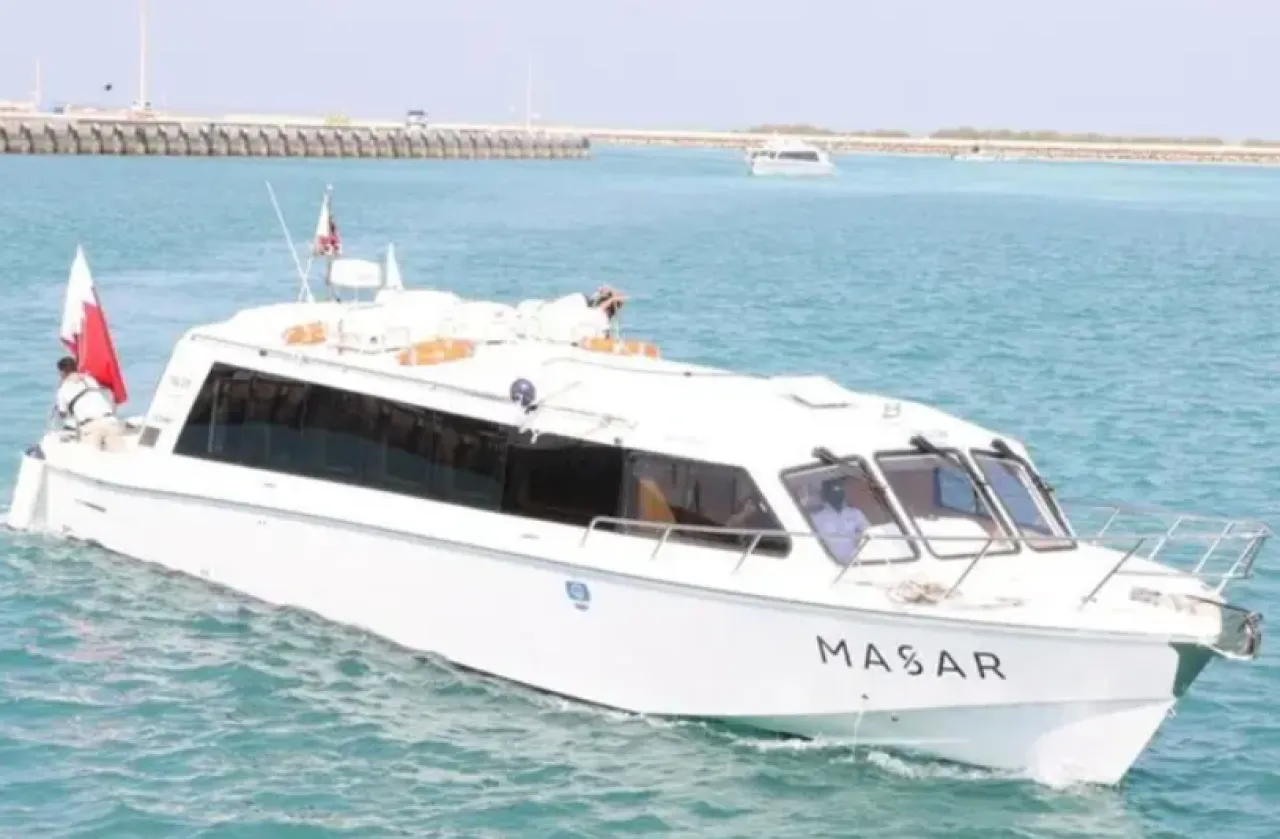
Khaberni - In the framework of enhancing the transportation system between the two countries, Bahrain and Qatar today inaugurated the first passenger maritime line in the region, connecting Suad Port in Muharraq Island and Ruwais Port in Qatar, with the trip duration being about 70 minutes.
This project is part of the maritime connection initiative between Manama and Doha, aimed at enhancing transport, tourism, and trade exchanges, and today saw the launch of the first trips of the maritime line, arriving at Ruwais Port at 11 AM carrying the Bahraini delegation.
The operation of the project in its first phase will start by transporting passengers from the Gulf Cooperation Council countries, with the operational trips starting from November 7 to 12, 2025, at a rate of two trips daily (round trip), one in the morning and another in the evening period, later increasing to three daily trips from November 13 to 22, 2025, with the possibility of gradually increasing them according to demand and usage rate.
In the same context, the project's capacity reaches about 32 passengers, and the prices for the trips vary, costing $72 for a return trip in standard class, while reaching $2689.67 for business class, in US dollars.
Information indicates that the next phase will witness a broader development of the maritime line to include the transportation of cars and containers through specialized transport companies from both sides, enhancing trade and tourism movement, and facilitating the movement of individuals.
Additionally, Bahraini and Qatari sources suggest that the maritime line project will double the volume of trade and tourist exchange between Bahrain and Qatar, reducing the time and distance between them.
Alongside its role in consolidating economic and social ties and opening promising prospects for the transport and logistics services sector in the region, wherein the trade volume between Qatar and Bahrain increased by 14% in the second quarter of the current year, according to the Bahrain Chamber of Commerce and Industry.
In his turn, the Qatari Minister of Transport, Sheikh Mohammed Al Thani, said, "This project is a strategic pioneering step that reflects the depth of fraternal ties between the two brotherly countries, and enhances the bonds of cooperation and integration among the Gulf Cooperation Council countries."
He also pointed out that "the project embodies Qatar’s commitment to developmental and strategic partnership with the Kingdom of Bahrain, and elevating it in the transport, transportation, and associated logistics services sectors, serving mutual interests and enhancing economic integration within the Gulf Cooperation Council system."
Additionally, Dr. Sheikh Abdullah bin Ahmed Al Khalifa, Minister of Transportation and Telecommunications, stated that this strategic project opens the field for increasing maritime passenger transport between the Kingdom of Bahrain and the Gulf Cooperation Council countries, facilitating the movement of citizens, residents, and visitors between the two countries, supporting tourism and cultural activities, and enhancing social communication between the people, noting that this line is the first international maritime connection for passengers between two countries in the Arab Gulf states.
Dr. Sheikh Abdullah bin Ahmed Al Khalifa also added that the inauguration of the maritime line between the Kingdom of Bahrain and the State of Qatar represents a quality investment in the maritime tourism sector and an important tributary to the national economy, confirming that the Ministry is developing an integrated maritime transport system for passengers linking the Kingdom of Bahrain with its regional neighbors, according to the highest standards of safety and sustainability, within a clear and ambitious strategic framework aimed at developing the land, maritime, and air transportation sectors, in line with the principles of Bahrain's Economic Vision 2030, based on sustainability, competitiveness, and fairness.
This project represents a qualitative leap in the Gulf maritime transport system, exemplifying the commitment of both countries to enhancing regional integration and facilitating the movement of individuals, in support of the Gulf Cooperation Council's vision towards a unified, safe, and sustainable transportation network.